
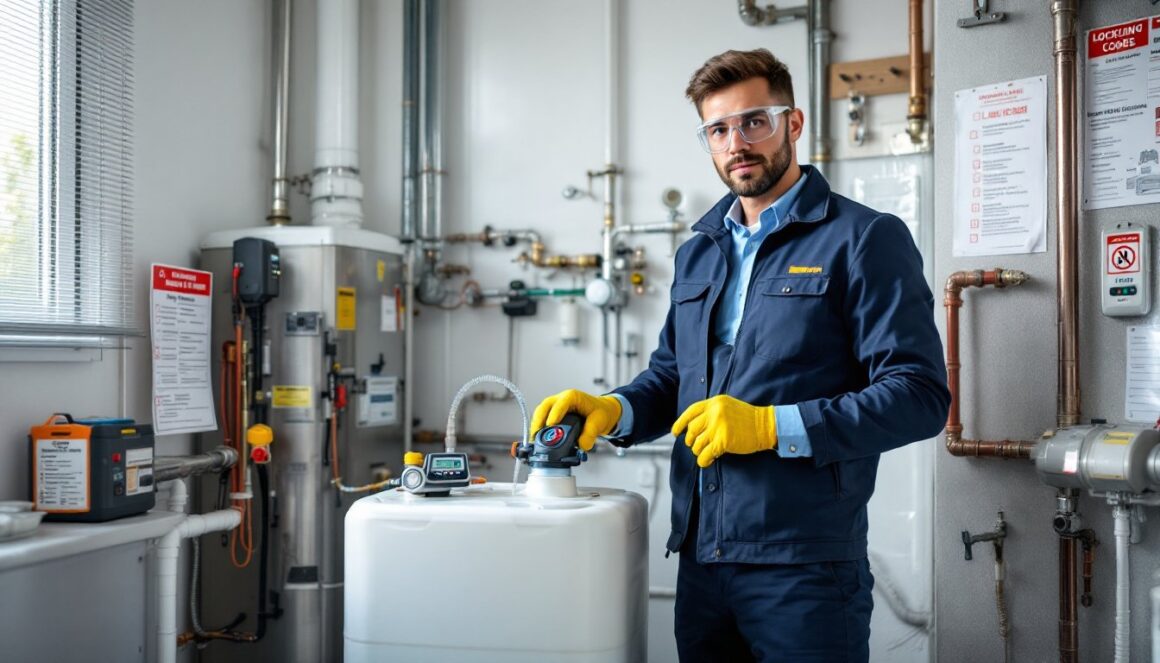
Refilling the köldbärare (heat transfer fluid) in a bergvärme (ground‑source) system isn’t glamorous, but it’s a task that keeps a heat pump running efficiently and protects the borehole from freeze and corrosion. This guide walks through why the fluid matters, when to top it up, safety and permit issues, and a clear fill‑and‑purge procedure you can follow on a small residential system. It assumes a closed loop ground‑source system and uses practical tips, including tool alternatives and troubleshooting, so a confident DIYer or homeowner can decide whether to tackle the job or call a qualified geothermal technician.
Key Takeaways
- Refilling the köldbärare in a bergvärme system is essential to maintain heat pump efficiency and protect the borehole from freeze and corrosion.
- Use manufacturer-recommended premixed heat transfer fluids like propylene glycol to ensure freeze protection and corrosion inhibition without toxicity risks.
- Monitor static pressure (typically 0.8–1.5 bar) and expansion tank levels to identify when refilling is needed and avoid system alarms or pump cavitation.
- Follow proper safety procedures including depressurizing the loop, wearing PPE, and adhering to local permits and regulations before performing refills.
- Thoroughly purge air from the loop during refilling to prevent flow faults and maintain optimal heat transfer efficiency.
- If leaks, rapid pressure loss, or other issues occur, consult or hire a certified geothermal technician to prevent environmental harm and system damage.
How Bergvärme Systems Use Heat Transfer Fluid And Why It Matters
A bergvärme (ground‑source) system circulates a heat transfer fluid through borehole loops to absorb ground heat and deliver it to the heat pump. The loop is a closed circuit: the fluid, commonly water mixed with propylene glycol, denatured ethanol, or methanol, provides freeze protection, improves thermal transfer, and contains corrosion inhibitors.
Why fluid choice matters:
- Thermal performance: glycol lowers thermal conductivity compared with pure water: concentration (commonly 25–35% for propylene glycol in residential loops) balances freeze protection with heat transfer efficiency.
- Freeze and vapor safety: ethanol/methanol gives lower freeze points per volume but are flammable and sometimes restricted, many installers prefer propylene glycol because it’s non‑toxic.
- Corrosion and longevity: properly inhibited fluids protect copper, steel, and polymer components in the borehole and manifold. Using automotive antifreeze (ethylene glycol) is not recommended without system‑approved inhibitors.
A correctly mixed and charged loop keeps design flow, prevents cavitation of the circulation pump, and avoids frequent alarms on the heat pump. Poor fluid quality or low level reduces efficiency, can introduce air, and in severe cases requires a full leak repair or borehole intervention.
When To Refill, Common Signs Of Low Fluid, And Essential Safety Precautions
When to consider refilling:
- Low static pressure: many small systems specify 0.8–1.5 bar (12–25 psi) as normal static pressure: a sustained drop below manufacturer values is a refill indicator.
- Visible low expansion tank level or a tank that isn’t half‑filled at ambient temperature.
- Air noise, cavitation, or gurgling in the loop: repeated flow faults or high‑temperature/low‑flow alarms on the heat pump.
Safety and regulatory points:
- Always consult the heat pump and loop manufacturer. Local rules often require licensed installers to work on pressurized circuits, especially when the fluid contains alcohol. Permits may be needed.
- PPE: wear safety goggles, chemical‑resistant gloves, and a respirator if handling methanol/ethanol in confined spaces. Use ear protection when running pumps.
- Use only approved non‑toxic antifreeze (typically propylene glycol) at recommended concentration. Avoid automotive antifreeze. Keep ignition sources away if using ethanol/methanol.
- Depressurize the loop before disconnecting hoses and never mix different inhibitor chemistries without confirmation from a lab or manufacturer.
If pressure loss is significant or recurring, stop and locate leaks before adding fluid. Refilling a leaking loop only masks the problem and risks environmental contamination.
Preparing The System: Shutdown Steps, Pressure Checks, And Required Permits
Preparation is the most important part. Skipping steps often causes traps and repeated work.
Shutdown and isolation:
- Turn off the heat pump at the main breaker and switch off the circulation pump(s). Lockout/tagout if possible.
- Close any isolation valves that separate the loop from the heat pump and domestic circuits. Note gauge readings and system temperature before work.
- Verify expansion tank function: if it’s a bladder tank, check pre‑charge per manufacturer spec (typically 0.8–1.0 bar for small residential loops).
Pressure checks and leak assessment:
- If the loop lost substantial pressure, perform a pressure test (air or water) to about twice the normal operating pressure before refilling. This is standard practice if piping was modified or a major refill is required.
- Record pressure after a short soak (30 minutes) to ensure there’s no obvious leak.
Permits and who should work:
- Many jurisdictions require certified geothermal contractors for work on borehole circuits, especially where alcohol‑based fluids are present or where groundwater protection rules apply. Check local building codes and environmental regulations.
If in doubt, call a qualified geothermal technician, a simple phone consultation can clarify permit needs and safety constraints.
Tools, Materials, And The Right Heat Transfer Fluid For Bergvärme
Materials and typical quantities:
- Premixed heat transfer fluid (propylene glycol solution at the manufacturer‑specified freeze point). For small homes, a few 20–50 L containers commonly suffice: always check loop volume in system documentation.
- Fill/flush pump or strong circulation pump with two hoses and a clean bucket or tank.
- Pressure gauge (loop side) and a vent/bleed key.
- PT‑port fill adapter, wrenches, and PTFE tape.
Tools list (alternatives noted):
- Mains‑powered fill pump (preferred). A wet/dry shop pump or magnetic drive pump can work for short runs but may be slower and harder to prime.
- Hoses rated for glycol/alcohol and clamps.
- Basic hand tools: adjustable wrench, screwdriver, tube cutters if minor piping changes are needed.
Choosing the fluid:
- Propylene glycol is the recommended non‑toxic choice for most domestic bergvärme systems, mix to the freeze point specified in the system manual (often 25–35% by volume).
- Ethanol or methanol may be allowed by some manufacturers but introduce flammability and permit concerns: confirm compatibility and local code acceptance before using.
Safety note: store fluids in labeled containers away from heat and ignition sources and dispose of replaced fluid per local environmental rules.
Step‑By‑Step Refill Procedure: From Connecting The Filling Kit To Bleeding The System
This is a generic closed‑loop fill‑and‑purge method. Always follow the heat pump manufacturer’s manual for system‑specific steps.
-
Set up: Place a premixed fluid container near the equipment. Connect the fill pump suction hose to the container and the discharge hose to the loop fill/PT port. Ensure the return purge hose goes back to the container to form a closed fill‑and‑return loop.
-
Prime hoses and pump: Prime the pump so both hoses contain fluid, not air. It helps to submerge the suction hose fully in the fluid and briefly open the discharge at the bucket to flush trapped air.
-
Configure valves: Close bypasses per manifold design. Open the fill and purge ports that create a through‑circuit. If multiple loop circuits exist, plan to purge them one at a time.
-
Start circulation and purge: Run the pump. Fluid should circulate from the bucket → loop → purge return → bucket. Purge each circuit until steady flow without visible air bubbles, expect 10–20 minutes per circuit for thorough purging.
-
Reach operating pressure: With air removed, continue pumping until the loop gauge reads the specified static pressure (for many small systems, 12–25 psi / 0.8–1.5 bar). Stop the pump and close the fill valve.
-
Bleed high points and expansion tank: Open manual or automatic vents until clear fluid (no air) emerges. Confirm expansion tank level around half at ambient temperature and that the bladder pre‑charge is correct.
-
Reopen isolation valves: Reset manifold and bypass valves to operational positions and restart the heat pump following manufacturer startup sequences.
Keep the pump running a short while under normal operation to help release micro‑bubbles into vents.
Testing, Leak Checks, Troubleshooting Common Problems After Refilling
Post‑refill checks:
- Inspect all fittings, manifolds, and hose connections under pressure for visible leaks. Tighten clamps or fittings if a slow seep appears, then recheck pressure after 1 hour.
- Run the circulation pump for several hours (or longer) to allow micro‑bubbles to migrate to vents. Some systems benefit from a few hours of circulation before full heat demand is applied.
- Recheck static pressure after 1–24 hours. A small drop is normal as trapped air escapes: a large or continuous drop indicates a leak.
Common problems and fixes:
- Persistent air noises or low flow: repeat the purge sequence. Check that all automatic vents are functioning and that expansion tank size and pre‑charge are correct.
- Rapid pressure loss: isolate sections and perform a localized leak test at the manifold, fittings, and borehole header. Repair before topping up again.
- Freezing alarms or poor performance: sample fluid to verify antifreeze concentration with a refractometer or glycol test strips. If concentration is low, top up with correctly premixed fluid rather than adding neat glycol.
When to call a pro:
- If pressure drops quickly after refilling, if a leak appears at the borehole header, or if local regulations require certified personnel. Don’t attempt major repairs without proper permits and equipment.
Conclusion
Refilling köldbärare in a bergvärme system is a disciplined fill‑and‑purge job: use the manufacturer‑recommended, premixed heat transfer fluid, follow safe shutdown and pressure‑test practices, purge air thoroughly, and verify operating pressure and expansion tank condition. Because of environmental, safety, and permit issues, especially when alcohol‑based fluids are involved, many homeowners choose to have a certified geothermal technician perform or at least inspect the work. If they proceed themselves, homeowners should use proper PPE, the right pump and hoses, and never rush the purge.