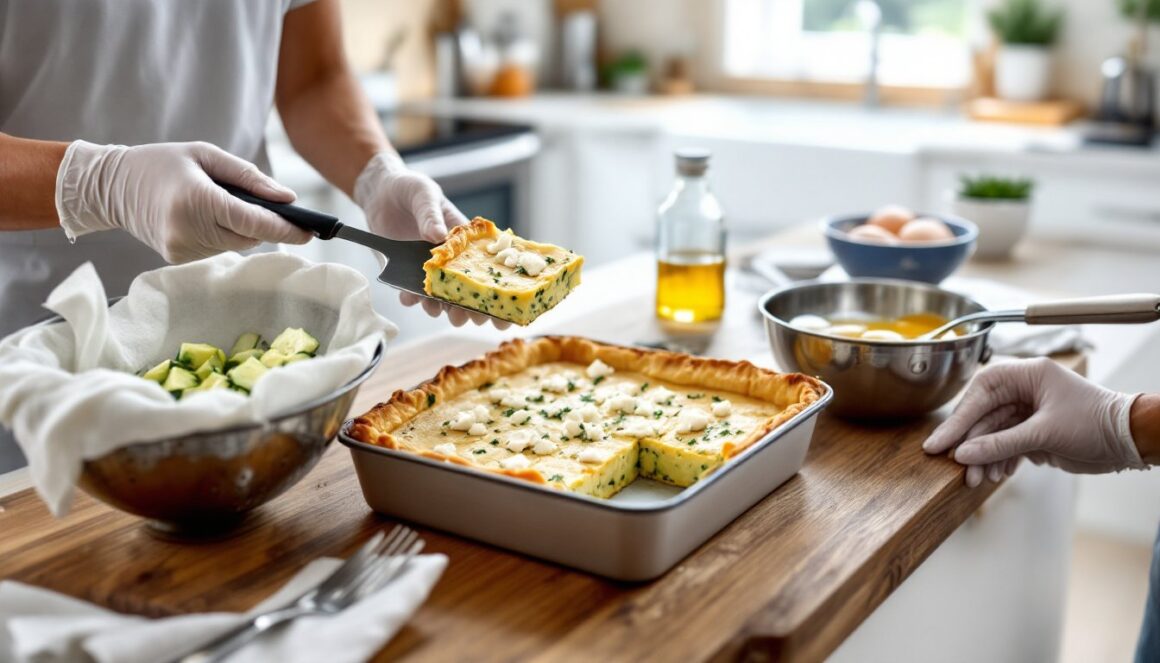
Crustless zucchini pie, kolokithopita or batzina, is a forgiving, savory bake that suits busy weeknights and casual gatherings. It’s essentially a batter of grated zucchini, eggs, flour, cheese, and herbs baked in a shallow pan so the edges crisp while the center stays tender. This recipe keeps things simple: no phyllo, minimal fuss, and clear swaps for dietary needs. The instructions below focus on good prep (draining the zucchini is nonnegotiable), reliable equipment, and a few tricks to get a golden, non‑soggy pie every time.
Key Takeaways
- Crustless zucchini pie (πιτα με κολοκυθακια χωρις φυλλο) makes an easy, savory dish perfect for busy weeknights without the fuss of phyllo dough.
- Draining the grated zucchini thoroughly is crucial to prevent sogginess and ensure a golden, crisp crust in the zucchini pie.
- Use eggs, flour, and cheese like feta to bind the batter and add flavor, with flexible ingredient swaps for dietary preferences.
- Bake the zucchini pie at 180–200°C until golden and set, then let it rest before slicing to firm up the structure.
- The recipe accommodates gluten-free, dairy-free, and vegan variations by substituting flours, dairy, and eggs, maintaining good texture with slight adjustments.
- Store leftover zucchini pie refrigerated for up to 5 days or freeze for 1–2 months, and reheat carefully to preserve crispness and flavor.
Ingredients, Quantities, And Helpful Swaps
For a standard 30×40 cm / 9×13 in pan, this ingredient list is a practical baseline.
- Zucchini: 1–1.5 kg (about 2–3 medium), coarsely grated. Excess moisture is the main enemy here.
- Eggs: 3–4 large. They set the batter and provide structure.
- Flour: 150–200 g (about 1–1½ cups) all‑purpose. For gluten‑free, use corn flour or a 1:1 GF baking mix.
- Milk or yogurt: 200–250 ml milk or 200 g Greek yogurt for a richer, tangy result.
- Feta: 150–250 g, crumbled. Feta brings salt and creaminess, reduce added salt accordingly.
- Olive oil: 60–100 ml in the batter, plus extra for greasing and drizzling.
- Herbs & aromatics: dill, mint, basil, or sliced green onions (use about 2–3 tbsp fresh herbs total).
- Salt & pepper: Season lightly: remember feta is salty.
Helpful swaps and notes:
- Cheese swaps: ricotta (milder, creamier), goat cheese (tangy), or a mix with grated Parmesan for nuttiness. Reduce salt if using a salty hard cheese.
- Dairy swaps: plant milk or plant yogurt work: use unsweetened varieties to avoid off flavors.
- Flour alternatives: Corn flour produces a slightly coarser crumb typical in some Greek variants: a GF mix keeps it chewy but may absorb more liquid, increase eggs or yogurt slightly if batter seems thin.
Practical measurement tip: weigh when possible. A cup of grated zucchini varies widely, so the 1–1.5 kg guideline is more reliable than cup measures.
Equipment, Prep Steps, And Time Breakdown
Tools and PPE:
- Grater (coarse side) or food processor grating disc.
- Colander and a clean towel or cheesecloth for squeezing excess moisture.
- Mixing bowls, whisk, spatula.
- Baking dish: about 30×40 cm / 9×13 in or a 9‑inch round.
- Oven thermometer (optional) to verify temperature.
Safety: Use goggles only for abrasive tasks: at minimum wear kitchen gloves when squeezing hot items, and be cautious with hot oil. No heavy trades PPE is needed, but keep hands and work surfaces clean.
Prep steps and time breakdown (approximate):
- Grate, salt, and drain zucchini: 20–60 minutes passive. This includes resting time for water release.
- Mixing and assembly: 10–15 minutes active.
- Baking: 40–60 minutes at 180–200°C / 350–390°F, depending on pan depth and oven accuracy.
Notes on prep:
- Squeezing the zucchini is the most time‑consuming but crucial step. Work in batches, squeeze until barely any liquid releases.
- If pressed for time, grate and salt the zucchini the night before and refrigerate in the colander covered with a towel: this increases water release and shortens final prep.
Oven considerations:
- Many home ovens run hot or cold. An oven thermometer is a cheap way to confirm true temperature. Aim for 180°C for a slower set and even color: use 200°C if a crisper top is desired, watching closely.
Step-By-Step Recipe: From Grating Zucchini To Oven-Ready Dish
Preparing The Zucchini Filling (Salt, Drain, And Flavor Build)
- Grate zucchini on the coarse side. If using a food processor, pulse briefly to avoid mush.
- Place grated zucchini in a colander, sprinkle with 1–1½ tsp kosher salt (adjust for feta saltiness), and toss. Let sit 20–60 minutes to draw out water.
- Gather a clean towel or cheesecloth and squeeze the zucchini in batches until very dry. Aim: no visible puddles when pressed. This prevents a soggy pie.
- In a mixing bowl whisk 3–4 eggs, 200–250 ml milk or 200 g Greek yogurt, and 60–100 ml olive oil until combined. Add black pepper, chopped herbs (2–3 tbsp), and a small pinch of nutmeg if desired.
- Stir in 150–200 g flour (and ½–1 tsp baking powder if a slightly puffier texture is wanted). Mix until a thick batter forms: it should coat the back of a spoon.
- Fold in the squeezed zucchini and 150–250 g crumbled feta until evenly incorporated. Taste and adjust seasoning, remember feta’s saltiness can dominate.
Tip: If batter feels too thin because the zucchini retained too much moisture, add 1–2 tbsp flour or another egg. Conversely, add a splash of milk if batter seems too stiff.
Baking, Checking Doneness, And Serving Suggestions
- Preheat oven to 180–200°C. Grease the pan with olive oil: heating a thin layer of oil in the pan briefly in the oven before adding batter creates crisper edges.
- Spread batter thinly across the pan, about 1 cm / ½ in thickness yields a crisp bite: thicker layers take longer to set and may be denser.
- Drizzle a little olive oil over the top and scatter extra feta or grated hard cheese if desired.
- Bake 40–60 minutes. Doneness cues: the top is golden brown, edges pull away slightly, and the center is set with no jiggle. A toothpick should come out clean or with a few crumbs, not wet batter.
- If the top browns too fast, tent with foil and continue baking until set.
- Let rest 10–20 minutes before slicing, resting firms the structure and improves sliceability.
Serving ideas: cut into squares and serve warm or at room temperature with a simple salad, lemony yogurt, or a dab of tzatziki. It’s also great picnic‑style and travels well.
Flavor Variations, Add-Ins, And Dietary Adjustments
Common and tasty add‑ins:
- Onions or leeks: sauté first for sweetness (about 1 small onion or 1 leek, finely sliced).
- Garlic: 1–2 cloves, minced, added to the batter or sautéed with onions.
- Peppers, tomatoes, mushrooms, or corn: lightly sauté to remove excess moisture before folding in.
- Herb mixes: dill + mint feels classically Greek: basil gives a milder Mediterranean note.
Cheese swaps and combinations:
- Combine feta with Parmesan or grated hard cheese (50:50) for a more savory top crust.
- For creamier texture, fold ricotta into the batter and reduce milk slightly.
Dietary adjustments:
- Gluten‑free: use corn flour or a GF baking mix. Expect a slightly different crumb, cook at the lower end of the temperature range and check early.
- Lower fat: reduce olive oil to 40–50 ml and use low‑fat yogurt: increase herbs and lemon zest for brightness.
- Dairy‑free / vegan: replace eggs with a commercial egg replacer or a chickpea flour batter (this changes texture noticeably). Use plant yogurt and vegan feta alternatives: bake until fully set and consider adding a touch of xanthan gum for structure.
Practical tradeoff note: many swaps change moisture balance. If switching to a drier flour or dairy‑free cheese, monitor batter thickness and be prepared to add an extra egg or tablespoon of oil to reach the right consistency.
Troubleshooting, Storage, And Reheating Tips
Troubleshooting common problems:
- Soggy or unset center: usually from insufficient draining of zucchini or too thick a layer. Solution: squeeze more water out and bake in a shallower layer: extend baking time and lower oven temp slightly to avoid burnt edges.
- Too salty: reduce added salt and use less salty cheese. If already baked and too salty, serve with plain yogurt or a lemony salad to balance.
- Overly browned top before set: tent with foil or place a piece of parchment over the top to slow browning and let the center continue to cook.
Storage:
- At room temperature: keep for 1–2 days in a covered container in a cool room.
- Refrigerated: store up to 5 days in an airtight container.
- Freezing: slices can be frozen for 1–2 months: thaw in the fridge before reheating.
Reheating recommendations:
- Oven (best for texture): cover loosely and reheat at 150–175°C / 300–350°F for 15–20 minutes until warmed through.
- Microwave (fast): 2–3 minutes per slice depending on power: expect a softer texture.
- Skillet: reheat in a nonstick pan over medium with a little olive oil to restore crisp edges.
Final troubleshooting tip: if baked pie feels very dense, next time reduce flour by 1–2 tbsp and use full‑fat yogurt or a splash more oil to lighten the crumb.
Safety reminder: let the pie cool enough to handle before slicing to avoid burns and to allow internal steam to redistribute.