
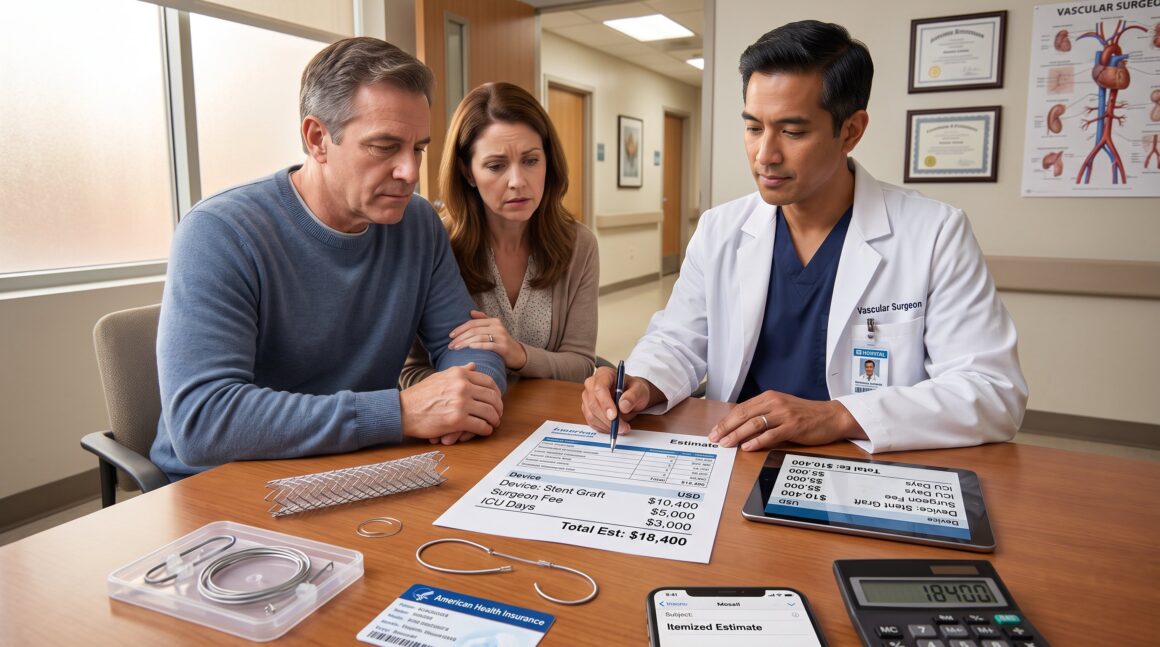
ποσο κοστιζει η εγχειρηση ανευρυσματος, In 2026, aneurysm surgery costs still vary widely. The smallest factors can change a bill by tens of thousands of dollars. This guide gives direct numbers and steps to estimate what a patient or family might pay for brain or aortic aneurysm repair. It highlights procedure types, major cost drivers, how location and insurance change bills, and practical ways to cut out‑of‑pocket expenses.
Key Takeaways
- Aneurysm surgery costs vary widely, typically ranging from $5,000 in low-cost centers to over $80,000 in complex U.S. cases depending on the procedure and location.
- Endovascular procedures generally shorten hospital stays but involve higher device costs, while open surgeries have longer recovery and different resource needs, impacting overall expenses.
- The largest cost drivers include procedure complexity, device prices (like stents and coils), hospital and ICU stays, and surgeon fees.
- Insurance coverage, hospital choice, and geographic location significantly affect out-of-pocket expenses, with in-network facilities and high-volume centers often offering better pricing and outcomes.
- To estimate costs accurately, patients should request an itemized hospital quote, confirm insurance benefits, and discuss device choices and surgical techniques with their care team.
- Choosing the lowest cost option is not always safest; evaluating surgeon experience, infection rates, and hospital outcomes is crucial for both health and financial considerations.
Understanding Aneurysm Surgery Types: Endovascular Vs Open
Fact first: endovascular procedures generally shorten hospital stay, while open surgery often needs longer recovery and different resources. Endovascular repair includes coiling, stents, and EVAR. Open repair includes clipping for brain aneurysms and open aortic repair. In the U.S., a typical brain aneurysm coiling case ranges about USD 25,000–70,000: clipping often ranges USD 30,000–80,000. For aortic aneurysms, endovascular device costs can be very high, a single stent graft may cost about USD 10,400.
Context and tradeoffs: endovascular methods can reduce ICU days and wound care needs but raise device and implant fees. Open surgery may have longer OR time, greater anesthesia usage, and more inpatient days. For ruptured aneurysms, costs spike: hospitalization averages USD 87,000–138,000+ in many U.S. studies. Patients should ask which technique the team recommends, why, and for an itemized estimate tied to that specific procedure.
Practical note: a patient who prefers a shorter stay must weigh the device cost vs recovery needs. Sometimes endovascular saves time but not money.
Typical Cost Breakdown And What Drives Price
Fact first: the largest cost drivers are procedure complexity, devices (stents, coils, grafts), hospital and ICU days, and surgeon fees. Typical U.S. totals for elective brain aneurysm care often fall in the USD 24,000–40,000 range for uncomplicated cases. For ruptured cases or complex repairs, totals commonly exceed USD 80,000.
Breakdown at a glance: hospital and facility charges, surgeon and anesthesia fees, imaging and diagnostics, and implant/device costs. Each component can shift the total dramatically. For example, device costs alone sometimes account for 40–60% of an endovascular repair bill.
Real example: one center reported median elective endovascular cost near USD 24,578 versus open approaches near USD 31,785–39,737, depending on technique. Another study found device cost for EVAR represented roughly half of the endovascular total. These numbers show why two hospitals quoting the “same” procedure can give very different estimates.
Hospital And Facility Charges
Fact first: hospital and post‑op care can add USD 20,000–100,000+ in high‑income countries. Facility charges include ICU days, ward nights, OR time, pharmacy, and consumables.
Hospital details: ICU daily rates, telemetry monitoring, and specialized nursing drive charges for brain and aortic repairs. Materials and disposables, catheters, balloons, grafts, appear as line items. In the U.S., studies show hospital materials and daily inpatient rates are the single largest portion of total cost.
Practical warning: ask for an itemized facility estimate. Patients who accept a package rate in countries like India often see predictable facility fees (for example, published package totals of USD 5,000–13,600). But package pricing may exclude complications. Always confirm what is covered: ICU time, revisions, and imaging after the operation.
Surgeon, Anesthesia, Imaging, And Device Costs
Fact first: surgeon fees commonly range USD 15,000–50,000+ in the U.S.: device prices can equal or exceed surgeon fees. Anesthesia and imaging add several thousand dollars more.
Surgeon and anesthesia: experienced cerebrovascular or vascular surgeons charge higher fees. Anesthesia is billed as part of the OR and can increase with procedure length. Imaging costs include CT, MRI, and diagnostic angiography before and after surgery and may add several thousand.
Devices: endovascular implants for intracranial or aortic work are expensive. Aortic stent grafts may cost around USD 10,400 each. For large intracranial aneurysms, multiple coils or specialized stents raise costs significantly. Patients should ask the team which specific devices are planned and get price estimates: device choice often explains the biggest bill differences between similar cases.
Insurance, Country, And Hospital Choice: How Location Affects Cost
Fact first: country and insurance status alter billed price and out‑of‑pocket cost more than any single device choice. In the U.S., total billed costs for brain aneurysm surgery commonly range USD 30,000–80,000+: in India, totals often fall between USD 5,000–13,600.
Location specifics: public health systems in Canada, the U.K., and Germany lower patient bills, though list prices still reflect high hospital cost. In Australia, totals can resemble U.S. levels for private care. Within countries, high‑volume specialty centers may charge more but often report better outcomes. For elective, stable cases, patients sometimes travel for lower prices and high quality, medical tourism to India is common for predictable package pricing.
Insurance effect: in‑network status, deductibles, and out‑of‑pocket maximums determine what the patient actually pays. A USD 50,000 bill can translate to USD 500 or USD 25,000 for the patient depending on coverage. Patients must call insurers for pre‑authorization and a cost estimate tied to their plan.
How To Estimate Your Out-Of-Pocket Expenses And Practical Ways To Reduce Costs
Fact first: accurate out‑of‑pocket estimates come from combining an itemized hospital quote with insurance benefit details. Steps to estimate: identify the exact procedure, request an itemized quote from the hospital, and get a benefits summary from the insurer showing deductible and coinsurance.
Concrete actions: ask the hospital for a package rate or bundled estimate for the specified procedure: request device names and their costs: confirm whether the hospital lists implant charges separately. Call the insurer and ask: is the hospital in‑network, what portion of prosthetics and devices do they cover, and how will a readmission or complication be handled?
Ways to reduce cost: choose in‑network facilities, use high‑volume centers that publish outcomes and pricing, ask about financial counseling, and explore payment plans or charity care. For elective cases, obtaining two written estimates and comparing device use can reduce surprises. Warning: cheapest option is not always safest, check surgeon experience, infection rates, and readmission statistics before choosing a lower cost center.
Conclusion
Fact first: aneurysm surgery costs range widely, from roughly USD 5,000 in some low‑cost centers to USD 80,000+ for complex U.S. cases. Patients should gather an itemized estimate tied to the planned technique, confirm insurance details, and weigh device choices against recovery needs.
Final insight: transparent conversations with the surgical team and insurer reduce surprises. An honest cost estimate, paired with outcome data for the proposed center, gives the clearest path to a safe procedure without unexpected financial shock.