
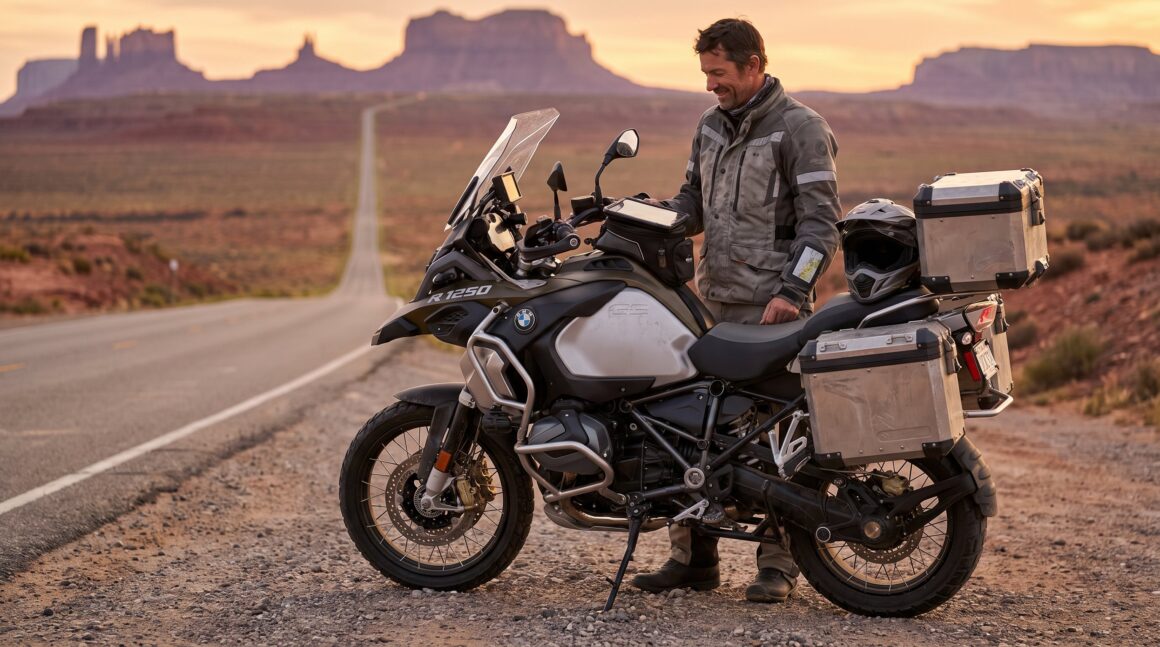
bmw gs 1200 adventure 2021 queries still appear when riders compare large-displacement adventure bikes. This guide explains why many searchers use that phrase, then maps the real 2021 BMW R 1250 GS Adventure’s strengths: long-range touring ability, heavy-duty off-road kit, and layered electronics. It sets clear expectations for ownership costs, common maintenance points, and the practical mods that turn a showroom GS into a ready expedition bike.
Key Takeaways
- The 2021 BMW R 1250 GS Adventure offers a powerful 1,254 cc engine with 136 hp and a 30L fuel tank, providing a practical long-range touring experience of approximately 393 miles per tank.
- This model focuses on modern safety and convenience features like Integral ABS Pro with cornering function, adaptive LED headlights, and customizable option packages for suspension, comfort, and ride dynamics.
- Designed for experienced riders, it balances stable on-road comfort with moderate off-road capabilities, though its heavier weight requires skill for technical trails and rough terrain.
- Routine maintenance is predictable but premium-priced, with long service intervals around 10,000 km and attention needed for electronics, shaft drive seals, and high-quality tires.
- Recommended upgrades include aluminum panniers, crash bars, skid plates, off-road tires, and adjustable seats or screens to enhance expedition readiness and rider comfort.
- Despite the higher cost, disciplined care and practical modifications make the 2021 GS Adventure a reliable choice for long-range touring and versatile adventures.
Quick Overview: Who The 2021 GS Adventure Is For And Key Highlights
Fact: The 2021 R 1250 GS Adventure targets experienced riders doing long-range touring and mixed-surface travel. Riders who type “bmw gs 1200 adventure 2021” usually want a large-tank, two-up capable machine that also goes off-road when needed.
The 2021 Adventure uses a 1,254 cc ShiftCam boxer engine making about 136 hp and 105 lb-ft of torque. It carries a 30 L fuel tank, lists a wet weight near 268 kg, and offers seat heights roughly 890–910 mm depending on the seat. That combination yields a practical range near 630 km (≈393 mi) on a tank and comfortable highway stability for two riders with luggage.
Key kit: spoked wheels, crash bars, skid plate, wide footpegs, and advanced rider aids (cornering ABS Pro, traction control, ride modes). The standard breadth of features suits expedition riders who want modern electronics plus hardware that survives gravel and hard-packed trails. For someone comparing older GS 1200 variants, the 1250 model improves low-end torque and electronics while keeping the Adventure’s real-world touring range.
What Changed For 2021: Updates, Trims, And Notable Options
Answer: The 2021 model added IMU-based Integral ABS Pro and updated lighting while leaving the ShiftCam engine largely intact.
Major changes for 2021 include Integral ABS Pro with cornering function, an adaptive LED headlight option, and new option packages labeled Dynamics, Touring, Comfort, and Light. These packages group electronic and hardware upgrades, examples: ESA electronic suspension and quickshifter in Dynamics: heated seat and cruise control in Touring. Cosmetic tweaks refreshed trims and helped dealers upsell moderate-cost bundles.
Pricing: base MSRP hovered around $20,345 USD before options. Many buyers found MSRP rises when adding luggage, adaptive suspension, and lighting packages, so a showroom build often approached the mid-to-high $20k range. For buyers comparing the phrase “bmw gs 1200 adventure 2021” to this model, the take-away is that 2021 focused on software-driven safety and lighting upgrades rather than a complete drivetrain overhaul.
Performance, Chassis, And Electronics: Engine, Power Delivery, And Handling
Straight answer: The 1254 cc ShiftCam boxer gives broad torque, smooth midrange, and forgiving power delivery ideal for loaded touring and technical trail exits.
Performance numbers claim about 136 hp at 7,750 rpm and 105 lb-ft at 6,250 rpm with a 0–100 km/h near five seconds and top speeds north of 200 km/h. Fuel consumption averages roughly 4.75 L/100 km, producing the long-range figures riders prize. The tubular steel frame with 19″ front and 17″ rear wheels, long-travel suspension, and spoked rims keep the bike stable on highway miles and composed on rough tracks.
Electronics: IMU-backed ABS Pro, multiple ride modes, traction control, hill-start, and optional ESA let riders tune behavior for pavement or dirt. The R1250’s ride feel builds on BMW’s GS lineage: earlier models like the R1200GS received praise for balance and torque delivery, a point captured in professional reviews that emphasize a Rolls‑Royce–like composure. For a deeper comparison of that lineage, see a contemporary review of the earlier R1200GS riding feel in a major motorcycle feature linked below.
R1200GS riding feel supports how BMW tuned balance and torque in prior boxer models, a trait that continued into the 1250 with ShiftCam refinements.
Riding Capability And Comfort: On‑Road Touring Vs. Off‑Road Adventure
Key point: The 2021 Adventure excels at long on-road miles and moderate off-road routes: it requires skill and respect in deep off-road conditions because of its mass.
On-road touring: ergonomic layout, tall windscreen, broad seat, and stable chassis reduce rider fatigue. Two-up comfort remains a priority, passengers get a wide pillion and grab points. Cruise control, heated grips, and a large fuel capacity mean long days between stops. In practice, a pair riding continental highways with luggage can easily average 5–7 hours of comfortable riding per day.
Off-road use: the bike’s long-travel suspension, standing-friendly ergonomics, and enduro-oriented electronics make it competent on gravel, hard-packed trails, and light single-track. But, the near-270 kg wet weight and the big fuel tank make tight technical rock gardens or deep sand risky for inexperienced riders. Practical tip: fit more aggressive off-road tires and swap to a lower seat or use a skid plate upgrade for confidence on rough tracks.
Riders who search “bmw gs 1200 adventure 2021” often want this balance explained: the GS Adventure is a true road-biased expedition machine that also copes with dirt, not a lightweight dirt bike.
Practical Ownership, Maintenance, And Cost Of Ownership
Direct fact: ownership of a 2021 R 1250 GS Adventure is premium-priced but predictable when maintained on schedule.
MSRP started around $20,345 USD, and well-optioned builds commonly reached the mid-$20k range. Used 2021 models often sell around $18,050 USD depending on miles and equipment: one example market average showed bikes with roughly 31,000 km at that price. Warranty coverage typically mirrors BMW’s standard packages, expect roughly a three-year window though buyers should confirm dealer specifics.
Running costs: premium fuel, high-quality tires, and dealer servicing raise annual spend. Service intervals are relatively long, oil and filter at about every 10,000 km, so routine spend concentrates at multi-thousand-kilometer checkpoints rather than monthly work. The shaft drive reduces chain maintenance but needs periodic inspection for seals and U-joint wear on high-mileage bikes.
A practical warning: electronics complexity can mean occasional sensor or electrical work, and replacement tires for a 19″/17″ mixed-use setup cost more than basic road tires. Budget roughly $1,000–$1,800 per year for combined fuel, wear items, and periodic dealer service on active touring use.
Maintenance Schedule And Common Issues To Watch
Answer: follow scheduled oil changes, inspect the valve and final drive at major intervals, and monitor electronics and seal wear.
Routine: oil and filter roughly every 10,000 km (6,000 mi) or annually. Valve checks and air filter service fall at larger intervals, commonly 20,000–30,000 km. Brake fluid replacement is typical every two years. On shaft-drive units, inspect driveshaft seals and U-joints periodically: owners report occasional rear seal wear after high mileage.
Common issues: occasional sensor or switch faults arise on feature-rich models: heated components and TPMS sensors can need attention. Corrosion on exposed aluminum luggage mounts or fasteners occurs in coastal climates, regular lubrication and stainless replacements reduce that risk. Honest lesson: budget for a few dealer diagnostic visits in early years: modern BMWs hide coolant, electronics, and sensor tasks behind dealer-level diagnostics.
Recommended Accessories And Practical Mods For Touring And Adventure
Fact: add luggage, protection, and comfort items to turn a stock Adventure into a dependable expedition machine.
Recommended hardware: aluminum panniers and a top case for secure luggage: a quality crash bar and an upgraded skid plate for underbody protection: and a navigation or phone mount positioned for easy glance. For comfort: a low or comfort seat variation and an adjustable screen reduce back and neck fatigue on long days. For real off-road use: switch to off-road-oriented tires, fit wider aggressive footpegs, and add handguards.
Electrical and small mods: auxiliary LED lights improve night visibility in fog and rain: a quickshifter and ESA tuning refine throttle response on varied terrain. Practical numbers: good aluminum pannier sets range $1,000–$2,000: a full crash-bar and skid-plate combo often runs $500–$900. Honest warning: heavy luggage raises the center of gravity, pack low and practice handling before heavy off-road outings.
Conclusion
Final insight: riders searching “bmw gs 1200 adventure 2021” usually want a capable, long-range machine: the 2021 BMW R 1250 GS Adventure delivers that with improved electronics, strong low-end torque, and expedition-ready hardware. It costs more to buy and run than simpler bikes, but disciplined maintenance and a few practical mods reward owners with years of reliable touring and capable off-road performance.