πωσ μπορω να δω αν ειμαι ασφαλισμενοσ, This question appears in search bars and inboxes across Greece. The fastest way to confirm insurance status is to check online via gov.gr or EFKA’s systems, then back up results with employer verification. This guide explains clear, practical methods that a worker, pensioner, or freelancer can use in 2026. It focuses on precise steps, required IDs (AMKA, AFM), common pitfalls, and exact next steps when records don’t match. The reader will leave knowing which site to visit, what to click, and who to call.
Key Takeaways
- To confirm your insurance status in Greece quickly, use online portals like gov.gr, EFKA’s ATLAS, or the myEFKA app with your AMKA and AFM numbers.
- Checking your insurance coverage regularly prevents denied medical claims and ensures uninterrupted access to health and social benefits.
- If online insurance records show discrepancies, verify contribution submissions with your employer or contact EFKA for corrections.
- Keep essential documents like your AMKA, AFM, ID, and recent payslips handy to resolve coverage issues efficiently.
- Correcting minor data errors early, such as AMKA or AFM typos, avoids long-term benefit losses and bureaucratic delays.
- Regularly saving and comparing online insurance status reports with employer records safeguards your insurance continuity and benefits.
Why It Matters To Confirm Your Insurance Status
Fact first: confirming insurance status ensures access to medical care and legal proof for work or benefits. When someone in Greece finds out their insurance is inactive, they can lose immediate access to public hospital services, prescriptions, and maternity or disability benefits.
Why that matters now: a missed employer contribution or a mismatch in AMKA can block benefits for weeks. For example, a hospital visit for appendicitis can lead to unexpected bills if coverage proves inactive. A contract worker discovered an 8-week gap in contributions when applying for a surgical procedure, the hospital required direct payment until the gap was resolved.
Concrete benefits of checking: it prevents denied claims, speeds bureaucratic tasks, and identifies unpaid contributions early. It also helps when applying for permits, loans, or unemployment benefits because many agencies require proof of continuous insurance.
Warning: small data errors (typos in AMKA or AFM) are common. They often look like a coverage gap but are simple to fix with documentation. Confirming status early avoids last-minute crises and financial surprises.
Quick Online Methods: Check Your Status On EFKA And Other Portals
Answer first: the fastest checks are on gov.gr, the ATLAS portal, and the myEFKA services. These portals show insurance capacity, contribution records, and employer entries.
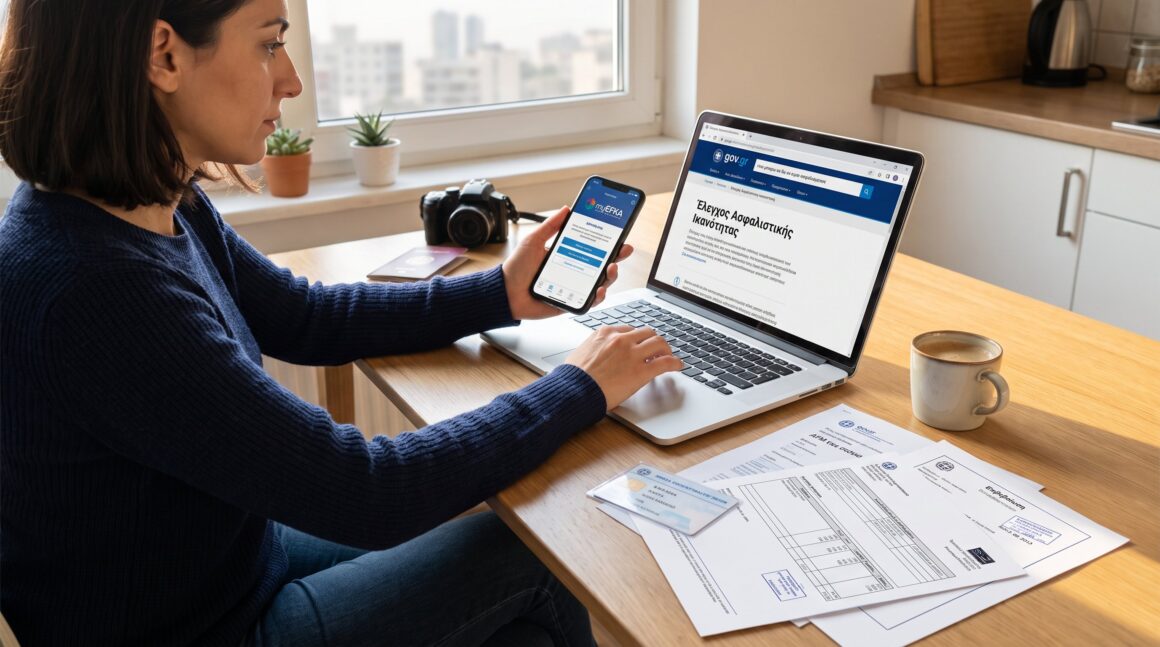
Step-by-step for gov.gr: log in with trusted eID or TaxisNet credentials. Search the service named “Check Insurance Capacity” (Έλεγχος Ασφαλιστικής Ικανότητας). The result shows current capacity and the organization reporting coverage. If the system shows coverage, note the reporting employer and last payment date.
Step-by-step for ATLAS: access ATLAS via the EFKA or gov.gr links. ATLAS aggregates records from multiple insurance bodies. Enter AMKA and AFM when prompted. The portal returns contributions and insurance events across decades, not just current months.
Using myEFKA app: download the official myEFKA app on Android or iOS. Log in with AMKA and a secure code. The app displays recent contribution months and active insurance funds. It also offers messaging to local EFKA offices.
Practical tip: save screenshots and download PDF confirmations when available. These documents serve as proof for employers, hospitals, and state services. If an online check gives inconsistent results, repeat the check after 24–48 hours, system updates and queued employer submissions sometimes create temporary mismatches.
Verify Through Your Employer, Insurance Company, Or Mobile App
Direct answer: if online records seem wrong, verify with the employer or insurer. Employers can confirm monthly contribution submissions and correct errors faster than portals can.
What to ask the employer: request a recent pay slip and a contributions summary for the last 6–12 months. A responsible payroll officer will provide the insurance fund name, employer registration number, and the exact months reported. If an employee finds a missing month, the employer can file a retroactive contribution within set deadlines.
When to contact the insurer: contact EFKA or the specific insurance body when the employer claims they submitted contributions but the portal shows no record. The insurer can search with AMKA and employer registration and reveal processing delays or rejected entries.
Mobile app checks: use myEFKA for personal verification: use employer payroll portals for employer-submitted receipts. The myEFKA app also allows the user to send a verified request to EFKA offices. In practice, a user who contacted their employer and then checked myEFKA often saw the correction appear within 72 hours.
Human detail and lesson: one freelancer assumed an employer paid contributions and later learned the employer filed under a wrong AFM. The freelancer lost two months of benefits until both sides coordinated with EFKA. Always double-check and keep documents.
What Documents, Common Problems, And Next Steps If You Are Not Covered
Immediate fact: AMKA and AFM are the two essential identifiers to prove insurance in Greece. Identity card or passport and a recent payslip or employer confirmation are next in importance.
Required documents: AMKA number, AFM (tax number), national ID or passport, latest payslips (last 3 months), and any employer letters. For pensioners, the social security number and pension slips matter. For freelancers, tax filings and invoices often supplement the record.
Common problems and precise fixes:
- Typo or mismatched AMKA/AFM: correct with a visit to the local EFKA office and present ID. Expect a processing window of 3–10 days.
- Unpaid employer contributions: request an employer statement and file a complaint at EFKA if the employer disputes payment. EFKA may open an inquiry: outcomes typically take 1–3 months.
- System lag: when employers submit late or batches are queued, records update after 24–72 hours. Wait before escalating.
If not covered: first, get written confirmation from the employer about submission dates. Second, visit EFKA online or the local office to file a correction request with AMKA and payslips. Third, if the employer refuses, file a formal complaint at EFKA and consider contacting the Labour Inspectorate (ΣΕΠΕ).
Practical numbers: a typical correction for a single-month omission resolves in 2–6 weeks: contested employer non-payment cases can take 2–6 months. Keep all receipts and screenshots to speed adjudication.
Conclusion
Core insight: use gov.gr or ATLAS first, then verify with EFKA, your employer, or the myEFKA app if anything seems off. Early checks prevent lost benefits and surprise bills.
Actionable next steps: check insurance capacity on gov.gr today, save a PDF confirmation, and compare it to recent payslips. If discrepancies appear, request employer documentation and file an EFKA correction immediately. Keeping AMKA and AFM accurate is the simplest, most effective safeguard.