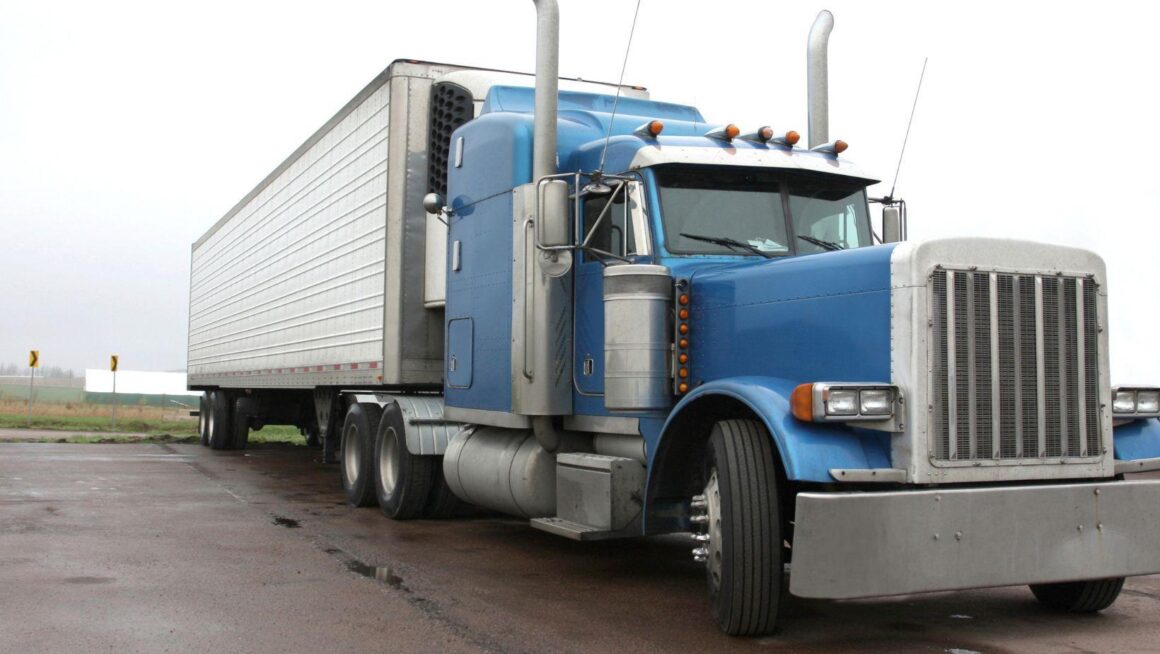
A tractor-trailer is supposed to move as one long unit. The tractor leads, the trailer follows, and both stay lined up as the truck moves down the highway. But once the trailer starts swinging sideways, that familiar shape can change frighteningly fast.
Instead of following neatly behind, the trailer begins rotating toward the tractor. The angle between the two gets sharper while the entire vehicle may still be moving forward. For nearby drivers, a truck that was occupying one lane can suddenly become a massive obstacle stretching across several.
That folding motion is known as a jackknife, and once it begins, the driver may have very little time to regain control. What started as a braking or traction problem can quickly become a danger to everyone nearby.
The Trailer Starts Moving Its Own Way
The tractor and trailer are connected, but they’re still two large sections that can behave differently when traction is lost. Normally, the tractor pulls the trailer forward in a relatively straight line. Trouble starts when the tires can no longer maintain the grip needed to keep everything aligned.
Imagine the tractor slowing while the heavy trailer behind it still has momentum carrying it forward. If the tractor begins sliding or certain wheels lose traction, the trailer can start pushing at an angle instead of continuing directly behind the cab.
As that angle increases, the truck begins taking on the familiar folded shape associated with this type of crash. The driver may try to correct the movement, but there’s a point where momentum and lost traction make recovery extremely difficult. A vehicle that’s normally long and straight can suddenly become wide and unpredictable.
One Bad Moment Can Start the Swing
Hard braking is one possible trigger, especially when a driver needs to react suddenly and the truck loses traction during the maneuver. Excessive speed can make the situation harder because there’s less room to slow gradually or make a smooth correction when something unexpected appears ahead.
Slippery pavement can reduce the grip available to the tires. Rain, ice, snow, or other slick conditions may make abrupt braking or steering more difficult to control. Sudden steering itself can become a problem if the tractor changes direction faster than the trailer can safely follow.
Cargo and equipment can matter too. Poorly distributed or shifting weight may affect stability, while problems involving tires or braking systems can influence how the truck responds. Often, the important question isn’t simply what happened at the final moment. It’s whether several conditions had already made the truck harder to control.
Suddenly the Trailer Is Everywhere
A tractor-trailer already takes up considerable space when everything is working normally. Once the trailer swings sideways, the amount of roadway it occupies can increase dramatically. Drivers who had plenty of room moments earlier may suddenly find a large trailer stretching across their lane.
The movement can also be difficult to predict from a nearby car. Someone behind the truck may see the trailer begin rotating but have no idea where it will stop. A vehicle traveling alongside it can have even fewer options if traffic or a barrier blocks the escape route.
Then comes the risk of secondary crashes. Drivers may brake hard or swerve to avoid the truck, creating new collisions even if the trailer never hits them directly. At highway speeds, traffic behind the initial problem has only seconds to recognize what’s happening, slow down, and find somewhere safe to go.
The Cause May Be Hidden in the Details
After the truck stops moving, investigators can begin working backward. The braking system may be examined to determine whether it was functioning properly. Tires can provide information about condition and traction, while roadway marks may help show how the tractor and trailer moved before coming to rest.
Cargo deserves attention as well. What the trailer was carrying, how much it weighed, and how that weight was distributed or secured may help explain the truck’s behavior. Electronic vehicle information can potentially add details about speed, braking, and other actions before the crash.
Weather and road conditions provide another part of the picture. Driver actions, maintenance records, inspection information, photographs, video, and witness accounts may all contribute too. A folded truck shows how the crash ended. Figuring out why it folded requires looking at what happened before the trailer ever started swinging.
Conclusion
A trailer normally spends the entire trip quietly following the tractor. That’s what makes the change so dramatic when alignment disappears. Within moments, the trailer can go from staying safely behind the cab to moving sideways across lanes filled with other vehicles.
The trigger can involve braking, speed, slippery pavement, steering, cargo, equipment, or a combination of factors. Once traction and alignment are lost, the trailer’s momentum can make the truck increasingly difficult to control, while nearby motorists have very little time to respond.
Understanding those mechanics helps explain why these crashes can become so dangerous so quickly. The trailer isn’t simply cargo space attached to the back of a truck. It’s a large, heavy moving section of the vehicle, and when it stops following the tractor’s path, it can suddenly become one of the biggest hazards on the highway.