
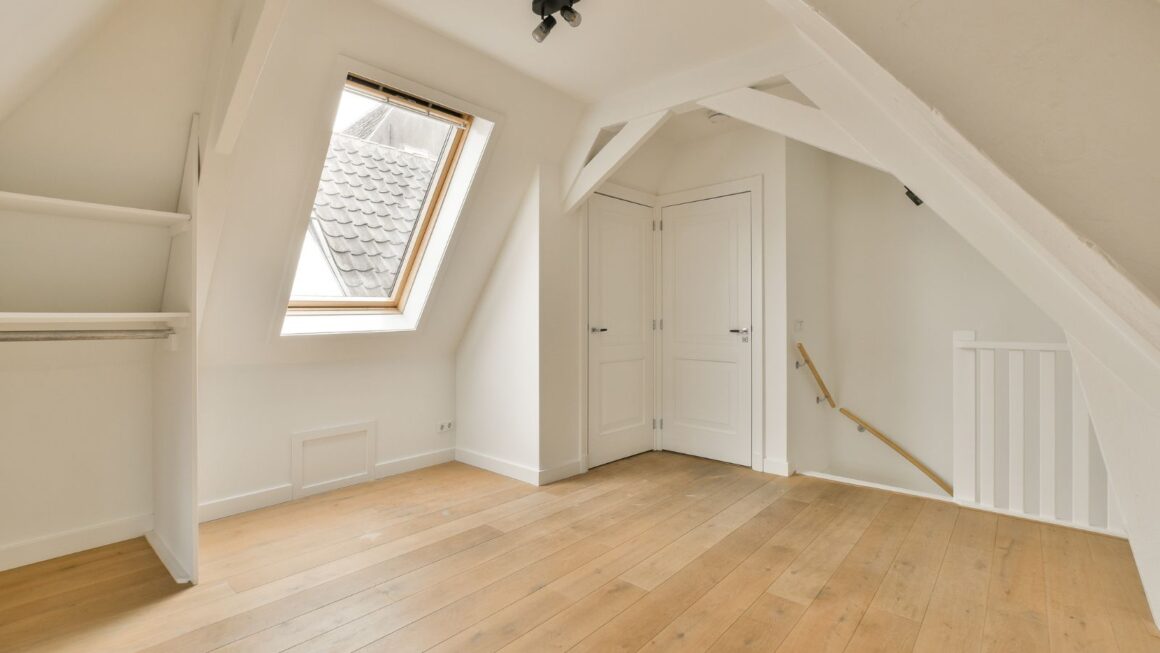
For commercial landlords and property investors, value creation is no longer limited to location and rent reviews. As costs rise and competition increases, many are looking inward — at the buildings they already own — to identify underused space that can be transformed into income-generating assets.
One area that is often overlooked is roof and loft space. While loft conversions are typically associated with residential property, they can play a meaningful role in improving the performance and value of certain commercial and mixed-use buildings when approached strategically.
Loft Space as an Untapped Asset
Many commercial properties, particularly older buildings and mixed-use sites, contain roof or attic space that serves little practical purpose. These areas may be used for basic storage or left unused altogether, despite representing valuable square footage.
For landlords, this creates an opportunity. Converting underutilised loft space can increase lettable area, diversify income streams and strengthen the overall asset profile without the need to acquire additional property.
In value terms, this approach focuses on optimisation rather than expansion — extracting more from existing assets rather than taking on new acquisition risk.
Where Loft Conversions Make Commercial Sense
Not every commercial property is suitable for a loft conversion, but certain asset types lend themselves well to this strategy. Mixed-use buildings, small office blocks, and properties with residential units above commercial premises are common examples.
Potential uses for converted loft space may include:
- Additional residential units or studios
- Office or flexible workspace
- Secure storage or ancillary tenant facilities
The most successful projects align the conversion with local demand and planning context rather than treating the space as a generic add-on.
Cost vs Value: A Commercial Perspective
From an investment standpoint, the key question is not cost alone, but return. Loft conversions represent capital expenditure, and landlords must assess whether the uplift in rental income or capital value justifies the investment.
Factors that influence this calculation include structural suitability, access requirements, fire safety upgrades and compliance costs. Understanding the process in detail is essential before committing capital, which is why resources such as a loft conversion guide can be useful when assessing feasibility and scope at an early stage.
When executed correctly, conversions can offer attractive returns relative to other forms of refurbishment, particularly where new lettable space is created.
Planning, Compliance and Risk Management
Planning and regulatory compliance play a significant role in determining the viability of any loft conversion project. Commercial landlords must consider planning permission, building regulations, fire safety requirements and, where relevant, party wall agreements.
Failure to address these elements early can result in delays, cost overruns or, in some cases, the inability to proceed at all. A structured feasibility phase helps mitigate these risks and ensures that projects align with both regulatory expectations and commercial objectives.
From a risk management perspective, clarity upfront is often more valuable than speed.
Impact on Asset Value and Exit Strategy
Loft conversions can influence not only rental income but also overall asset valuation. Additional floor space, improved layout efficiency and enhanced usability can all contribute to stronger valuations and wider buyer appeal.
For landlords considering an eventual sale or refinance, demonstrable improvements that increase net income and reduce vacancy risk are particularly attractive. Converted space that is well integrated into the building’s layout is more likely to be viewed as core value rather than a compromise.
In this context, conversions support both income generation and long-term exit flexibility.
Aligning Conversions with Long-Term Strategy
The most effective commercial loft conversions are those aligned with a broader asset strategy. Rather than reacting to short-term opportunities, landlords who plan conversions as part of a long-term vision tend to achieve more consistent outcomes.
This includes considering how the space will be used over time, how it affects operating costs, and how it contributes to tenant satisfaction and retention.
When treated strategically, loft conversions move beyond being a construction project and become a tool for long-term value creation.
Turning Space Into Performance
In an environment where acquisition costs remain high and margins are under pressure, commercial landlords are increasingly focused on making smarter use of existing assets. Loft conversions offer a practical way to unlock hidden value, provided they are approached with clear financial and operational intent.
For landlords willing to assess their properties through a strategic lens, unused roof space may represent more than dead space. It may be an opportunity to strengthen performance, improve resilience and maximise long-term property value.

