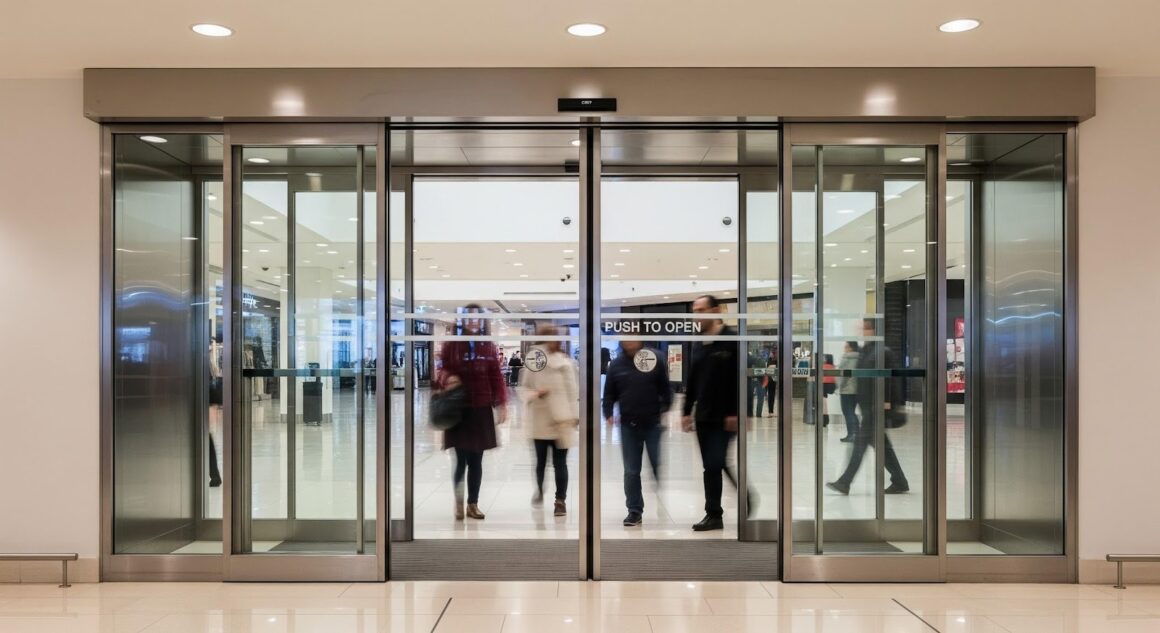
Walkways into your business do more than allow people inside. They communicate values, influence customer experience, and dictate operational flow before a single word is spoken. From the quiet confidence of a heavy timber door to the seamless motion of an automatic entrance, each type delivers a unique message about your brand and its priorities. Selecting the correct style is a functional, aesthetic, and strategic decision that impacts efficiency, accessibility, and the crucial first impression that greets every visitor or employee.
The Modern Flow of Automatic Entrances
Contemporary business design strongly favours movement, accessibility, and a sense of openness. Manually operated doors, while functional, create points of friction, literal and psychological, in this flow. They require physical effort, can cause congestion, and present barriers for individuals with mobility challenges or full hands. Engineered commercial sliding doors address these issues directly. Their automated operation, activated by sensor or push pad, facilitates a smooth, uninterrupted transition between exterior and interior spaces, promoting efficiency and projecting a modern, inclusive, and considerate brand image.
Creating a Seamless Threshold Experience
The customer journey begins on the pavement. An entrance that requires a person to struggle, wait, or awkwardly manoeuvre creates a negative initial interaction. Automatic sliding systems eliminate this hurdle entirely. Approaching the building triggers a silent, graceful opening, welcoming people into your space without physical effort or pause. This effortless transition feels premium and professional, setting a positive, forward-thinking tone for the entire visit and subtly signaling that your business values convenience and ease.
Operational Efficiency and Internal Logistics
Beyond the customer entrance, automated doors are critical tools for internal operations, particularly in logistics, retail, and healthcare. In warehousing, high-speed large sliding doors facilitate the rapid, hands-free movement of goods and equipment, improving workflow and safety. In supermarkets or hospitals, they maintain critical separation between environments, such as chilled storage and retail floors or sterile and public zones, while allowing unimpeded cart and trolley traffic. This supports stringent hygiene and temperature control protocols.
The Critical Role of Accessibility
Providing dignified, equal access is both a legal requirement and a moral imperative in many regions. Automatic doors are a cornerstone of an accessible built environment. They empower independence for wheelchair users, parents with prams, delivery personnel with trolleys, and anyone with temporary or permanent mobility restrictions. Installing them demonstrates a genuine commitment to inclusivity, ensuring your premises are welcoming and usable for the entire community you serve.
Energy Conservation and Environmental Control
Open doorways are significant sources of energy loss. Traditional doors left ajar allow expensive heated or cooled air to escape. Modern automatic sliding systems are designed for speed and precision; they open only when needed and close quickly behind traffic. Many integrate with building management systems, and some models feature effective perimeter seals. This intelligent operation dramatically reduces HVAC energy consumption and costs while maintaining a consistent, comfortable internal climate.
Durability and Demanding Environments
Commercial entrances face relentless use and environmental stress. Quality automatic sliding doors are engineered for this reality. Their systems use robust motors, heavy-duty tracks, and impact-resistant glass or panels designed to withstand constant cycling, high traffic volumes, and exposure to weather. For specialised settings like industrial plants or refrigeration areas, doors can be specified with enhanced seals and materials to perform reliably in extreme temperatures or corrosive conditions.
Architectural Integration and Aesthetic Impact
Far from being purely utilitarian, today’s automatic doors contribute significantly to architectural design. They can feature slim sightlines, frameless glass, or custom finishes that complement a building’s façade. This allows businesses to combine exceptional functionality with a sleek, modern aesthetic. The entrance becomes a transparent, inviting feature that enhances natural light penetration and visual connectivity between inside and out, rather than a solid, imposing barrier.
An Investment in Experience and Efficiency
Choosing an automatic sliding door system is an investment that pays dividends across multiple areas of your business. It elevates the customer experience from the first second, streamlines internal logistics, ensures compliance with accessibility standards, reduces operational energy costs, and projects a contemporary, professional image. In a competitive landscape, the doorway is no longer just an opening, it’s a dynamic interface between your business and the world. Optimising this interface is a clear signal that you are focused on progress, people, and performance.