
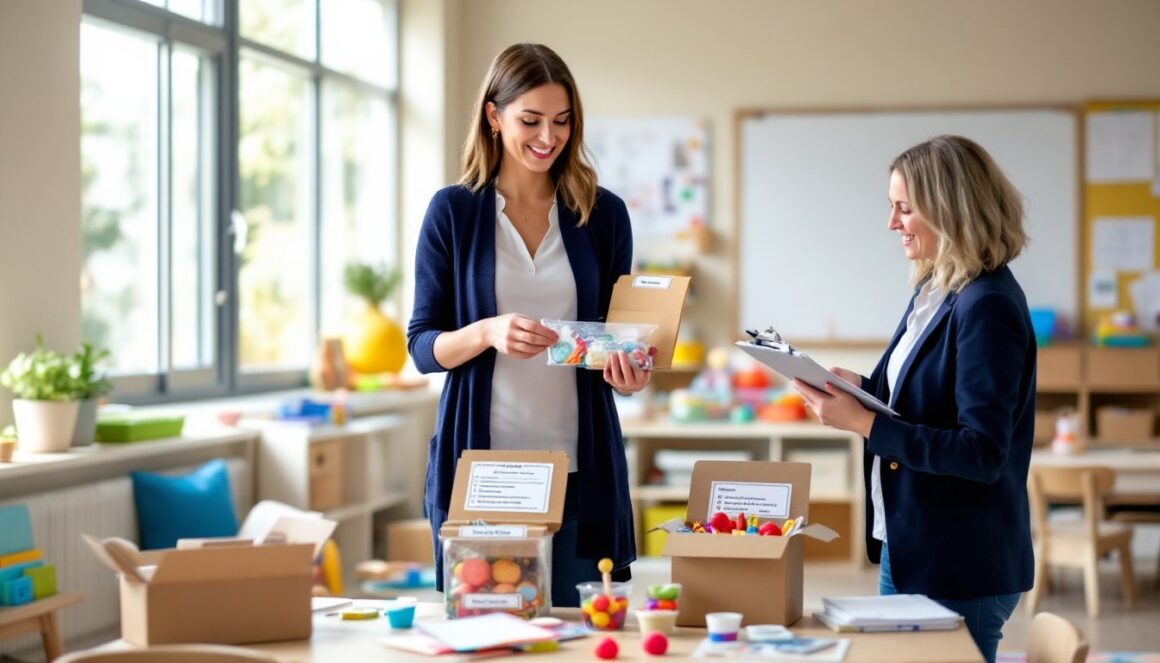
When organizing δωράκια για γενέθλια στο νηπιαγωγείο (birthday favors for kindergarten), the guiding rule is simple: keep favors safe, small, and classroom-friendly. Teachers juggle schedules, allergies, and clean-up, so favors that are quick to prep, non-messy, and quietly educational make everyone’s life easier. This guide lays out why those three priorities matter, offers 12 low-cost ideas with practical prep notes, and shows how to personalize, pack, and distribute favors while staying mindful of budgets and dietary rules.
Key Takeaways
- When selecting δωράκια για γενέθλια στο νηπιαγωγείο, prioritize safety, simplicity, and educational value to support classroom routines and minimize supervision.
- Choose favors that are non-food or allergy-friendly, avoid small parts under 1.25 inches, and always confirm school allergy policies with the teacher before bringing items.
- Practical favors like bubbles, sticker sets, mini coloring books, and small puzzles enhance learning while being easy to distribute and clean up.
- Personalize favors with name labels, use transparent packaging for easy inspection, and assemble using batch methods to save time and reduce errors.
- Mixing one small toy with a paper-based item helps keep costs low, especially when buying in bulk or creating DIY items.
- Coordinate with teachers on timing, distribution preferences, and any special supervision instructions to ensure a smooth, stress-free birthday celebration.
Why Simple, Safe, And Educational Favors Work Best In Kindergarten
Kindergarten classrooms run on routines: favors that disrupt that flow create stress for teachers and short attention bursts for kids. Simple items reduce supervision needs and the chance of small parts becoming a choking hazard. For that reason, favor choices should prioritize age-appropriate size and immediately playable formats.
Safety first: avoid toys with parts smaller than 1.25 inches in diameter (a common small-part test), and check federal guidelines about choking hazards. Teachers will appreciate non-food options unless the school explicitly allows snacks, many classrooms have strict allergy policies (peanut-free, dairy restrictions, etc.). Always verify with the teacher before bringing any edible favor.
Educational good sense: favors that support fine motor skills, color and shape recognition, and imaginative play extend learning beyond the classroom circle. Items like sticker sets, mini coloring books, and shape-and-color cards are low-cost and reinforce classroom lessons without adding clutter. These items also fit neatly into a teacher’s storage system and can be handed out without creating a craft session.
Practicality matters: favors that are lightweight, individually packaged, and stackable save time during distribution. Transparent bags or small envelopes allow teachers to verify contents quickly and check for allergens at a glance. Finally, keep cleanup in mind, favors that won’t leave glitter, crumbs, or paint on desks are a big win.
PPE & supervision note: parents should include a brief note if a favor requires adult help (e.g., cookie-decorating kits). Teachers may ask that such items be saved for home. If any homemade modeling dough is provided, note ingredients clearly and suggest washing hands after play.
12 Kid‑Friendly, Low‑Cost Favor Ideas With Quick Prep Notes
Below are 12 practical favor ideas with prep, sizing, and classroom notes so a parent or teacher can assemble them quickly.
- Bubbles
- Prep: Buy travel-size 2–4 oz bottles or small vials: tie a name tag if desired.
- Notes: No assembly, non-food, good outdoors. Ensure wand fits bottle to avoid leaks.
- Sticker Set
- Prep: Use 2–3 themed sheets per child and place in small envelopes (4″ x 6″).
- Notes: Look for large stickers for easy peeling: avoid metallic foils if the class surfaces are delicate.
- Mini Coloring Book + Crayons
- Prep: Fold and staple 8–12 page booklets (paper 8.5″ x 11″ folded), add a 4–6 count crayon pack.
- Notes: Teachers can use these during quiet time. Use non-toxic wax crayons (labeled) instead of colored pencils.
- Crayon Bundle
- Prep: Group 4–6 chunky crayons, wrap with a ribbon or paper sleeve.
- Notes: Chunky crayons (about 0.6″ diameter) suit small hands.
- Small Puzzle
- Prep: Choose puzzles with large pieces (2″–3″ minimum). Wrap in a small box or resealable bag.
- Notes: Durable cardboard puzzles are best: stay away from tiny magnetic pieces.
- Shape-and-Color Cards
- Prep: Print sets (4″ x 6″ cards), laminate for durability, bundle 6–8 per child.
- Notes: Great for matching games and vocabulary practice.
- Modeling Dough
- Prep: Use small store tubs (about 2 oz) or make homemade batches and portion into single-serve containers.
- Notes: Label ingredients and suggest handwashing. Avoid glitter in dough.
- Mini Picture Book
- Prep: Look for board books or slim paperbacks designed for ages 3–6.
- Notes: Lightweight, classroom-friendly, and perfect for a reading corner.
- Finger-Paint/Activity Sheet Kit
- Prep: Add one simple worksheet, a small paint dot card (washable tempera samples), and a disposable brush or sponge.
- Notes: Use only washable paints and make a note that painting is best supervised at home.
- Single‑Serve Fruit Cup (food option)
- Prep: Pre-packaged fruit cups with sealed lids: check teacher approval first.
- Notes: Verify ingredients and allergen labeling. Consider lactose- or nut-free options.
- Cookie‑Decorating Kit (with permission)
- Prep: Include one pre-baked cookie, a sealed packet of icing, and a small bag of sprinkles.
- Notes: Only with teacher OK and clear allergen labels. Recommend parent supervision.
- Water Bottle or Art Supply Set
- Prep: Small 12–16 oz reusable bottles or a compact art set (marker, eraser, small notebook).
- Notes: Practical, reusable, and a long-lasting reminder of the celebration.
Cost tips: Buying in bulk (packs of 24–36) typically lowers per-piece cost. Mix one toy with a paper item to keep prices down while giving variety.
How To Personalize, Pack, And Distribute Favors (Materials, Allergies, Budget Tips)
Personalizing favors makes each child feel special without adding significant time or cost. A simple label with the child’s name and a short message goes a long way.
Materials and labeling
- Use transparent 4″ x 6″ bags or small kraft gift bags (4″ x 3″) for easy inspection. Labels: print adhesive name stickers on standard Avery 2″ x 4″ sheets or write names on pre-cut tags.
- For durability, laminate name cards or use a clear packing tape strip across the label to prevent smudging.
Allergy and school policy checklist
- Confirm classroom rules: peanut-free, latex-free, or other restrictions. Always ask the teacher.
- Avoid loose food items unless packaged with full ingredient lists and expiration dates.
- For homemade items (dough, baked goods), supply an ingredients card and recommend teacher approval.
Packing workflow (fast assembly line)
- Set up a table with stations: labels, main item, filler/paper item, final seal. Use trays to keep sets organized.
- Assemble in batches of 6–8 to reduce repetitive motion and mistakes.
- Have a double-check station where someone verifies names and allergy notes before sealing.
Budget strategies
- Mix one small toy (like bubbles) with one paper-based item (coloring page or sticker) to keep per-child cost low.
- Buy bulk 24–48 packs of crayons, stickers, and mini books from wholesale retailers: compare per-piece prices.
- DIY where sensible: make a simple 8-page coloring booklet using free clip art and fold-staple it, ink and paper costs are low when printed double-sided.
Teacher coordination and timing
- Share a quick email or note with the teacher describing the favors and asking for any restrictions. Include a sample image if helpful.
- Plan to bring favors to school the morning of the celebration or the previous day in clearly labeled boxes. Ask whether the teacher prefers distributing during the party time or sending them home with each child.
Distribution etiquette
- Let the teacher lead class distribution. If handing out directly, avoid doing it during core learning time. Keep the teacher’s instructions visible on the package if a favor requires adult supervision.
Sustainability & cleanup
- Favor choices like mini-books and crayons are reusable and less wasteful than single-use toys. Avoid glitter and loose confetti: they create extra cleanup for teachers.
Safety reminder: include a small printed note on any favor with potential hazards (choking risk, food allergens, or recommended adult supervision). This shows respect for school policies and for the teacher’s workload.
Conclusion
Choosing δωράκια για γενέθλια στο νηπιαγωγείο comes down to safety, simplicity, and usefulness. Favor ideas like bubbles, sticker sets, mini books, and small puzzles support play and learning while keeping cleanup and supervision minimal. By confirming classroom rules, labeling clearly, and assembling favors in an efficient, allergy-aware way, parents and teachers can give memorable birthday moments without extra stress. A little planning, bulk buys, a quick teacher check, and simple labeling, goes a long way toward a smooth, happy celebration.