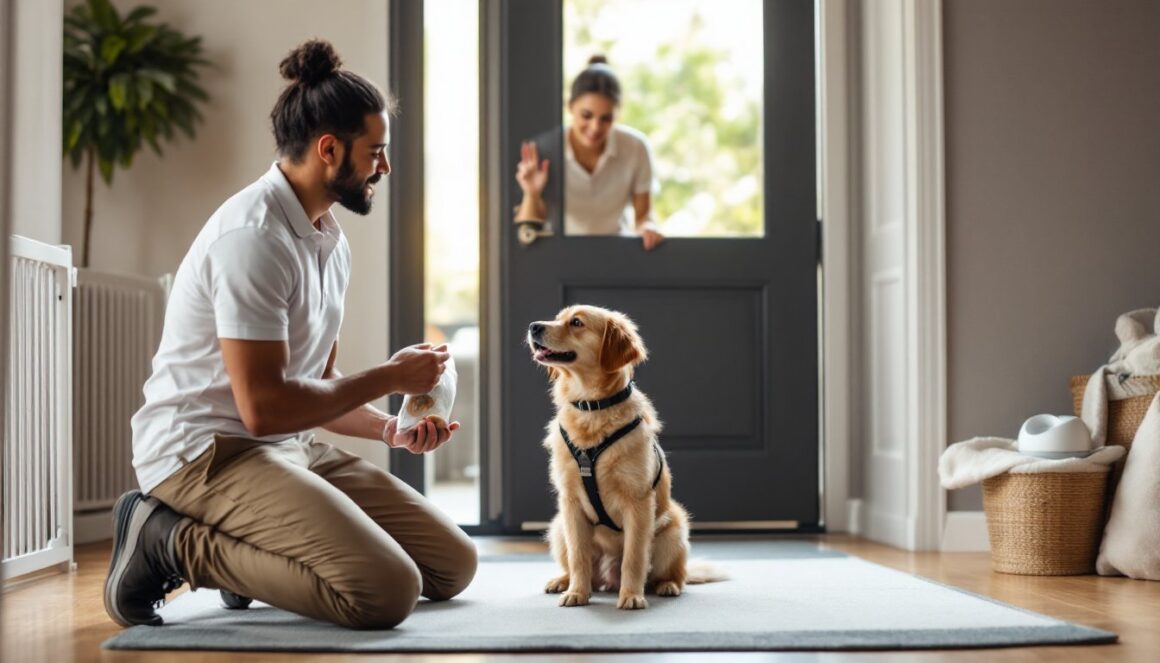
Door barking is one of those household problems that’s loud, persistent, and embarrassing, but fixable. Whether the dog greets guests with a chorus, alerts to every passerby, or has learned that barking gets attention, this guide shows how to stop door barking (få hund att sluta skälla vid dörren) using clear training steps, environment tweaks, and simple home aids. The approach combines a calm “quiet” cue, gradual desensitization to door sounds, and practical barriers so the household stays peaceful while the dog learns. No specialist tools required, just consistency, short practice sessions, and patience.
Key Takeaways
- To get a dog to stop barking at the door, teach a calm “quiet” cue by rewarding brief pauses in barking with treats and praise.
- Identify the dog’s barking trigger—alert, excitement, fear, or learned behavior—to tailor training effectively and improve results.
- Use environmental management like baby gates, sound masking, and relocating the dog’s bed to reduce doorway reactivity during training.
- Train a replacement behavior such as “go to mat” to redirect the dog’s attention away from the door during arrivals.
- Consistency from all household members in training and not rewarding barking helps prevent setbacks and speeds progress.
- Consult a certified trainer or behaviorist if barking includes aggression, fear escalation, or persists despite consistent training.
Why Dogs Bark At The Door — Common Triggers And What It Means
Dogs bark at the door for a few reliable reasons: understanding the trigger makes training faster.
- Territorial/alert barking: The dog senses someone near home and acts as a sentry. This is often instinctual and tied to guarding behavior.
- Excitement/social greeting: Some dogs bark because arrivals mean pets, play, or a walk, it’s anticipation, not aggression.
- Fear or anxiety: A doorbell or knock can predict something scary: the dog reacts to anticipated stress.
- Learned behavior: If barking makes people move, offer attention, or the visitor goes away, the dog learns barking “works.”
How this informs training: If barking is fear-based, the plan emphasizes desensitization and calming alternatives. If it’s learned or excitement-based, the focus is on rewarding quiet and teaching a replacement behavior (for example, go-to-mat). In all cases, consistency from everyone in the household is critical, mixed responses prolong the problem.
Teach Calm Behavior At The Door: A Step‑By‑Step Quiet Cue Training Plan
A predictable, repeatable training plan helps the dog associate silence with rewards rather than suppression.
- Choose a cue: Pick a short cue like “Quiet” or “Enough.” Keep it consistent: one word only.
- Work below threshold: Practice when the dog is calm, not when it’s already in a barking frenzy. Short sessions (3–5 minutes) several times a day work best.
- Reward silence, not silence after punishment: Wait for a brief pause in barking, say the cue, then mark and reward (treat or high-value kibble). Gradually increase the quiet duration before rewarding.
- Build duration and distractions: Once the dog reliably responds to the cue at low stimulus, introduce louder knocks, someone at the door, and then an entering visitor.
Important safety note: If the dog lunges or shows aggression, stop and consult a professional trainer. Avoid physically forcing the dog into submission: that typically increases fear or reactivity.
Step‑By‑Step: Teaching The Quiet Cue And Rewarding Calmness
-
Preparation: Have high‑value treats, a clicker or marker word (like “Yes.”), and a helper. Use a leash indoors if the dog tends to bolt or lunge.
-
Start low: Lightly knock or press the doorbell at very low volume. If the dog barks, wait for the first brief pause in sound.
-
Mark and reward: As soon as there’s a pause, even one second, say the marker or the cue “Quiet” and give a treat. Praise calmly: excitement can re-trigger barking.
-
Repeat and lengthen: Do many short reps. Increase the required silence before reward by a second or two each session.
-
Add steps gradually: Increase knock volume, open the door a crack, have a helper step in. If the dog breaks, drop back to the last successful level.
-
Teach a replacement: Train “go to mat/place” by rewarding the dog for moving to a mat near the wall, away from the door. Reward longer stays, then practice door sounds while the dog stays on the mat.
Training notes:
- Use a leash for safety during early stages. If the dog growls or snaps, stop and consult a behaviorist.
- Keep treat sizes tiny, one or two calories per rep if practicing often.
- Sessions: 3–6 short sessions daily rather than one long session.
Manage The Environment To Reduce Doorway Reactivity
Altering the environment reduces the number of practice trials the dog needs and prevents setbacks.
- Block access/visibility: Use baby gates or a small exercise pen to keep the dog out of the immediate door zone. Close blinds or cover lower windows to block passersby visibility.
- Move the dog’s bed/chew area: Relocate favorite resting spots away from the door so the dog isn’t roused by every sound.
- Mask sounds: Run a white noise machine, box fan, or calming music near the entry to muffle knocks and doorbells. Subtle sound masking reduces trigger intensity.
- Reduce doorbell triggers: Put up a sign asking guests to text first, or teach family members to announce themselves verbally instead of ringing.
Practical tip: For apartments where space is tight, a half-door or solid panel gate gives a visual barrier without isolating the dog completely. Always ensure the dog can’t slip under gates or chew through them.
Tools, Aids, And Simple Home Modifications That Help
These affordable items speed progress and make training safer.
- Barriers: Baby gates or pet pens to prevent direct access to the doorway during training sessions.
- Mat/place: A clearly marked mat or bed (36″ x 24″ for medium dogs is a good starting size) teaches an alternative location.
- Sound masking: White noise machines or a small fan placed near the door reduce startling sounds.
- Food toys: Stuffed Kongs, food puzzles, or long‑lasting chews keep the dog occupied away from the entry during arrivals.
- Treat pouch and clicker: A hands‑free treat pouch and optional clicker speed up timely rewards.
Tool alternatives:
- A circular saw? Not relevant here, but a leash and harness suffice: a head halter can give more control if the dog lunges. Use a harness that fits properly to avoid injury.
Costs and selection: These items range from $15 for a basic treat pouch to $50–100 for a sturdy baby gate. Choose chew‑proof gates for determined diggers, and select non‑toxic, durable mats for heavy chewers.
Troubleshooting: Common Setbacks And When To Seek Professional Help
Common setbacks:
- Slow progress: Training takes time: inconsistent practice or varied household responses often cause plateaus.
- Regression: Guests who reward barking (laughing, petting, or giving attention) will undo training quickly.
- High arousal or fear: If the dog escalates (lunges, pins ears, shows teeth), the barking likely ties to anxiety or aggression.
When to consult a pro:
- If the dog’s barking is intense, persistent, or paired with aggression, consult a certified positive‑reinforcement trainer or a veterinary behaviorist.
- If barking appears tied to medical pain or sudden behavioral change, first get a vet check to rule out health issues.
What to expect from a pro: A trainer will assess body language, run controlled desensitization and counter‑conditioning programs, and may suggest management changes. A behaviorist can evaluate for anxiety disorders and, in some cases, discuss medication as a short‑term aid while training proceeds.
Safety reminder: Do not rely on punitive devices (shock collars) without professional guidance: they can increase fear and worsen reactivity. Positive, consistent methods work best for long‑term change.
Conclusion
Stopping door barking (få hund att sluta skälla vid dörren) combines clear training, environmental management, and the right tools. Teach a consistent quiet cue, reward alternative behaviors like going to a mat, and gradually expose the dog to door triggers while keeping sessions short and calm. If the dog shows fear or aggression, seek a certified trainer or behaviorist. With patience, regular practice, and sensible management, most dogs learn to be calm at the door, and households regain quiet.