A gray, milky, or bluish film over a cat’s eye is never something to shrug off. It can sit on the cornea (the clear, front window of the eye) or be deeper inside the lens: either way, it often signals reduced vision and sometimes pain or infection. This guide explains what that gray film can look like, the most common causes (from age-related lens changes to corneal scars and infections), what to expect at a veterinary visit, and practical at-home care and long-term outlooks so owners can act quickly and responsibly.
Key Takeaways
- A gray film on a cat’s eye often indicates vision problems and can signal pain or infection that requires prompt veterinary attention.
- Common causes include corneal scars, cataracts, infections, and age-related lens changes, all affecting the eye’s clarity differently.
- Owners should watch for signs like cloudiness, redness, discharge, squinting, and behavior changes that suggest reduced vision or eye discomfort.
- A thorough veterinary eye exam, including dye tests and pressure measurements, is essential to diagnose the exact cause of the gray film.
- Immediate care involves protecting the cat from further injury and following vet instructions closely, as some conditions may need emergency treatment or specialist referral.
What A Gray Film On A Cat’s Eye Looks Like — Signs You Shouldn’t Ignore
A gray film on a cat’s eye usually appears as a cloudy, hazy, or milky layer over the normally clear cornea or as a gray/white opacity inside the eye (lens). Owners will most commonly notice:
- The eye looks dull, cloudy, or bluish-gray rather than bright and glass-clear.
- Associated signs like redness, discharge (watery or purulent), squinting, pawing at the eye, or the third eyelid showing indicate irritation or pain.
- Changes in behavior: the cat may bump into furniture, misjudge jumps, or hesitate in dim light, which suggests reduced vision.
Not every cloudy eye is the same. A shallow corneal scar looks different from a dense lens cataract: the scar sits on the surface and may have an irregular outline, while a cataract shows as a uniform white or gray spot behind the pupil. Sudden clouding, especially with pain (squinting, hiding, decreased appetite), is an emergency and needs same-day veterinary attention.
Quick safety note for owners handling an affected cat: wear gloves to protect yourself from scratches, and avoid touching the eye. Transport the cat in a secure carrier: wrapping loosely in a towel helps prevent panicked movements that could worsen an eye injury.
Common Causes Of A Gray Film On A Cat’s Eye
Several conditions can produce a gray film. Below are the most common causes, grouped by where the opacity comes from and what it means for treatment and prognosis.
Diagnosis And Treatment — What To Expect At The Vet
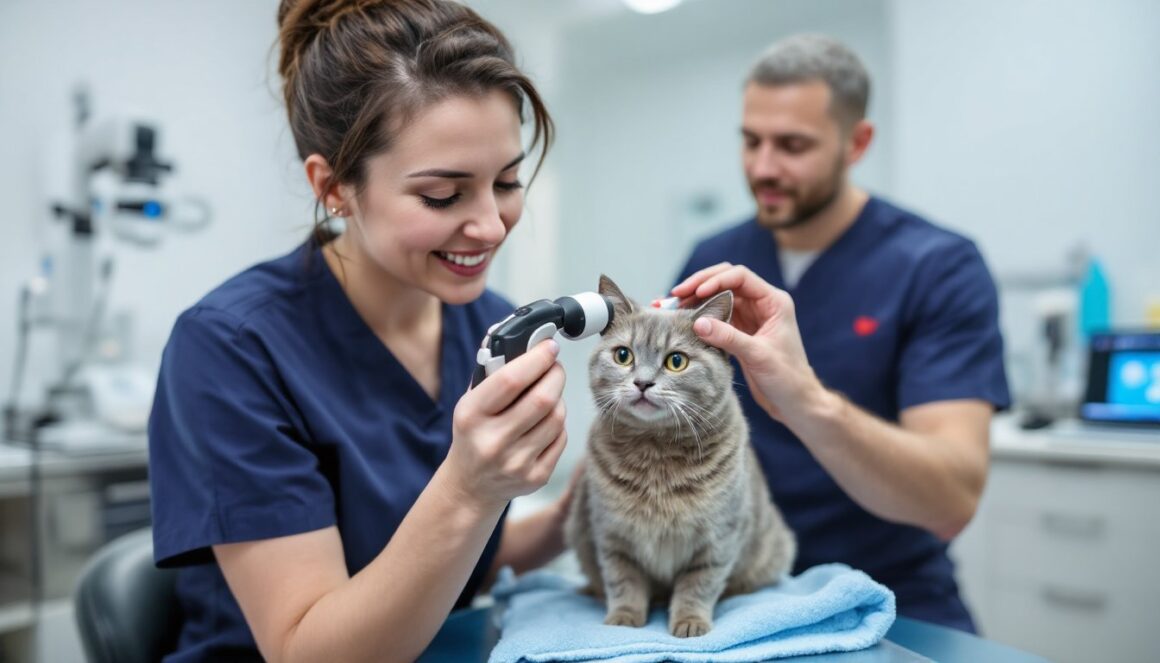
A veterinary ophthalmic exam is the only reliable way to determine whether the gray film is corneal, lenticular (lens), or due to another cause. Expect a stepwise workup:
- A focused eye exam using bright light and magnification to assess the cornea, anterior chamber, lens, and retina.
- Fluorescein stain (a dye) applied to the surface to detect corneal ulcers, the dye sticks to exposed stroma and highlights defects.
- Tonometry to measure intraocular pressure: this checks for glaucoma, which can cause cloudiness and pain.
- Additional tests if needed: ophthalmic ultrasound, retinal function testing (electroretinogram), bloodwork, or blood pressure measurement to rule out systemic causes.
Owners should be prepared to describe onset, whether the change was sudden or gradual, any trauma, and concurrent signs like appetite loss or lethargy. If an ulcer is suspected, the vet will prioritize preventing infection and stabilizing the cornea: if a cataract or deep lens change is suspected, referral to a specialist may follow.