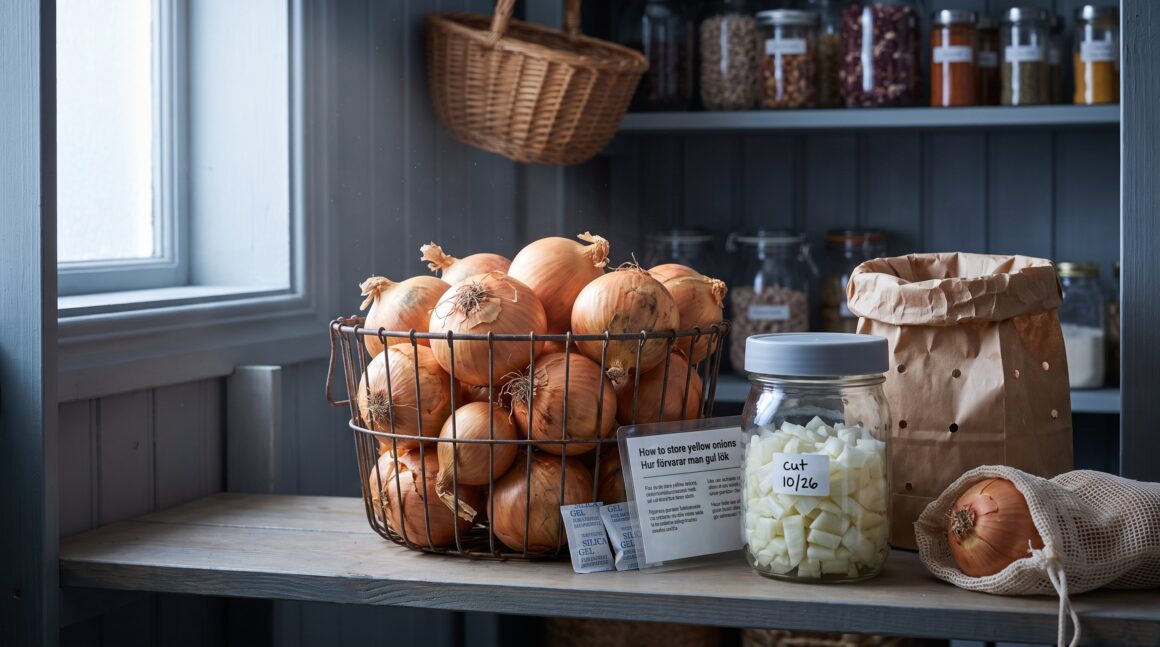
“hur förvarar man gul lök” is a simple question with specific, actionable answers. This guide explains where to keep whole yellow onions, how to handle cut or peeled pieces, and which long-term methods actually work. It draws on storage science and practical experience: cool, dry, dark, and ventilated conditions extend shelf life. Readers will get clear steps, container recommendations, spoilage signs, and quick salvage tips so they waste fewer onions and spend less time guessing.
Key Takeaways
- Properly storing yellow onions in a cool, dry, dark, and well-ventilated place at room temperature can extend their freshness for 4 to 8 weeks.
- Avoid storing yellow onions in plastic bags or near potatoes, as this traps moisture and accelerates spoilage due to ethylene gas.
- Use breathable containers like wire baskets or mesh bags and keep onions off the floor to maximize airflow and prevent mold.
- Refrigerate cut or peeled yellow onions in airtight containers and use them within one week to maintain safety and flavor.
- For long-term preservation, freeze chopped onions after pre-freezing or dry them into powder, understanding texture changes occur after freezing.
- Discard onions showing signs of spoilage such as softness, mold, sliminess, or foul odor, but salvage firm parts by cutting away affected areas.
Why Proper Storage Matters For Yellow Onions
Fact: Proper storage slows sprouting, softening, and mold. Yellow onions contain moisture and sugars that feed microbes and trigger shoots. When onions sit in warm, humid, or light-filled places, they lose firmness and flavor faster. For example, a whole yellow onion stored in a cool, dry pantry will often last 4–8 weeks, while one left near a sunny window can sprout in a week and rot shortly after.
Context: The National Onion Association and food-preservation sources point to four conditions, cool, dark, dry, ventilated, as critical. Ventilation keeps trapped moisture from softening the papery skins: darkness prevents chlorophyll and sprout formation: dryness reduces mold growth: and cooler temperatures slow enzyme and microbial activity.
Why it matters to the reader: Storing 10–20 onions correctly reduces grocery trips and food waste. A household that follows these rules can keep onions usable long enough to save money and avoid last-minute shopping.
Storing Whole Yellow Onions At Room Temperature
Answer: Keep whole yellow onions in a cool, dry, dark, well-ventilated spot at room temperature. This yields the longest fresh life without refrigeration.
Practical steps: Choose a pantry, cellar, basement, garage (if it stays cool and dry), or a kitchen cabinet away from heat. Temperatures between 45–65°F (7–18°C) are ideal: common kitchen countertops often sit warmer and shorten shelf life. Place onions out of direct sunlight and at least several feet from ovens or heat-producing appliances.
Real detail: One homeowner reported storing 24 yellow onions in a wire basket in a cool pantry at 55°F and using them over 10 weeks with only two showing minor soft spots. Contrast that with a bag left by a sunny window that sprouted in 7 days.
Common mistakes: Storing onions in plastic bags, sealed containers, or near potatoes. Plastic traps moisture, and potatoes emit ethylene gas that speeds onion spoilage. Avoid sealed environments and mixed storage with ethylene-producing produce.
Best Containers, Locations, And Conditions For Room-Temperature Storage
Answer: Use containers and locations that maximize airflow and block light.
Best containers: Wire baskets, mesh bags, perforated sacks, open paper bags with holes, or a shallow bowl. These let air circulate and let skins dry after light handling. Avoid plastic grocery bags and airtight bins. A metal or wicker basket on a pantry shelf works well.
Best locations: A pantry that stays dark and dry, a root cellar, or a cool cabinet. If using a basement or garage, pick a spot away from moisture and frost. Keep onions off the floor on a shelf or hanging rack to improve airflow.
Conditions to watch: Keep humidity low, ideal relative humidity is 45–55%. If the home is humid, use silica packets near stored onions to absorb excess moisture, or store them higher where air is drier. Keep onions at least 12 inches from potatoes.
Warning: Storing in direct sunlight causes rapid sprouting and mellowing of flavor. If light is unavoidable, wrap bulbs loosely in paper to reduce exposure while maintaining airflow.
Storing Cut Or Peeled Onions In The Fridge
Answer: Refrigerate cut or peeled onions in airtight containers and use within about 1 week. This preserves safety and flavor.
How to do it: After cutting, wrap the onion pieces tightly in plastic wrap or place them in a resealable airtight container or glass jar. For stronger odor control, use containers with silicone seals or double-wrap in a resealable bag plus container. Label with the cut date.
Shelf life and quality: Refrigerated, cut onions stay safe and usable for about 5–7 days. Beyond that, they lose crispness and develop off-odors. If the onion feels slimy, has dark spots, or smells foul, discard it.
Practical tip: If someone dislikes strong onion smells in the fridge, store cut onions in a separate mini-container or in a place designated for produce. Putting a small plate of baking soda nearby can absorb some refrigerator odors, but it won’t stop onion odor leaking from an unsealed container.
Freezing And Other Long-Term Preservation Methods
Answer: Freeze chopped onions for long-term storage, or use drying, canning, or braiding for specific needs. Expect texture changes after freezing.
Freezing method: Peel and dice onions, spread them on a baking sheet to pre-freeze for about 1 hour, then transfer to labeled freezer bags or vacuum-sealed packs. Frozen onions keep 6–12 months. They’re best for cooked dishes: they lose crispness when thawed.
Drying and powdered onions: Use a dehydrator or low oven to dry slices until brittle, then grind into powder. Dried onion lasts 1–2 years in a sealed jar.
Canning and pickling: Pressure canning chopped onions is less common because of texture loss, but pickled onions are a flavorful, long-lasting option stored in the fridge or canned jars.
Braiding: For whole bulbs with necks intact, braiding stalks and hanging in a cool, dry place is a traditional method that combines ventilation and storage. Braided onions can last several months if conditions are right.
Honest assessment: Freezing is the most convenient long-term option but changes mouthfeel. Drying keeps flavor concentrated and shelf-stable. Choose the method that fits how the onions will be used.
Signs Of Spoilage And How To Salvage Usable Onion Parts
Answer: Discard onions that are soft, mushy, slimy, moldy, or emit a rotten odor. Salvage firm, dry sections when spoilage is limited.
Spoilage signs: A soft or collapsing bulb, black or green mold on the skin, slimy surface, or a sour/rotten smell. Heavy sprouting with softening often indicates internal decline. If the neck is wet or the layers inside are discolored, the onion is unsafe.
How to salvage: If only a small area is affected, cut away at least 1 inch around the spoiled spot into firm, white tissue. Use the remaining firm portion within a day or two and keep it refrigerated in a sealed container. Example: If the tip has a 2-cm soft spot but the rest is white and crisp, trimming and refrigerating allowed use in a stir-fry the same day.
Safety note: Never taste suspicious onions to test safety. Strong off-odors and sliminess are reliable indicators to discard. When in doubt, throw it out.
Conclusion
Insight: Storing whole yellow onions at room temperature in cool, dry, dark, ventilated conditions preserves flavor and reduces waste. Refrigerate only cut or peeled onions in airtight containers, and use freezing or drying for long-term needs. Small changes, a wire basket, keeping onions away from potatoes, pre-freezing diced onions, save time and money. Apply one change today and assess: it often prevents the next wasted onion.