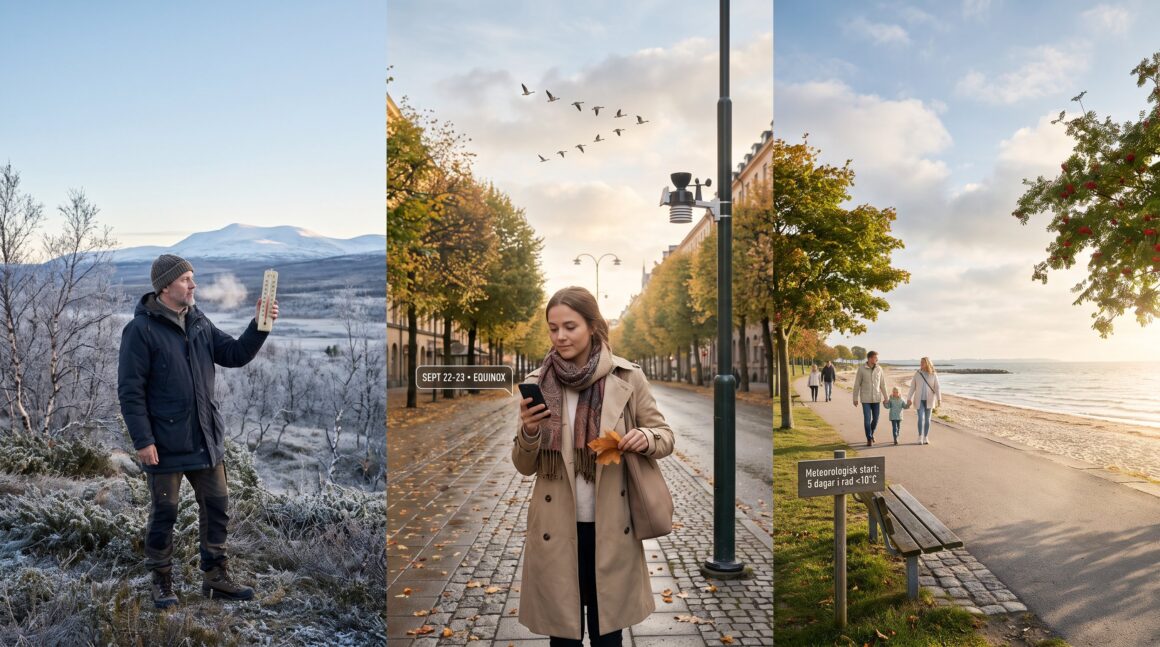
när börjar hösten i sverige, the question appears simple but the answer changes with definition and place. In Sweden, autumn can mean the meteorological shift tied to temperatures, the astronomical equinox, or the calendar months of September–November. This guide lays out clear dates, explains how agencies like SMHI set the start, and shows why northern mountains and southern coasts see very different autumn timing. Readers will get exact windows, regional examples (Kiruna to Malmö), and practical signs to watch for when the season really arrives.
Key Takeaways
- In Sweden, autumn start dates vary by definition: meteorological autumn begins when daily mean temperatures drop below 10°C for five consecutive days, astronomical autumn starts at the equinox around September 22–23, and calendar autumn spans September to November.
- Regional differences are significant, with northern areas like Kiruna experiencing autumn as early as mid-August, while southern coastal cities may not see meteorological autumn until mid-October.
- The meteorological definition by SMHI is practical for weather forecasting and planning, reflecting real temperature changes and seasonal needs such as clothing and heating.
- Observable signs such as falling leaves, first frosts, shorter daylight, and bird migrations provide natural indicators of autumn’s arrival, which vary across Sweden’s regions.
- For accurate planning or cultural purposes, using the appropriate autumn definition—meteorological, astronomical, or calendar—is crucial depending on location and activity.
Meteorological Versus Astronomical Autumn: Definitions That Matter
Fact first: autumn in Sweden has three common definitions, meteorological, astronomical, and calendar, and each gives a different start date.
Meteorological autumn: Sweden’s meteorological service (SMHI) defines autumn by temperature. Autumn begins when the daily mean temperature falls below 10°C for five consecutive days after 1 August. The first day of that five-day run is counted as the start. This rule prevents a premature “autumn” during a single cool spell and ties the season to lived weather, when people actually need warmer clothes and heating.
Astronomical autumn: This starts at the autumnal equinox, when the Sun crosses the celestial equator going south. That event usually falls on 22–23 September (rarely the 24th). Astronomical autumn ends at the winter solstice, around 21 December. This approach is fixed by astronomy and does not depend on local temperatures.
Calendar autumn: By social convention and many publications, autumn is the three-month period of September, October, and November. This is easy for planning and communication but less precise for weather-sensitive activities.
Why it matters: Farmers, tourism planners, and energy managers choose different definitions. SMHI’s meteorological approach is practical for forecasting: the astronomical date helps with cultural events and fixed calendars.
Typical Calendar Dates For Autumn In Sweden
Fact first: most Swedes mark autumn on the calendar as September 1 to November 30, but the meteorological start varies widely by location.
Calendar window: September 1–November 30 is the standard civil definition. Schools, festivals, and business reports often use this span because it’s stable year to year.
Meteorological averages: Long-term SMHI data (1961–1990) show clear regional differences. For example:
- Kiruna (far north): around August 16 (meteorological average), often the earliest start.
- Östersund (central inland): about September 5.
- Stockholm (east coast, south-central): about September 29.
- Malmö, Gothenburg, Lund (far south): typically early to mid-October.
Practical takeaway: If someone asks “när börjar hösten i sverige” and expects a simple date, the safest short answer is: calendar autumn starts September 1, astronomical autumn around Sept 22–23, but meteorological autumn can occur anytime from mid‑August in the north to mid‑October in the far south.
Regional Differences: North, South And Everything In Between
Fact first: autumn arrives much earlier in northern and high-altitude areas than in southern coastal regions. Sweden’s long north–south extent produces strong timing differences.
Northern extremes: In and above the Arctic Circle, including places like Kiruna and high mountain plateaus, the first signs of autumn often appear in late August or even July on the highest fjells. Nights cool quickly there, and sunlight angle drops sooner. Color change and first frosts are common early.
Central belt: Inland, central towns such as Östersund and surrounding agricultural areas usually move into autumn in early to mid-September. These areas show clear leaf color shifts and the first sustained temperature declines.
Southern Sweden: Skåne and the southern coastal cities (Malmö, Lund, Gothenburg) experience a milder, stretched autumn. Meteorological autumn often doesn’t set in until late September or mid‑October. The sea moderates temperature drops, which keeps trees green longer and delays the first frost.
Practical example: A Stockholm commuter might notice cooler evenings and falling leaves around late September, while a resident near Kiruna could already be packing heavier jackets in mid‑August.
Signs Of Autumn: Weather, Daylight And Nature Changes To Watch For
Fact first: observable signs, falling leaves, first frosts, migrating birds, and shortening days, reliably indicate autumn’s arrival. These markers often coincide with meteorological measurements.
Weather signals: Expect more frequent low‑pressure systems, wind, and rain. Daytime highs drop and nights become noticeably cooler. The first ground frosts appear in many inland and northern areas during early autumn. In Stockholm and southern coasts, frosts usually arrive later, often in October or November.
Daylight changes: After the equinox (around Sept 22–23), daylight decreases rapidly. In northern Sweden the shift is dramatic: daylight hours can fall by several minutes per day, affecting mood, travel, and daylight-dependent businesses.
Nature cues: Trees progress from green to vivid yellows and reds: birches tend to turn bright yellow, rowan shows red clusters, and maples can produce deep reds depending on local conditions. Bird migrations intensify, geese and other migrants leave northbound breeding grounds in late August through September. Harvest activity peaks: apple picking, potato lifting, and berry harvesting occur across regions at slightly different times.
Practical warning: Relying only on calendar dates can mislead outdoor plans. For instance, a photographer chasing autumn colors in Lapland should prioritize altitude and historical station dates, not just “September.” Conversely, a southern coastal day trip in early October may still feel summery if sea temperatures are warm.
Conclusion: When asked “när börjar hösten i sverige,” the honest answer must be conditional. Use calendar, astronomical, or meteorological definitions depending on needs. For weather-sensitive planning, consult SMHI station dates: for cultural or business planning, use September 1–November 30. Practical signals, frost, leaf color, and daylight loss, confirm the season on the ground.