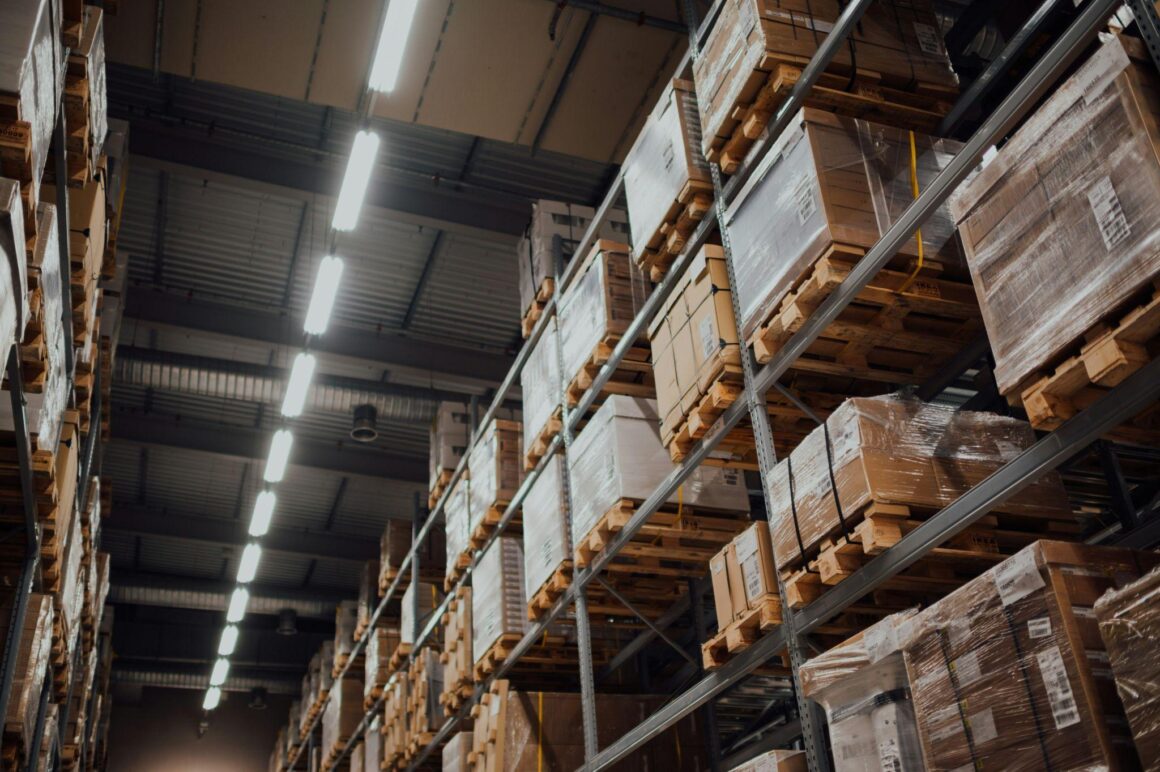
Rising storage costs and growing pressure on warehouse capacity are pushing UK businesses to rethink how they manage palletised stock, and industry specialists like Randex are helping organisations implement smarter pallet storage strategies that make better use of available space. The right storage configuration can cut operational costs, improve stock accuracy, and create a safer, more productive working environment for warehouse teams.
The True Cost of Inefficient Pallet Storage
Inefficient pallet storage is more expensive than most warehouse managers realise. When pallets are stored in configurations that do not match the actual flow of goods, the result is wasted floor space, slow retrieval times, and higher labour costs per unit shipped. Excess inventory in poorly organised bays is harder to count accurately, leading to stock discrepancies and the risk of procurement errors. Over the course of a year, the combined cost of wasted space, avoidable labour, and inventory inaccuracies in a poorly organised warehouse can amount to a significant proportion of the total operational budget, making a storage review a genuinely worthwhile investment.
Selective Pallet Racking: The Versatile Standard
Selective pallet racking remains the most widely used pallet storage solution in the UK because it offers direct access to every individual pallet position without disturbing surrounding stock. Each pallet can be retrieved without moving others, making it ideal for businesses with many distinct product lines or those that require FIFO stock rotation. Selective racking is compatible with all standard forklift equipment and can be configured to suit a wide range of load weights and bay dimensions. While it does not offer the highest storage density among available options, its flexibility and ease of operation make it the default choice for most mixed-product warehouses.
High-Density Racking Options for Limited Floor Space
Where floor space is limited, and the product mix is less varied, high-density racking systems such as drive-in racking, push-back racking, or pallet flow racking can significantly increase storage capacity within the same footprint. Drive-in racking allows forklifts to enter the rack structure directly, enabling deep storage lanes for pallets of the same product line. Push-back racking uses inclined rails and carts to store multiple pallets per lane in a last-in, first-out configuration. Pallet flow racking, by contrast, uses gravity rollers to move pallets from the loading end to the picking face, supporting efficient FIFO rotation in high-volume environments where stock turnover is rapid and consistent.
Automated Pallet Storage and Retrieval Systems
Automated pallet storage and retrieval systems represent the highest level of pallet storage technology, combining software-controlled storage allocation with robotic or shuttle-based retrieval mechanisms. These systems achieve storage densities far beyond manual racking configurations while also providing real-time inventory data at the individual pallet level. They are particularly well suited to cold store environments where minimising operator time in temperature-controlled areas is a priority, as well as to high-throughput distribution operations where retrieval speed is critical to meeting despatch schedules. The business case for automated systems strengthens as labour costs rise and the performance gap between human and machine-driven handling continues to grow.
How to Calculate the Right Storage Capacity for Your Business
Calculating the correct storage capacity requires more than simply counting the number of pallet positions currently in use at peak times. A proper analysis should account for seasonal variation in stock levels, goods-in frequency, the proportion of rapidly turning stock versus slow-moving lines, and any planned growth in product range or order volumes. Overcapacity is costly because it ties up capital in unnecessary racking and floor space; undercapacity creates operational bottlenecks and forces businesses into expensive off-site overflow storage arrangements. Working with an experienced storage solutions provider to model your inventory profile against different racking configurations will produce a more accurate and cost-effective result than relying on rough estimates.
Steps to Implementing a Pallet Storage Improvement
Implementing a pallet storage improvement project requires careful planning to minimise disruption to ongoing operations throughout the transition. Begin by auditing the current layout: measure existing pallet positions, document average occupancy rates across different zones, and map the routes that goods follow from receipt to despatch. This audit will reveal which areas are underperforming and where the greatest efficiency gains are available. Design the new configuration around your operational requirements rather than purely around maximising the number of pallet positions, and stage the implementation so that part of the warehouse remains fully operational throughout. A well-managed installation should deliver measurable improvements in retrieval time and space utilisation from the very first week.