
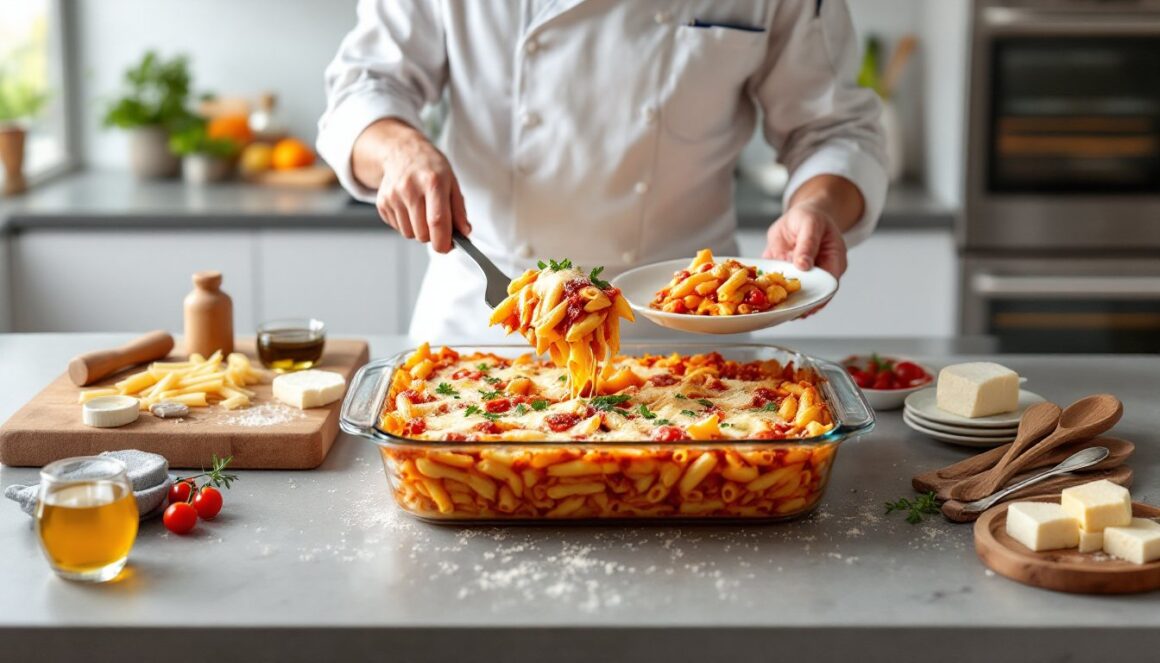
Pénes sto fourno me tyria, baked penne with cheese, is the kind of comfort food that feeds a family and still looks impressive. This practical guide walks through a dependable recipe based on classic Greek and Italian-influenced versions: a pasta cooked just shy of al dente, a creamy béchamel or tomato-cheese sauce, and a short oven bake at 180–200°C for a golden, bubbling top. The instructions include exact quantities, sensible substitutions, and troubleshooting tips so they can make this dish on a weeknight without surprises.
Key Takeaways
- Baked penne with cheese is best made with pasta cooked just shy of al dente to avoid mushiness after baking.
- Using a balanced béchamel or tomato-cheese sauce with reserved pasta water ensures a creamy, well-coated baked penne dish.
- Incorporating both Parmesan for flavor and mozzarella for melt provides a perfect cheesy texture and taste.
- Letting the baked penne rest 5–10 minutes after cooking helps it set for neat, firm slices.
- The recipe allows smart substitutions like whole-wheat pasta or lactose-free products to accommodate dietary needs without sacrificing flavor.
- Preparing the baked penne with a short, hot oven bake at 180–200°C results in a golden, bubbling top that enhances its appeal.
Ingredients, Quantities, And Smart Substitutions
Ingredients (serves 4):
- 400 g penne (about 14 oz: use rigatoni or ziti if that’s what’s on hand).
- 500 ml milk (about 2 cups) for béchamel, or 400–500 g tomato sauce for a tomato base.
- 40 g butter and 40 g flour (for béchamel roux), about 3 tbsp each.
- 200–250 g mozzarella (shredded) for melt.
- 50–70 g Parmesan (grated) for saltiness.
- 150–200 g ricotta or feta (optional: adds creaminess or tang).
- 1 medium onion (finely chopped), 2 garlic cloves (minced).
- 2 tbsp olive oil, salt, pepper, pinch of nutmeg for béchamel, and dried oregano for tomato versions.
- Optional: 150–200 g diced ham or cooked ragù: 1 small zucchini or scallions for vegetables.
Smart substitutions and notes:
- Whole-wheat penne works for more fiber: increase sauce slightly because whole-wheat soaks more liquid.
- For lactose intolerance, use lactose-free milk and aged hard cheeses (they’re lower in lactose).
- If short on time, stir prepared béchamel into heated sauce instead of making roux from scratch.
- Use pasta water (reserve 1/2 cup) to loosen sauce when mixing, it contains starch that helps the sauce cling.
Measurements & product types:
- When a recipe lists 400 g penne (nominal weight), expect about 3–3.5 cups dry: it yields roughly 4 generous servings.
- Parmesan and mozzarella play different roles: Parmesan = flavor/salt, mozzarella = stretch/melt. A mix gives a balanced top and interior.
Step‑By‑Step Method: Prep, Cook, And Bake (Times Included)
Safety & prep: they should always wear goggles when grating large blocks of cheese (kickback risk) and a heat-resistant glove when handling hot dishes. Have a colander, ovenproof baking dish (about 23 x 33 cm / 9 x 13 in), and measuring tools ready.
-
Preheat & boil (10–15 minutes):
-
Preheat oven to 180–200°C (350–400°F). Use the lower end for a cream bake and the higher end for quick browning.
-
Bring a large pot of salted water to a rolling boil. Salt should taste slightly briny (about 1 tbsp salt per 4 L water).
-
Add penne and cook very al dente, usually 11–12 minutes depending on package time: test 1–2 minutes before the shortest time listed.
-
Make the sauce (10–15 minutes):
- For béchamel-cheese sauce: melt 40 g butter, stir in 40 g flour and cook 1–2 minutes (this is the roux). Gradually whisk in 500 ml milk until smooth and simmer until slightly thickened. Add 50 g grated Parmesan, salt, pepper, and a pinch of nutmeg. Fold in 150 g ricotta if using.
- For tomato-cheese version: sauté 1 chopped onion in 2 tbsp olive oil until translucent, add 2 minced garlic cloves, then 400–500 g tomato sauce. Simmer 5–8 minutes, season with salt, pepper, oregano, and stir in 50 g Parmesan.
-
Combine and assemble (5 minutes):
-
Reserve 1/2 cup pasta water before draining. Drain penne and return to the pot.
-
Mix penne with the sauce and about 150 g shredded mozzarella. If sauce is too thick, loosen with a splash of reserved pasta water.
-
Transfer to the prepared baking dish, top with remaining 100 g mozzarella and a sprinkle of extra Parmesan. Optional: scatter 2–3 tbsp breadcrumbs dotted with a little butter for crunch.
-
Bake & finish (15–30 minutes):
-
Bake at 180–200°C for 15–30 minutes, closer to 15–20 minutes if the mixture is already hot: longer (25–30 min) from cold or when a deep crust is desired.
-
For extra browning, use the grill/ broiler for 1–3 minutes at the end, watching closely so it doesn’t burn.
-
Rest for 5–10 minutes before serving so slices hold shape.
Tips For Perfect Texture, Flavor Boosts, And Common Mistakes To Avoid
Texture tips:
- Always undercook the pasta slightly: they should remove penne at very al dente. Overcooked pasta turns mushy after the bake.
- Reserve pasta water. The starch-rich water helps emulsify sauces and prevents a dry bake: start with 2–4 tbsp and add more as needed.
Flavor boosts:
- Add a pinch of nutmeg to béchamel, it’s traditional and lifts the creamy base.
- Fold in grated Parmesan to the sauce rather than only on top: it seasons every bite.
- For a Greek touch, crumble 50–100 g feta into part of the filling, it adds tang that contrasts with mozzarella’s milky melt.
Common mistakes and how to avoid them:
- Mistake: baking wet, soupy pasta. Fix: don’t overload with watery sauce: reduce tomato sauce slightly or thicken béchamel properly before combining.
- Mistake: skipping the rest period. Fix: let the dish sit 5–10 minutes after baking to firm up for neat slices.
- Mistake: uneven browning. Fix: rotate the dish halfway through baking and use a higher temperature or broil for the last 1–3 minutes if needed.
Practical tool notes:
- A saucepan and wooden spoon are fine: a whisk helps with béchamel.
- A miter saw note: if they’re cutting wooden trivets for hot dishes, use a miter saw or circular saw with proper clamps, but that’s outside cooking scope.
Safety callouts:
- Wear heat-resistant gloves when removing a hot dish and use eye protection when grating cheese aggressively. Food safety: refrigerate leftovers within 2 hours.
Make‑Ahead, Storage, Reheating, And Serving Suggestions
Make-ahead & assembly:
- They can assemble the dish up to 24 hours ahead and keep it covered in the refrigerator. Bring to room temperature (15–20 minutes) before baking, or add 5–10 minutes to bake time if baking straight from the fridge.
- For freezing: bake fully, cool, portion, and freeze up to 2 months in airtight containers. Thaw in the refrigerator overnight before reheating.
Storage & reheating:
- Store leftovers covered in the fridge for up to 3 days. Label with date and ingredients if they have dietary restrictions.
- Reheat in an oven-safe dish at 160–170°C (325–340°F), covered with foil for 15–20 minutes, then uncover for 5 minutes to refresh the crust. Add a splash of milk or reserved pasta water if it seems dry. Microwaving works for single portions but can make pasta gummy.
Serving suggestions:
- Pair tomato-based versions with a bright green salad (arugula, lemon vinaigrette) to cut richness.
- Creamy béchamel versions go well with roasted vegetables or a simple oregano-lemon dressed cucumber salad.
- For a heartier meal, serve alongside garlic bread or roasted eggplant.
Portioning & leftovers:
- A 400 g pack of penne yields 4 generous portions: expect 4–6 portions as a side. Cost estimates vary by region and cheese grade, mention that prices for cheese fluctuate seasonally.
Conclusion
Baked penne with cheese, πένες στο φούρνο με τυριά, is forgiving when they follow three fundamentals: al dente pasta, a well-balanced sauce (béchamel or tomato-cheese), and a short, hot bake for a golden top. With the swaps and make-ahead tips above, they can tailor richness, use pantry staples, and still get reliable, crowd-pleasing results on a weeknight.