With over 12 years of operational experience in a mining region with more than 460 years of history, Napoleon Gold Mine has established itself as one of the most important gold mining companies in Colombia. The company carries out exploration, production, and marketing activities in the municipality of Remedios, in the northeast of the department of Antioquia, one of the most renowned gold-mining areas in the country and the world for its historical continuity and geological potential.
Remedios is located approximately 195 kilometers from Medellín, the second largest city in Colombia and one of its main economic and industrial centers. The municipality is part of a historic gold belt that has been continuously mined since the early years of the colonial period. This long mining tradition has profoundly shaped the local identity, economy, and culture, making Remedios one of the oldest gold-mining districts in Latin America.
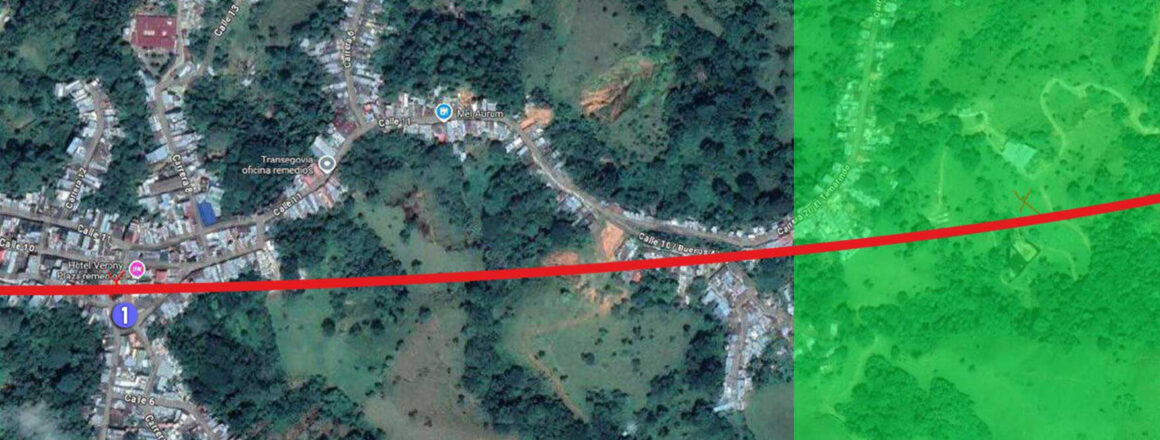
In the heart of this district lies La Veta del Cura, also known as Veta Roja, Veta de la Iglesia, or Priest’s Vein. It is one of the most emblematic and oldest gold veins in Colombia and the world, where Napoleon Gold Mine has been operating for over a decade. Its uniqueness lies not only in its mineral wealth but also in its location: the vein runs beneath the town of Remedios and under its main church, founded in 1560, one of the oldest in the country, located just 900 meters from the current mining area.
The importance of La Veta del Cura transcends its historical and cultural significance. From a geological perspective, the area is located within the Antioquia Batholith, one of the most important geological formations in Colombia. This batholith, composed of large bodies of intrusive igneous rocks, has been instrumental in the formation of numerous high-grade gold deposits in the department. The geological structure of the batholith favored the circulation of mineralizing fluids, giving rise to veins with significant concentrations of gold that sustain regional mining activity.
Antioquia is historically the leading gold producer in Colombia. According to official statistics from the National Mining Agency, in 2024 the department accounted for almost all of the country’s formal gold production. In the case of gold concentrates, Antioquia led with 88.8% of the national total, while in refined gold production it reached 97.5%, figures that confirm its dominant position within the Colombian mining sector. In this context, Remedios occupies a strategic place on the national gold map.
The municipality’s mining tradition is also expressed in the cultural sphere. Every year, Remedios and other nearby mining towns celebrate the Gold Festival, events that pay tribute to generations of miners and highlight traditional activities such as mining, livestock farming, music, and popular parades. Local identity is reflected even in the municipality’s flag: yellow symbolizes gold wealth, green represents the forests and natural environment, and black recalls past events associated with the exploration of energy resources in the region.
With documented mining activity since 1933 in its direct area of influence and a tradition dating back to 1560, La Veta del Cura stands out as a highly valuable asset within the Latin American and international context. Its geological potential, centuries-old history, and strategic location make it one of the most important underground gold mines in Colombia, where Napoleon Gold Mine continues its operations in an environment of exceptional historical, cultural, and geological significance.
Strategic location of Napoleon Gold Mine in the municipality of Remedios, Antioquia (Colombia).