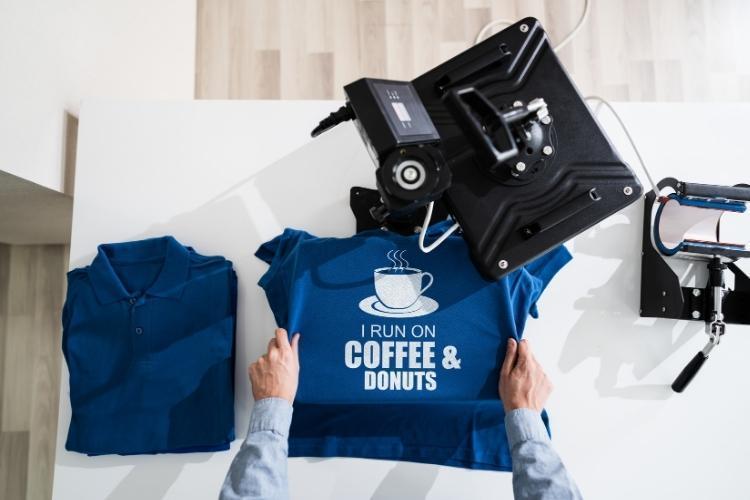
Custom apparel is no longer just about large production runs. Today’s customers expect fast turnaround times, personalized designs, and professional-quality prints, whether they’re ordering one shirt or one thousand. As a result, ultraviolet direct-to-film (UV DTF) printing has become a popular choice for apparel businesses looking to deliver high-quality products without the limitations of traditional printing methods.
Flexible Ordering Supports Modern Apparel Production
When choosing a DTF supplier, businesses often look beyond print quality. Fast production, flexible ordering, and dependable service all play an important role. You can learn more at dtftransfersmiami.com before selecting a provider that matches their production needs.
One of the biggest advantages of DTF printing is its flexibility. Unlike traditional screen printing, which requires screen preparation before production begins, DTF printing allows businesses to produce everything from single custom garments to large commercial orders without extensive setup.
According to DTF Transfers Miami, customers can order with no minimum quantities or setup fees. That flexibility makes it easier for apparel brands to launch seasonal collections, test new designs, or fulfill personalized orders without committing to large inventories.
Industry guidance from DTFDatabase also identifies DTF printing as a strong option for print-on-demand businesses, short production runs, and full-color artwork across multiple garment styles.
Speed is another factor driving adoption. DTF Transfers Now reports production times of 24 to 48 hours, with same-day printing available for selected urgent projects. Faster turnaround allows decorators to respond quickly to customer demand while supporting just-in-time production.
Workflow software has also improved. Toby Weiss, Chief Executive Officer of Fiery, said of the company’s latest workflow platform: “Whether you’re printing your first custom t-shirt or your thousandth, Digital Factory 12 brings you the capabilities you need to reach your full printing potential.”
His comments reflect the industry’s continued investment in software that helps printers maintain efficiency while producing consistent results.
Growing Demand Continues to Drive DTF Adoption
Demand for DTF printing continues to rise as more businesses adopt short-run production and on-demand fulfillment. Market research from Grand View Research valued the global DTF printing market at approximately US$2.72 billion in 2024 and projects it will reach almost US$3.92 billion by 2030. Other analysts, including 360iResearch and Deep Market Insights, also expect continued growth as demand for customized apparel and promotional products increases.
This growth has encouraged suppliers to invest in faster equipment, wider material compatibility, and improved color technology to meet changing customer expectations.
Improved Color Performance Across More Materials
Print quality remains a major consideration for apparel decorators. DTF Transfers Now says it uses advanced nine-color ORGB printing technology to produce greater color accuracy and depth across detailed artwork.
The company also offers specialty finishes such as fluorescent neon, glitter, glow-in-the-dark prints, and UV DTF transfers for decorating hard surfaces including tumblers, bottles, glass, plastic, metal, and wood.
Other manufacturers are investing heavily in similar technologies. Dimitris Constantinou, Chief Executive Officer of DTGPRO, described the company’s automated Filmjet system as: “a major advancement in direct-to-film printing technology.” His comments highlight the wider industry’s focus on automation and production consistency.
Academic research supports these broader developments. A 2024 systematic review published through PubMed Central found that improvements in digital textile ink formulations and surface treatments continue to improve adhesion, color performance, and overall print quality. While the research covers digital textile inkjet printing rather than commercial DTF systems specifically, it demonstrates the ongoing innovation behind digital garment decoration.
Experience, Product Range, and Nationwide Service
DTF Transfers Now operates from Miami, Florida, and serves customers throughout the United States. Although the company has not publicly disclosed its founding date, it says its team brings nearly 20 years of experience from its earlier garment-printing business, Egos Tees Prints, before expanding into dedicated DTF production.
As with any company statement, this reflects the business’s own description of its experience rather than independent certification, but it provides useful context for its background.
Alongside custom DTF and UV DTF transfers, the company supplies gang sheets, transfer films, inks, powders, printer parts, cleaning products, and blank garments from brands including Bella+Canvas, Gildan, and Comfort Colors.
Offering these products through a single supplier can simplify purchasing for decorators who regularly replenish production materials or combine outsourced transfers with in-house printing.
According to the company, its transfers are suitable for cotton, polyester, denim, nylon, performance fabrics, and other commonly decorated materials. UV DTF products are also designed for hard goods such as tumblers, bottles, phone cases, glass, wood, and metal, reflecting growing demand for customized promotional products beyond clothing.
The Industry Continues to Evolve
Investment in DTF technology shows no sign of slowing. Equipment manufacturers, software developers, and print providers continue introducing new systems designed for commercial production.
Brother, for example, launched its industrial DTRX printer by describing it as “built for real-world production”, signaling that established manufacturers increasingly view DTF as a long-term production solution rather than a niche technology.
Market forecasts also point to continued expansion. While growth projections differ between research firms, most expect businesses to adopt DTF printing at a steady pace as demand for personalized apparel and shorter production runs continues to increase.
Independent analysts also note that transfer quality varies between suppliers. Film consistency, ink formulation, and manufacturing standards all influence wash durability, color stability, and long-term performance. Academic research into digital textile printing reaches similar conclusions, showing that material preparation, ink chemistry, and production controls all affect final print quality.
For apparel businesses, that means evaluating suppliers on more than price alone. Turnaround times, color accuracy, production capacity, technical support, shipping reliability, available transfer sizes, and product range all contribute to choosing the right production partner.
Conclusion
DTF printing has become an established part of modern apparel decoration because it offers the flexibility today’s businesses need without compromising print quality. As the market continues to grow, suppliers that deliver reliable production, fast turnaround, and consistent results will remain well positioned to support apparel brands, promotional product companies, independent designers, and commercial decorators alike.