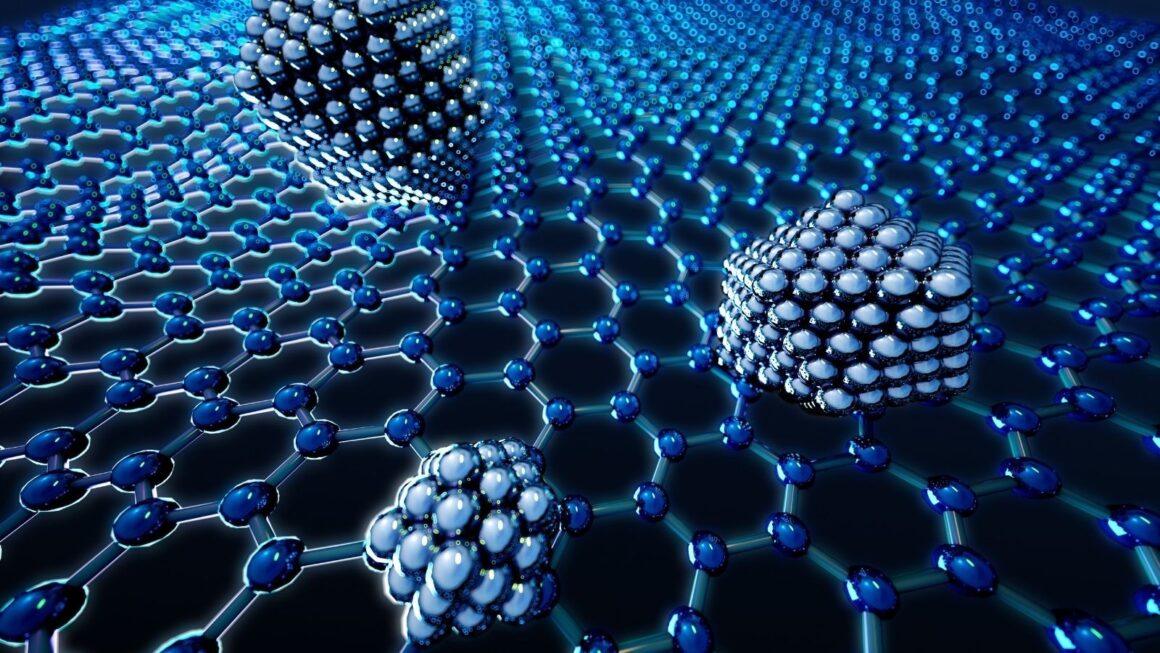
In a world that’s obsessed with innovation and evolution, it’s easy to assume that older technologies are meant to fade into obsolescence. The reality, however, is quite eye-opening, since fixed bed catalysts continue to do the heavy lifting across refineries, chemical plants, and pharmaceutical facilities worldwide.
But why? Read on to find out.
First, What Are Fixed Bed Reactors?
Just in case you don’t know much about fixed-bed reactors, they are a type of chemical reactor that uses a solid catalyst or packing material that’s fixed in place. The reactants, therefore, flow through it to produce the desired chemical reactions.
Unlike fluidised or moving beds, the catalyst remains immobile. Thus, the reactions will always have some form of stability, which is the foundation of various advantages like consistent residence time, predictable flow patterns, and straightforward reactor designs.
The best fixed bed catalyst manufacturing companies, like Applied Catalysts, also go the extra mile to offer custom catalysts to ensure your production needs are met. This way, you won’t just experience the textbook benefits of a fixed bed reactor setup, but also be sure that your system is built to handle the unique challenges of your production process.
So, Why Are Fixed Bed Catalysts Still Trusted?
If you ask facility owners why they go for fixed-bed reactors, many will mention something along the lines of simplicity and robustness, but these aren’t the only reasons. Here are others:
1. Operational Reliability
One of the most convincing reasons to choose fixed-bed catalysts is their operational reliability. This is in consideration that chemical production facilities prioritise uptime a lot. Every unplanned shutdown ripples through supply chains, production schedules, and ultimately, profitability. Fixed-bed reactor systems have fewer moving parts and simpler hydraulics, thus offering a level of dependability that the more complex reactor systems struggle to match.
What’s more, operators understand them. Engineers know how they behave under stress. Maintenance teams can pinpoint where the failures are likely and how to prevent them. That collective operational knowledge, built over decades, offers great economic value.
2. High Precision and Selectivity
Even though volume is important in modern chemical production, you also must pay great attention to precision. Fixed-bed catalysts excel in applications where selectivity matters and reaction conditions must be tightly tuned since it’s easy to control flow rates, temperature gradients, and contact time.
Some of the most ideal applications of fixed-bed reactor systems in relation to precision and selectivity include, but aren’t limited to:
- Petrochemical refining processes
- Fine chemical and pharmaceutical intermediates
- Speciality chemicals manufacturing
- Gas-phase reactions requiring controlled kinetics
In contexts where consistency is king, a predictable catalyst bed allows downstream processes to be designed with confidence. This reduces waste, reprocessing, and quality deviations.
3. Predictable Scalability
In chemical production, scalability is rarely straightforward. However, fixed-bed catalyst systems offer one of the most predictable scale-up pathways. Since the reaction behaviour in fixed beds is well understood, engineers can scale capacity through one of the following solutions:
(i) Adding parallel reactor trains
(ii) Increasing bed length or diameter
(iii) Using modular reactor designs
This helps to avoid the nonlinear hydrodynamic challenges that are often associated with fluidised or slurry systems. For a facility that’s focused on incremental growth as opposed to radical expansion, fixed beds offer a low-risk path.
4. Great Energy Efficiency
As more and more production processes become cost-sensitive, it’s crucial to pay attention to how energy impacts your overall expenses. Where cost saving is non-negotiable, fixed-bed reactor systems are a great option since they operate with lower energy demands compared to more mechanically complex systems. With these, there’s no need to suspend particles, maintain fluidisation velocities, or manage catalyst circulation loops.
As if that’s not enough, it’s often much easier to ensure proper heat integration and engineer pressure drops carefully. Also, when paired with effective heat-exchange designs such as staged beds or multi-tubular reactors, fixed bed systems can deliver exceptional thermal efficiency.

Ready to Enjoy These Benefits and More?
While we’ve mentioned a couple of benefits that make fixed-bed catalysts a great choice in modern chemical production, it’s also worth noting that these catalysts haven’t stood still technologically. Advances in catalyst formulation, support material, and pellet geometry have dramatically improved performance.
However, you aren’t going to experience these benefits without engaging the right manufacturer, which is where Applied Catalysts comes in. With more than 25 years of contract and custom catalyst manufacturing, you can be sure they will offer the solution you seek.