The fact that designing a brand image is crucial for the success of any business is hardly a surprise for anyone. Usually, such concepts as brand design are associated with advertising campaigns, unique logo design, and other elements of visual identity. Undoubtedly, all these elements are important when creating an efficient brand image; however, they represent merely a minor part of the entire process of branding.
As research shows, a brand is built within regular business activities and may be even referred to as an attribute of a business. Every invoice you send to a client, every printed proposal, every letter you write to a prospective customer, and every delivery your company receives from suppliers – all these activities may be regarded as branding moments aimed at building relationships with your audience. However, few entrepreneurs pay enough attention to this issue.
The problem is especially urgent for SMEs operating in highly competitive markets, where there are large corporations with huge budgets for marketing activities. Compared to giant companies, smaller ones often cannot allocate sufficient funds for implementing efficient marketing campaigns. However, the most efficient ways to increase brand awareness are those requiring minimal investment.
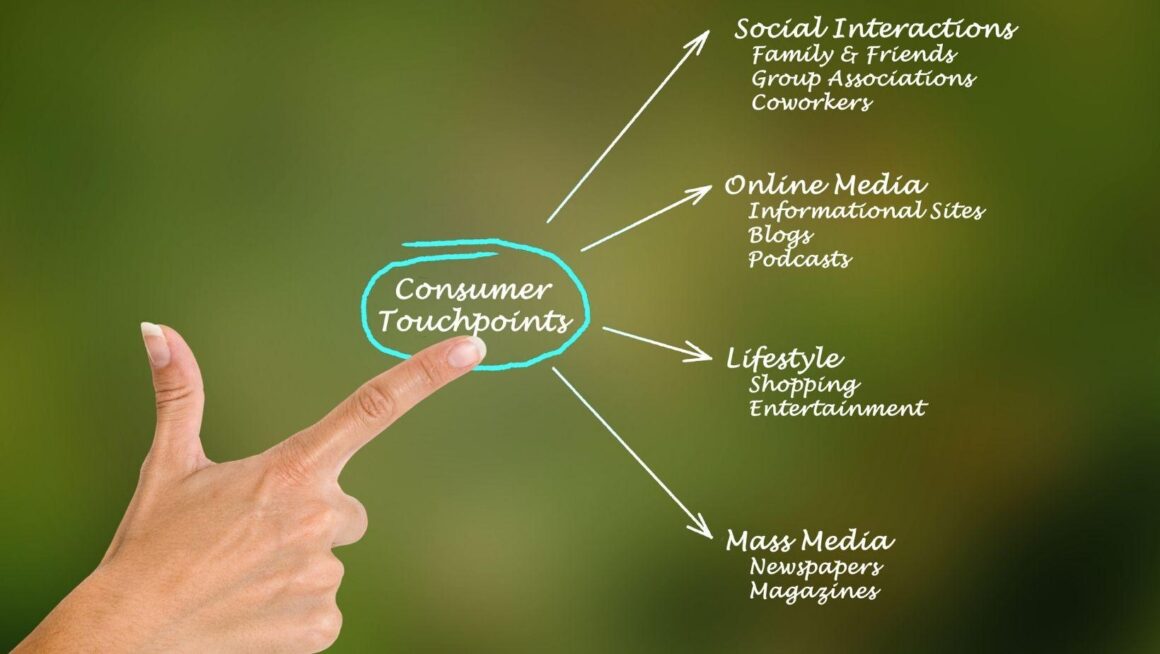
Customer Touchpoints: What They Are and Why They Matter
The first thing that comes to mind when discussing the issue of customer touchpoints is their connection with visual elements, used as tools for brand promotion. Indeed, these interactions cover a wide range of activities beyond the initial understanding. Specifically, customer touchpoints include: Your website, landing pages, and blog posts. Every visit to one of these web pages means that the customer gets the idea of the brand. Poorly developed and formatted pages leave negative impressions on users that negatively influence their decision-making in favor of your brand.
Your online advertisements. Depending on what kind of advertising you implement, whether PPC, display, video marketing, or other types of promotion, your clients will receive an idea of your brand.
Social media profiles. No matter whether your company operates a Facebook page, Instagram account, or Twitter profile, these profiles are important as they allow the target audience to learn about your company.
Your invoices, proposals, printed materials, emails, and letters. All these customer touchpoints contribute to shaping the general idea of your brand. At the same time, these touchpoints are even more important than those related to marketing as they become regular activities.
The examples provided above show that customer touchpoints do not consist of visual elements alone. On the contrary, many of them have nothing in common with marketing campaigns and are an integral part of daily business activities. Nonetheless, neglecting these touchpoints is one of the biggest mistakes that entrepreneurs may commit.
Customer Touchpoints that Can Be Used as Competitive Advantages
As you see, customer touchpoints are rather various. However, some touchpoints have higher priority than others.
Below you will find the list of interactions you should definitely pay attention to when working on the image of your brand
Invoices and proposals
When you deal with the provision of services, the role of these touchpoints becomes especially important.
Namely, sending your clients an invoice means that you inform them about how reliable you are and whether they can trust you as a professional company. A proposal you provide to a prospective client should show the quality of services you offer and their benefits.
In order to enhance efficiency of these touchpoints, consider the following recommendations: Integrate your logo, tagline, and other key elements of your identity into each invoice and proposal as it will help customers to recognize your brand name in your advertisements later.
Use consistent color schemes and fonts in order to achieve uniformity of these documents and to ensure that clients can distinguish them easily.
Make sure that the tone of voice in these materials is unified in order to demonstrate that you are speaking in the name of your brand.
Select appropriate paper and high-quality printing in order to showcase the highest quality of your services.
Packaging and deliverables. Businesses dealing with sales of products should pay particular attention to the packaging and delivery of goods as unboxing provides a unique and emotional experience to buyers.
For instance, well-packaged goods make customers delighted, and this may positively influence their decision-making processes. Also, it should be ensured that what customers get in your package corresponds to the idea of your brand. When preparing for shipping, you can use the following tips
- Integrate a note or a personalized tag into your box to make customers feel valued
- Make your package stand out among other boxes to attract customers’ attention.
- Provide a great description of your product in your box.
- Check the safety of your package before sending it in order to ensure that your product does not get damaged.
Communications and letters. These touchpoints are very important for building a good reputation. These pieces of correspondence should correspond to the general brand image in terms of the usage of certain fonts, colors, etc. You should demonstrate professionalism and reliability of your company to customers who are willing to spend money on your services.
Still, you should avoid making letters boring for your audience. Instead, you can use some captivating images or phrases. Remember that you should persuade the recipient to trust your brand.
Creating Brand Consistency Across Various Communication Channels
As mentioned above, many business owners believe that branding is connected with the development of brand design elements only. Actually, branding is a much more complicated process, which involves many activities. Nevertheless, the main requirement for developing an effective brand is keeping brand consistency across all channels of interaction between customers and your company.
In particular, it implies usage of identical visual elements, colors, and tones of voice in all communications and documents. This principle operates as follows:Seeing the same brand elements in different contexts, clients will be able to recognize your brand quickly.
Clients will know how to behave while communicating with your company and will stay loyal to your brand. Clients will be able to differentiate your brand from others, based on particular features. Thus, brand consistency allows establishing unique brand culture, which is appreciated by clients and makes them cooperate with your company.
Turning Customer Touchpoints Into Branding Assets
Now, when you have got some understanding of the significance of the issue of branding and when you have learned how to make some of the touchpoints more valuable, it is time to move forward.
In order to create a great brand image, you will have to produce many documents and materials, which should comply with basic principles of branding. Consider the following tips when producing such materials:
- Acquire branded business stationery to create efficient printed materials for promotion of your brand.
- Purchase business cards that will provide customers with an impressive impression of your brand.Prepare printed letters and use them in case of correspondence with customers and prospective clients.
- Get branded envelopes and office materials in order to make your documents look professional. Order branded packaging in order to create a unique impression on your clients.
Start Seeing Every Interaction as an Opportunity
Branding is not a campaign. It is not something that happens only when you are actively marketing. It is the sum total of every experience a customer has with your business, including the ones that happen long after the initial sale.
The businesses that understand this are the ones that audit their touchpoints regularly, asking whether each interaction is reinforcing or undermining the impression they want to create. They are the ones that invest in the details that others overlook, knowing that small improvements compound into a significantly stronger brand over time.
Every invoice, every proposal, every package, every printed document is a chance to leave a lasting impression. The question is whether your business is making the most of it.