
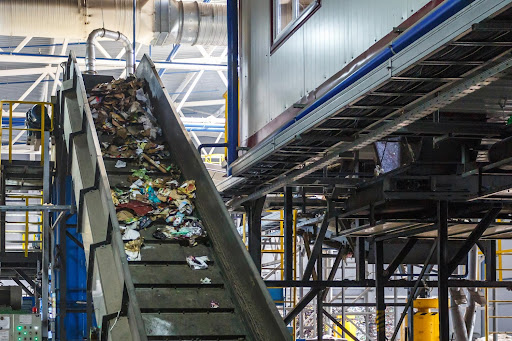
Most people hand off their unwanted items to a junk removal crew and consider the problem solved. The truck pulls away, the garage is clear, and the mental load of dealing with the clutter disappears with it. What very few people ever think about is what happens between the moment that truck rolls down the driveway and the moment those items reach their final destination. The answer is more complicated than most customers expect, significantly more varied than the industry often communicates, and far more consequential than most people realize.
About 50% of America’s 292.4 million tons of annual municipal solid waste ends up in one of the country’s 3,000-plus active landfills. Another 23.6% is recycled, 8.5% is composted, and 11.8% is burned in waste-to-energy plants. The average bag of trash travels 71 miles over 8 days before reaching its final destination. Those numbers represent the full waste stream, but they set the context for what professional junk removal services are working within, and they explain why where your items actually end up depends almost entirely on which company you hire and how seriously it takes the sorting process.
The Sorting Process That Starts Before the Truck Leaves
“The most important thing after a junk removal pickup is sorting, and the best companies start this process before the truck even reaches a processing facility. Crews that sort on-site separate items into categories as they load: items that can be donated, items that can be recycled, and items that need to go to a transfer station or landfill. If they see a working appliance, usable furniture, or household items in good condition, those go to one side. Scrap metal, clean wood, cardboard, and other recyclable materials get separated too. “Highlights Trevan Fenner, Owner of Mean Green Junk Removal
That on-site separation matters because it determines what options remain available once the truck reaches the sorting facility. A load that has been thrown together without any separation, with clean cardboard mixed in with wet debris and furniture stacked against sharp metal, limits what can be diverted from disposal because contamination closes off recycling and donation pathways. Soiled materials, wet cardboard, and mixed trash reduce recycling options and can push more volume into standard trash channels regardless of the customer’s intentions or the company’s stated policies.
The companies that execute this well invest in training their crews to recognize what has diversion potential before it is lost in a mixed load. The ones that do not are taking the faster, cheaper path to the nearest landfill or transfer station regardless of what their website says about environmental commitment.
Where the Items That Can Be Saved Actually Go
Items that are in genuinely usable condition follow a different path from the rest of the load, and that path has real community impact. Items in good condition get routed to local donation partners. Furniture, working electronics, household goods, and building materials that are still usable go to organizations that can put them back into the community. Goodwill, Habitat for Humanity ReStores, local shelters, and community thrift operations all accept items through junk removal company partnerships, though each has its own condition requirements and acceptance limits that change based on current inventory.
The gap between what customers expect and what actually gets donated is one of the most important things to understand when choosing a junk removal company. Donation is a powerful selling point that suggests environmental responsibility and community impact. But hauling is a volume-driven business. Trucks are packed tightly with mixed materials, often tossed in without sorting. Once a load of junk is collected, donating items becomes very complicated. Many companies claim to donate but without the facilities and systems in place, their promises rarely match reality. Items marked for donation too often end up in the dump.
The difference between a company that actually delivers on donation and one that uses it as marketing language comes down to infrastructure. Reputable companies have warehouse space for sorting, established relationships with specific donation partners, and provide receipts when items are successfully donated. Companies without that infrastructure have no realistic pathway for delivering on donation claims, regardless of how prominently those claims feature in their advertising.
What Happens to Recyclable Materials
Recycling is not a single stream. Different materials require different facilities and different processing steps, and the route each material takes after pickup reflects the specific infrastructure available in the local market.
Metals, appliances, e-waste, cardboard, and clean wood can often be recycled rather than landfilled. These get routed to appropriate recycling facilities. Scrap metal is one of the most consistently recyclable categories in junk removal because the commodity value of steel, aluminum, and copper creates a financial incentive for recyclers to process it. Appliances containing refrigerants require certified technician handling before they can be scrapped, because EPA regulations mandate refrigerant recovery before a unit can be disposed of or recycled.
Electronic waste, or e-waste, is a category that carries specific environmental stakes. Only 40% of the 3.14 million tons of e-waste generated in the U.S. is collected for recycling. Electronics tossed in landfills leach lead and mercury into soil and water. Responsible junk removal companies route e-waste to certified electronics recyclers who recover valuable materials including gold, copper, and rare earth elements while ensuring that hazardous components are handled in compliance with environmental regulations. Customers hiring a junk removal service for a cleanout that includes old computers, televisions, or phones should specifically ask how e-waste is handled, because the variation between companies on this point is significant.
Construction and demolition debris represents another major category, with approximately 600 million tons of C&D debris generated in the U.S. annually, and only about 35% of it recycled or recovered. Clean wood, drywall, concrete, and metal from renovation projects all have recycling pathways when they are sorted cleanly. Mixed debris from demolition work is harder to divert because the sorting cost increases as material categories become intermingled.
What Goes to the Landfill and Why
Even well-run junk removal operations with genuine commitment to diversion send a portion of every load to the landfill, because some items have no viable alternative. Damaged furniture that donation centers will not accept, contaminated materials that recyclers cannot process, and genuinely end-of-life items that have no reuse or recycling pathway all ultimately go to disposal facilities.
Furniture, mattresses, and appliances collected through bulk pickup typically go straight to the landfill. Mattress recycling exists in some states, with California, Connecticut, and Rhode Island having mandatory mattress recycling programs, but nationwide the vast majority of bulky items are landfilled. For mattresses specifically, the condition, state regulations, and whether the company has access to a mattress recycling facility all determine the outcome. Items that look potentially salvageable but are rejected by donation centers because of staining, odors, or structural damage follow the same landfill path regardless of their apparent condition at the time of pickup.
Rules around waste disposal have tightened significantly in recent years, and junk removal sits right in the middle of it. Cities want less landfill use, states push higher recycling rates, and regulators watch closely how electronics, mattresses, and hazardous items get handled. This pressure forces junk removal companies to sort more, document more, and send materials to the right places instead of dumping everything in one spot.
“Transparency only works when it’s backed by structured information. Whether you’re evaluating a real estate investment or tracking what happens to discarded materials, decisions become more trustworthy when there’s a clear record instead of assumptions. Companies that document where items are donated, recycled, or disposed of create accountability for both customers and partners. That kind of visibility builds confidence because people don’t have to rely on marketing claims—they can see the process supported by real data,“ says Jake Miakota, CEO at Subdivisions.
How to Know If Your Junk Removal Company Is Actually Doing What It Claims
The transparency gap between what junk removal companies claim and what they deliver is the most practical piece of information for any customer trying to make a responsible choice. If you want to ensure your items are donated, resold, or responsibly recycled, look for companies that provide receipts for donations, have warehousing or sorting facilities that make true diversion programs possible, and maintain ongoing relationships with specific nonprofit partners rather than vague references to giving back.
After pickup, systems that track where materials go for recycling, donation, or disposal are what separate companies that can prove their diversion claims from those that cannot. When a company can tell you specifically where your items went and provide documentation to back that up, they have built the operational infrastructure that makes responsible junk removal real rather than promotional. When they cannot, the truck door closed on items that most likely went somewhere you would not have approved if you had been watching.
The question worth asking before you book is simple: what actually happens after you drive away? The answer tells you everything about whether the company you are hiring is doing what it says.