
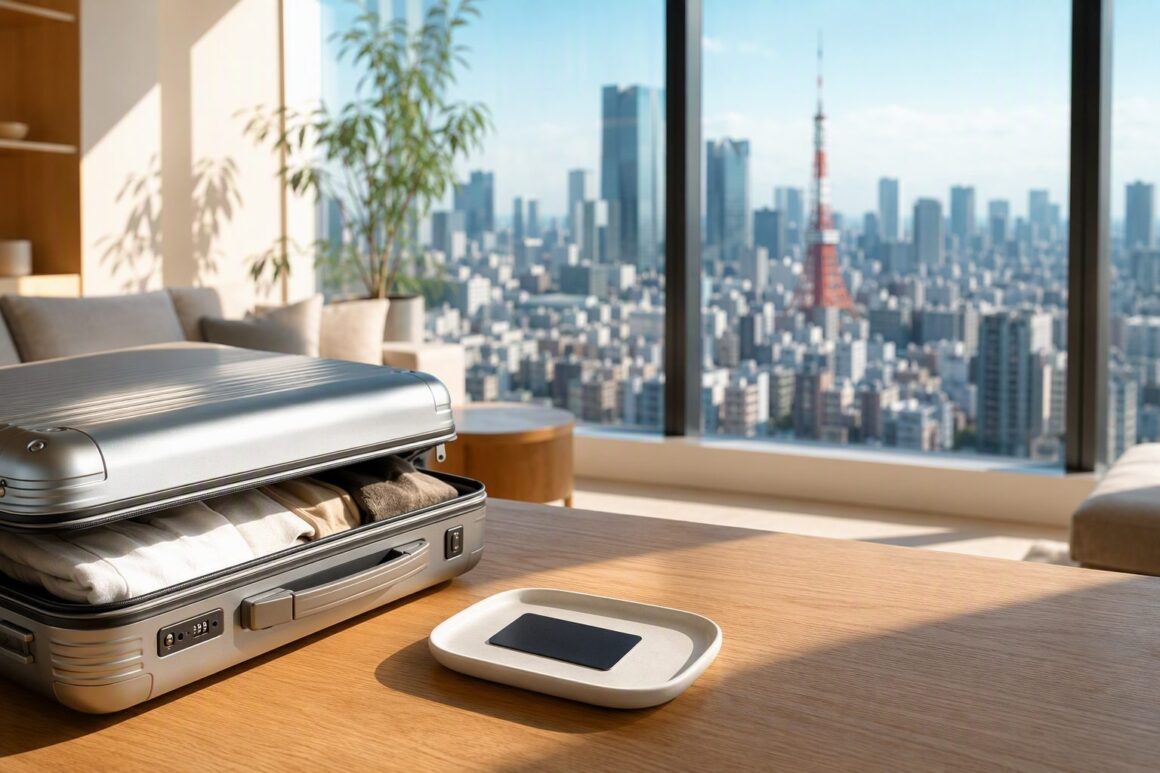
Your new hire has a fixed Tokyo start date in 2026. A conventional apartment lease can demand several months of cash before anyone hands over a key, and only part of that money ever comes back. So the relocation cost hits your budget weeks before the employee hits the office. That timing is why employee relocation costs in Tokyo should be judged on total cash outlay, not rent alone.
Companies can keep that cash inside the business by booking corporate stays in Tokyo without lease deposits for assignments of 30 days or longer. Anyplace runs furnished monthly apartments across Tokyo on that basis, which removes the standard two-year commitment and the setup bill attached to it. HR still has to confirm the real booking terms for the unit it wants.
What a Traditional Tokyo Lease Costs Before Move-In
Ask the broker for an itemized move-in estimate before you compare anything against furnished housing. The total varies by property and landlord, and the individual line items are treated very differently after payment.
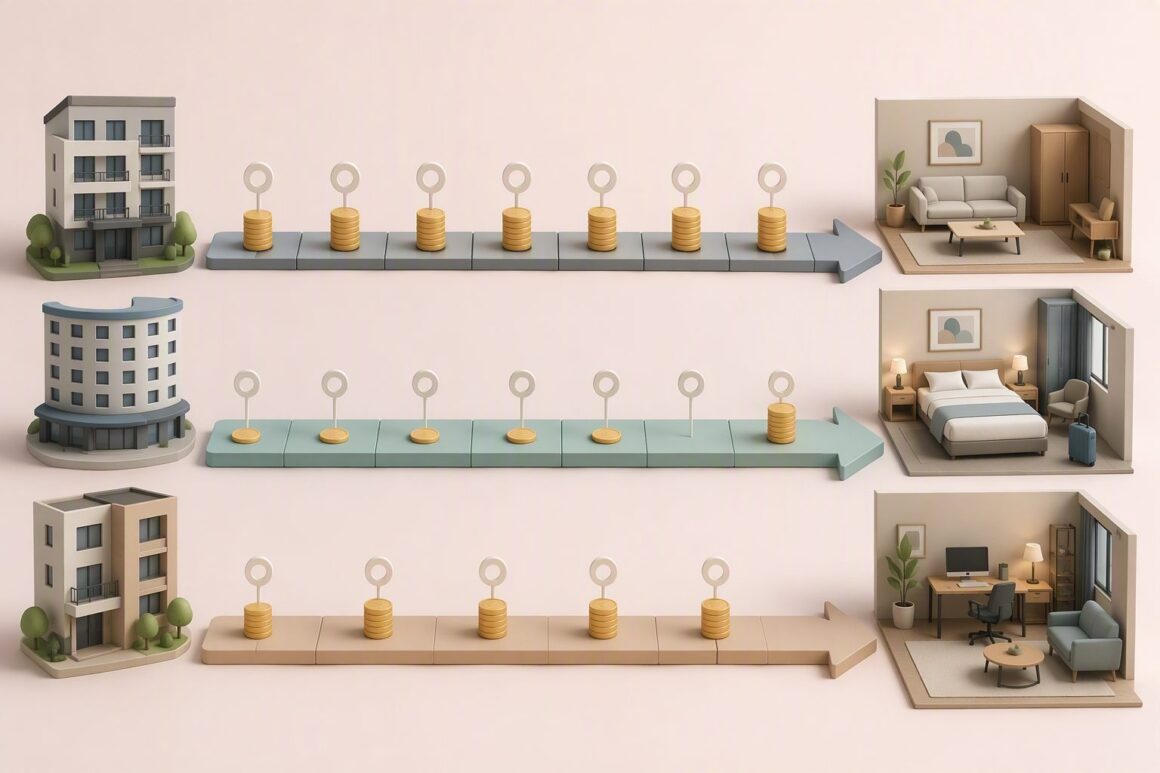
Key money (reikin) goes to the landlord where the property requires it, and it’s generally non-refundable. Gone. For an employer, that’s relocation spending nobody recovers, and Anyplace’s Tokyo corporate housing page puts it at one to two months’ rent on top of the deposit and agency costs. This is the practical problem with Japan rental key money for employers: it becomes a sunk cost as soon as it is paid.
The security deposit (shikikin) works differently. That money is held against tenant obligations such as unpaid rent or damage, and the lease should spell out which deductions are permitted and how move-out charges get calculated. Ask which version of the restoration guidance published by Japan’s Ministry of Land, Infrastructure, Transport and Tourism the contract follows, and get the answer before signing.
Then come the intermediaries. An agency commission pays the broker for arranging the tenancy. Guarantor costs show up when the landlord wants a personal guarantor or a rent-guarantee company, which is common when an incoming employee has no Japanese rental history at all. Advance rent and administrative charges vary by agreement.
Run the numbers on a hypothetical unit. Assume rent of ¥180,000 a month and a move-in bill worth four to six months of it, which puts roughly ¥720,000 to ¥1.08 million on the table before anyone buys a desk or turns on the electricity. Treat that multiple as an illustration rather than a market average, because it depends entirely on the property and the landlord.
It’s also worth separating expenses from restricted cash, since finance treats them differently. Key money and commissions are expenses once paid. A refundable deposit stays on the books as an asset, but it’s unavailable for the length of the tenancy and can shrink through whatever deductions the agreement permits. Then there’s the term itself: an assignment that ends in month seven can leave the company paying rent on an empty apartment for the balance of the lease. Furniture and utility setup add costs that never appear on the lease invoice.
How Anyplace Changes the Math for Corporate Housing in Tokyo
The model is plain enough: move-in-ready apartments booked by the month, so a company matches housing to an assignment instead of signing a standard long-term residential lease. Furniture, internet, and other core living essentials come with the unit. In other words, these are furnished apartments for relocated employees, with the basic setup already handled.
Housing Designed Around Work Readiness
The workspace is what separates this from a basic serviced apartment. Anyplace advertises the following equipment in its Tokyo inventory:
- Height-adjustable standing desk
- Ergonomic work chair
- Ultrawide monitor
- Keyboard and mouse
- Private high-speed internet
- Webcam, microphone, key light and collapsible green screen, where specified in the listing
Check each item against the individual listing rather than assuming it applies to every apartment; the video-conferencing extras in particular are described property by property. The payoff is simple. Nobody buys a monitor or waits on an internet installation appointment, and client calls don’t happen from a hotel desk built for a laptop and nothing else.
Flexible Terms and Online Booking
After that first month, the arrangement runs month to month, with extensions subject to availability and the terms of the booked property. You pick dates around the assignment instead of defaulting to a residential term the company may never use. Anyplace advertises its Tokyo apartments without deposits, key money or guarantor requirements, and the booking runs online. For teams looking for monthly apartments in Tokyo without deposits, that removes a major upfront cash requirement.
Is Monthly Furnished Housing Cheaper Than a Tokyo Lease?
Sometimes. It’s more cost-effective for a temporary assignment when the company would otherwise absorb heavy setup charges or break a long lease early. It isn’t automatically cheaper on monthly rent. For employers comparing Tokyo corporate housing vs traditional lease options, the monthly rate is only one part of the calculation.
| Decision factor | Traditional residential lease | Business hotel | Anyplace furnished housing |
| Typical commitment | Often designed around a longer fixed term | Nightly or short-stay booking | 30-day minimum, subject to listing terms |
| Initial cash requirement | Often several months of rent before move-in | Usually avoids lease-style setup costs | Advertised without lease-style setup charges |
| Furniture and utilities | Commonly arranged separately | Included | Advertised asincluded or ready for use |
| Work environment | Must be equipped by the employer or employee | Often limited to a small desk or shared space | Dedicated home-office setup advertised |
| Assignment changes | Early termination may create additional costs | Flexible but potentially expensive over longer periods | Extensions may be possible, subject to availability |
| Best fit | Stable, long-term residence | Brief visits | Relocations and projects measured in months |
Use one framework so finance and HR argue about the same number: total assignment cost = move-in charges + monthly rate + setup + utilities + administration + exit costs.
A higher monthly rate can still preserve capital when it removes a large payment due before move-in and stops the company paying for months nobody occupies. The math depends on the specific options.
Months, not years. That’s the window where the monthly model wins.
Running the Decision Without Creating New Exposure
Start with two things: where the employee actually works, and how long the assignment is meant to run. Budget comes third, and it should be a total-cost ceiling rather than a rent ceiling. Confirm the likely extension scenario too, because a three-month booking that turns into a seven-month stay is a different decision than the one you approved.
Before anyone signs off, read the total monthly price rather than the nightly equivalent, then check how taxes and service charges are applied. Confirm which utilities are included and whether usage caps apply. Look at what the booking flow adds at checkout: a payment authorization hold ties up cash you hadn’t planned to commit, and cleaning or service fees change the comparison you just built. A damage provision does too. Availability across the whole assignment window matters as much as the number at the bottom.
Ask Anyplace to confirm in writing whatever your finance team will rely on, for the specific unit and the specific dates. Move-in timing goes in that email. It should also cover private internet, in-unit laundry and kitchen equipment, and the absence of a deposit or guarantor requirement for that apartment.
Then name one internal owner for the booking. When a relocated employee runs into a maintenance problem in week two, an existing escalation path is worth more than a negotiated discount.
Where in Tokyo to Book
Treat these as starting points and confirm availability before you promise anyone a neighborhood. Nihonbashi puts an employee within reach of Tokyo Station and the Marunouchi and Otemachi office districts, where much of the city’s finance and professional-services work sits. Ebisu is one stop from Shibuya on the Yamanote Line and connects through the Hibiya Line, which suits plenty of technology and creative teams. Shiba, in central Minato near Tokyo Tower, works for staff based around Toranomon. Yotsuya is the quieter central option, with rail running toward Shinjuku and other commercial areas. And Shibuya itself makes sense when the office or the client is in the district.
For a project team, proximity to the work site usually beats the prestige of the address.
Match Housing Commitments to the Assignment
The lease question isn’t really about rent. It’s about how much cash a company is willing to immobilize, and for how long, to house someone who may be in Tokyo for a matter of months. Anyplace fits the case where an employee needs a furnished home and a working desk for a defined project, and where a long residential commitment would lock up money the business needs elsewhere. Put the full obligations of a conventional lease beside the current price and terms of a suitable Anyplace apartment before you approve the relocation. That comparison provides the answer.