In the IT industry, a common misconception exists that the Discovery phase is just another formality—drafting a formal specification and signing off on a budget estimate. Looking under the hood, 80% of projects exceed planned release times not because of slow coding. They fail because the team started coding a lightweight script, discovered midway that they were building a full engine, and then decided to ship it as a distributed cloud platform.
The 2-week Discovery Phase doesn’t equal a box-ticking exercise. It is a “stress test” for your idea—proving its viability before the budget is entirely wasted. This essential stage directly influences the success of custom software development. Let’s drill this down.
The Power of Tradition—A Single Mistake Made Routinely
Routinely, the Discovery stage is documented in a 100-page file that nobody actually looks at. This results in wasted budgets and a false sense of security that everything has been accounted for. The truth is, the purpose of a 2-week Discovery Phase is not to map out every scroll interaction, but to figure out critical uncertainties and cut features, leaving only a viable core (the MVP).
Below is an example of how these 14 days might look to ensure the product successfully reaches launch on time.
Week 1: Excavation, Constraints, and a Wish List
Days 1–2: Saying No to Unvalidated Assumptions
More often than not, stakeholders arrive with ideas that mix business objectives with pipe dreams.
❌Capture every requirement in a notebook.
✅Conduct a prioritization session through the Impact vs. Effort framework.
Real-world example:
The client for a B2B logistics service was keen on incorporating a “smart neural network for optimal route prediction” in the first version. This task devoured 60% of the total development time. During the Discovery phase, it turned out that dispatchers didn’t need AI in 90% of cases; what they needed was a straightforward “Quick Print Waybill” button. The AI feature was moved to the Version 2.0 backlog, saving a month and a half of development time.
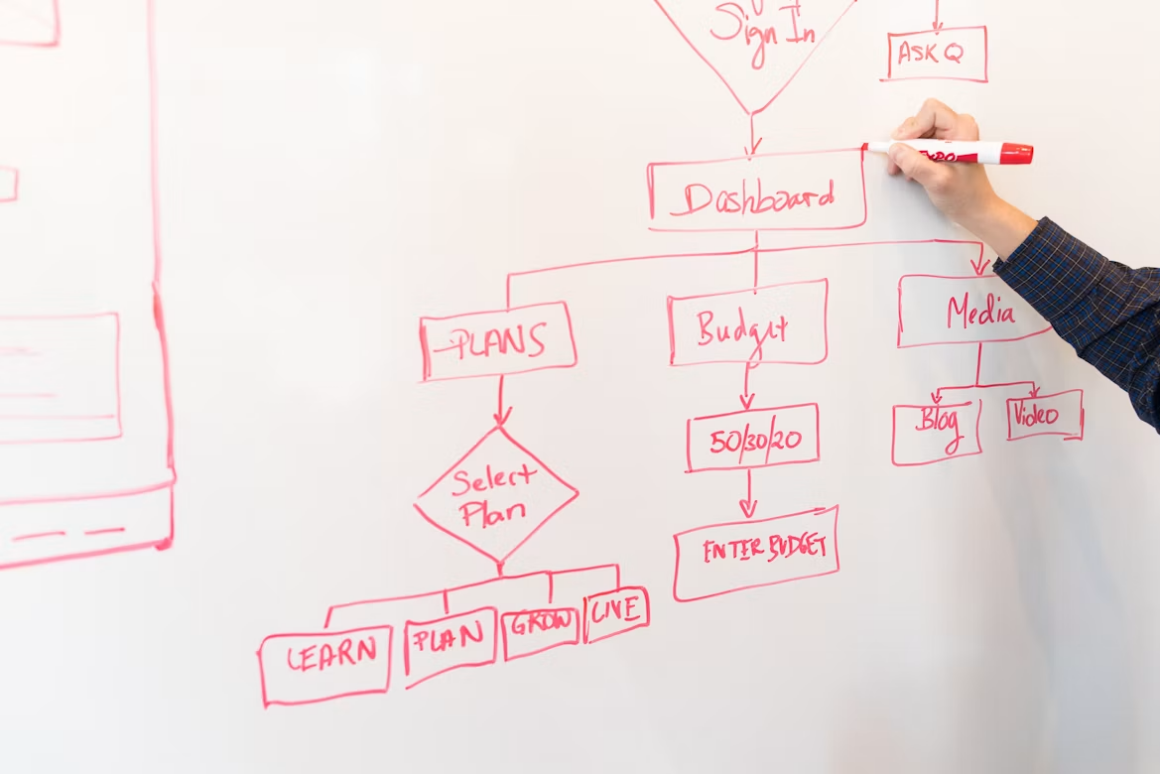
Days 3–5: Mapping the Actual CJM (Customer Journey Map)
There is no need to sketch a picture-perfect user path; however, identifying the points where the user might stumble is part of a bigger picture.
At this stage, it is crucial to document not just the standard operating workflow, but also edge cases:
Week 2: Technical Audit and Robust End-to-End Prototype
Days 6–8: Architectural Pitfalls (Tech Spike)
Integrations with third-party services (payment gateways, CRMs, external APIs) are among the most widespread deadline killers. If developers merely “eyeball” the documentation for a third-party API, the deadline is guaranteed to slip by a month.
With robust discovery phase services, an architect or a senior developer must conduct a “spike”—writing the minimum amount of working code required to make an actual request to the third-party service and fetch a response.
Real-world example:
A development team was working on a table-booking app. During the Discovery phase, a developer decided to run a test request against the API of the restaurant management system the client planned to use. However, the API updated data on available tables with a 15-minute lag. Had this been discovered during pre-release testing, the project would have required a complete revamp. The issue was resolved at the architectural level before the main code was even written.
Days 9–10: Clicks over Polished Visuals (Interactive Wireframes)
Cutting to the chase: never waste time on final UI design during the Discovery phase. All you need is an interactive, grayscale, clickable prototype (created in Figma or Axure). If a user isn’t informed where to click on a grayscale mockup, no amount of fancy UI—gradients or animations—will fix that.
What Should You Have in Hand by Day 14?
A proper Discovery phase doesn’t end with a massive tome, but with just four deliverables:
- Scope: A list of what is included in the release and a strict list of what is guaranteed to be excluded.
- Architecture map and tech stack: Unmistakable clarity on the system’s scale and its integrations.
- Clickable prototype: Logic validated through user scenarios, free of visual clutter.
- Budget estimate and schedule: An estimate broken down by sprints with a built-in buffer for unforeseen complications.
Summary
A two-week Discovery phase doesn’t postpone go-live: it’s an investment that pays for itself within the first two months of development. To get rid of unrealistic expectations means consciously transitioning from a “we-know-everything ” mindset to grounded technical and product calculations.