
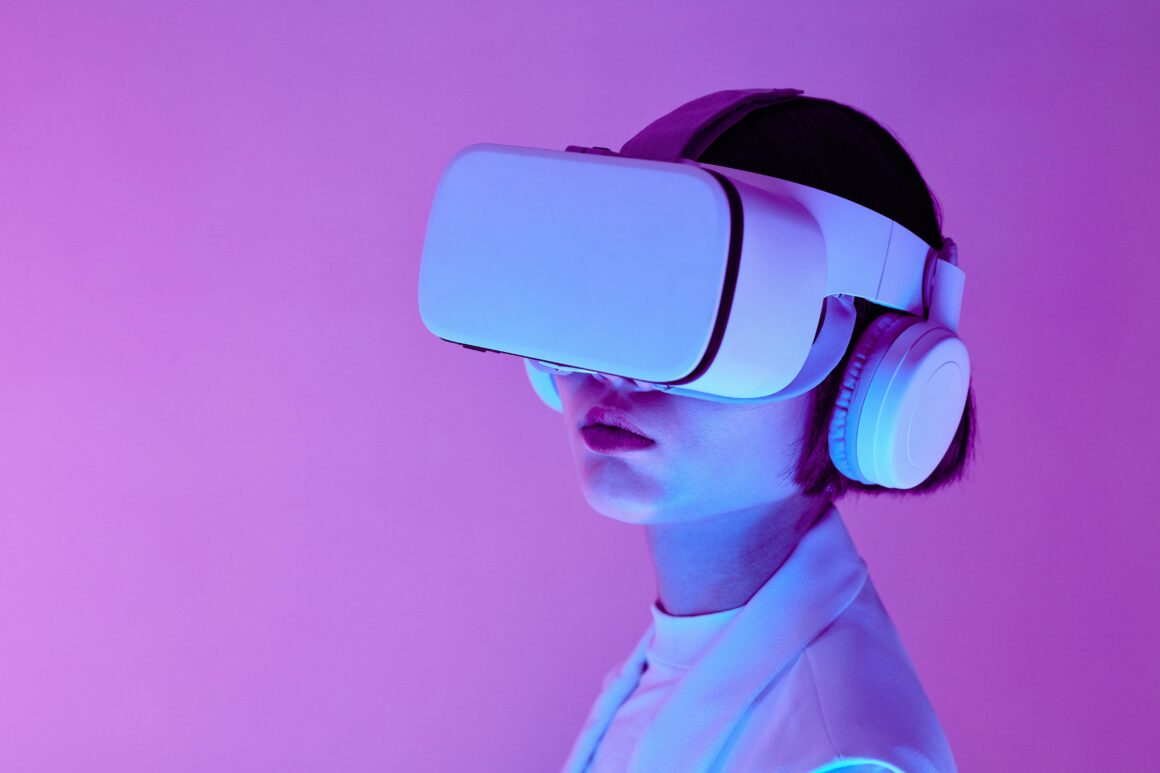
These days, learning a new language isn’t just about boring textbooks and memorizing vocab. Tech has seriously flipped the game, and Virtual Reality (VR) is leading the charge. It’s giving learners a way to actually step into the language instead of just staring at flashcards. Seriously, it’s like your brain gets a backstage pass.
Immersion that actually works
The coolest thing about VR? Immersion. You’re not stuck in a classroom anymore—you’re dropped into a full-on virtual world. Imagine walking through a café in Paris, ordering a croissant, and chatting with the barista in French. Or strolling the streets of Tokyo and asking for directions. You gotta use the language to get through the scenario, and your brain adapts super fast. It’s like forced practice, but way more fun. No boring drills here.
Check out the Pico 4 Ultra Enterprise—this headset is nuts. It creates super-realistic scenarios so you can practice everything from ordering food to negotiating a business deal. You’re not just reading; you’re actually interacting. Your brain treats it almost like real life. That’s the magic—VR puts you in situations where you have to think and respond in the language.
Boosting confidence without the stress
One of the biggest hurdles in learning a new language? Fear of messing up. VR solves that. You get to practice talking in a completely safe space. You can talk to virtual characters, repeat sentences, or run through whole conversations over and over. No judgment, no embarrassment. And the best part? You get instant feedback, so you know what you’re nailing and what you need to fix. That kind of practice seriously builds confidence. When you finally hit the real world, you’re not shaking in your boots—you’re ready to speak up.
Tailored learning for every type of learner
VR isn’t one-size-fits-all either. Future setups are gonna get even smarter, letting learners pick environments that match their style. Visual learners can explore 3D models of objects, auditory learners can dive into interactive dialogues, and kinesthetic learners can act stuff out in the virtual world. It’s about hitting your brain from all angles. Basically, VR makes learning way more personal and way less painful.
AI is jumping in too, which is a game-changer. It can track your progress and adjust the lessons depending on where you struggle. If you keep flubbing past-tense verbs, it’ll push more exercises in that area. Pair that with VR, and learning a new language becomes faster and way more customized.
VR doesn’t replace teachers
Even with all the hype, VR isn’t here to boot teachers out of the classroom. Some people think VR will replace traditional learning, but that’s not how it works. Teachers still matter—explaining tricky grammar, giving cultural context, and helping learners stay motivated. VR is more like your sidekick. It makes learning immersive, interactive, and practical, but it doesn’t replace the human touch that instructors bring.
Why it works
The combination of realistic virtual environments, AI-driven customization, and risk-free speaking practice makes VR a killer tool for language learning. Your brain treats VR almost like reality, which means it sticks way better than traditional memorization. You can practice over and over without feeling stressed or embarrassed. And the immersion? That’s the secret sauce.
VR is straight-up changing the language learning game. It’s not just fun—it actually works. By putting learners in real-life scenarios, offering instant feedback, and letting you practice safely, VR is making it easier than ever to speak a new language confidently.