
Advertising has changed significantly over the last two decades. Businesses used to rely solely on television spots, radio mentions, and expensive print magazine spreads. However, consumer attention has shifted away from these offline channels. To reach modern audiences effectively, companies must now look toward digital platforms where their customers spend most of their time. We’ll explore why moving the budget away from old methods and into paid social media is crucial for business growth today.
The Benefits of Paid Social Ads
Moving your advertising budget to social platforms offers distinct benefits that traditional media simply cannot match. The main advantages of paid social ads include their precision and targeting capabilities. Traditional ads use a broad “spray and pray” approach, hoping the right person eventually sees a generic message. Social platforms, conversely, allow you to narrow down your potential audience based on incredible detail.
You can target users by specific ages, geographic locations, job titles, stated interests, and past online behaviors. Another significant benefit is budget flexibility. You do not need thousands of dollars upfront to start, unlike buying a television spot. You can begin with a very small daily budget to test the waters. Finally, the speed of execution is unmatched in the advertising world. A campaign can go live within minutes. If an ad is performing poorly, you can pause it instantly to save money. This agility allows businesses to adapt quickly to market changes.
The Decline of Traditional Advertising Reach
Traditional advertising methods are quickly losing their former power. Thirty years ago, a prime-time television commercial could effectively reach millions of engaged viewers simultaneously during a popular program. Today, viewer behavior has changed dramatically. People now predominantly use streaming services that are often ad-free, or they record shows and fast-forward heavily through commercial breaks. Consequently, the actual viewability of standard TV ads has plummeted.
Furthermore, physical print media readership continues to decline year after year as people consume news online almost exclusively. This makes the high cost of entry for traditional media difficult for many businesses to justify. Radio suffers a similar fate due to the rise of streaming music services and podcasts.
The biggest issue with these traditional formats, however, is the lack of precise data compared to platforms like Google Ads. It is nearly impossible to know exactly how many people saw a billboard and then made a purchase specifically because of it. This passive form of marketing just does not yield the verifiable results it once did.
What Defines Paid Social Media Marketing
It is important to understand exactly what this modern approach entails. Unlike organic social posting, which relies solely on your existing followers seeing your content for free in their feeds, paid social media involves spending money to guarantee reach. You are essentially paying platforms like Facebook, Instagram, LinkedIn, Twitter, and TikTok to display your advertisements to specific groups of users.
These platforms now operate almost entirely on pay-to-play models for businesses. Because current algorithms heavily favor content from friends and family over business pages, organic reach for brands is extremely low. Therefore, paying is absolutely necessary to get your brand message seen by a wider audience beyond your current followers. The ad formats vary widely depending on the platform. They can range from “sponsored” posts that look like regular news feed items to video ads that play before other content. The defining characteristic, however, is that you control exactly who sees the content by putting money behind it.
Measuring Success with Data and Analytics
Traditional advertising often relies on rough estimates and guesswork regarding campaign performance. In contrast, digital channels provide concrete data that completely removes uncertainty. When you run paid social media campaigns, you receive real-time analytics on every single interaction. You know exactly how many people saw the ad (impressions), how many clicked on it, and importantly, how many took a desired action, such as making a purchase or filling out a lead form.
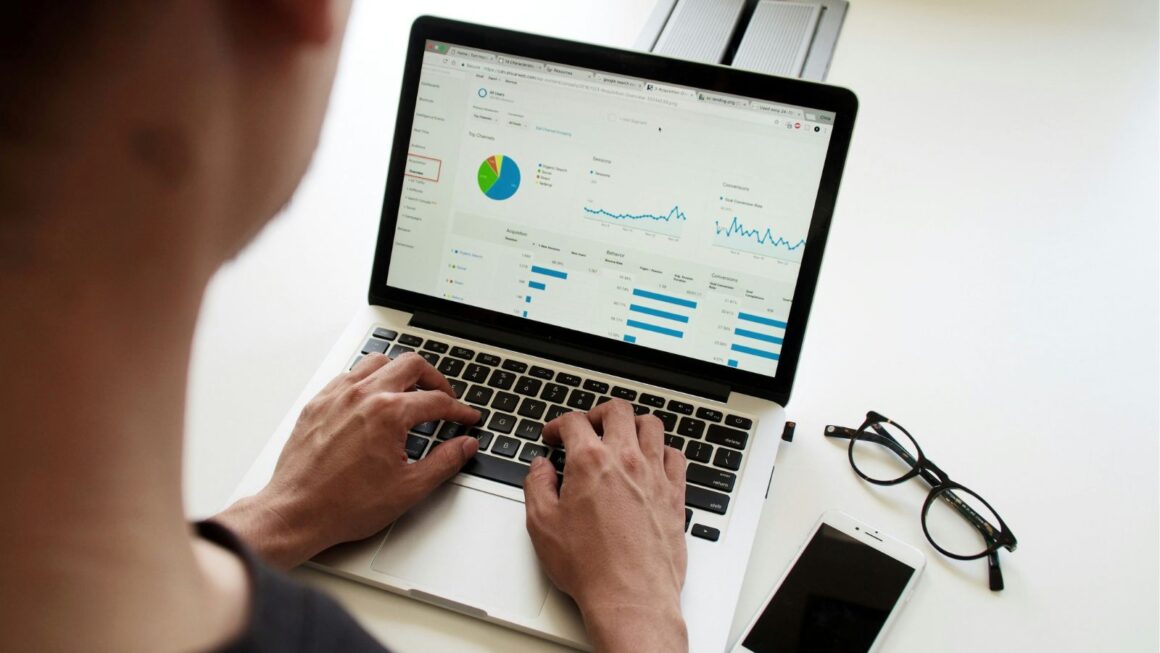
/alt: A man looking at a dashboard displaying ad analytics on his laptop.
/caption: Know which metrics to track to get the most out of your ad investment.
This allows you to calculate your exact return on investment (ROI) down to the penny. Furthermore, these digital tools allow for effective A/B testing. You can run two slightly different versions of an ad simultaneously to see which headline or graphic performs better with your audience. By analyzing these specific metrics, you can make data-driven decisions to optimize future campaigns for better results. This level of transparency and control is simply not possible with a magazine ad or a radio spot.
Integrating Paid Social into Your Strategy
Making the shift does not mean you must abandon traditional methods overnight if they still work for you. For many businesses, a hybrid approach works best initially. However, you must start prioritizing social platforms in your budget allocation to stay relevant. The first step is identifying accurately where your specific audience spends their time online.
For example, a B2B software company will likely find more success on LinkedIn, whereas a trendy fashion brand should focus its efforts on Instagram or TikTok. Next, you need to set clear, measurable goals before spending. Are you looking for immediate sales, or are you trying to build long-term brand awareness? Your goal will dictate your ad format and budget. Finally, ensure you allocate resources for high-quality creative assets. Since social feeds are incredibly crowded, your visuals need to grab attention immediately to stop users from scrolling past your ad.
The Bottom Line
The transition from traditional channels to digital ones is not merely a temporary trend. It is a fundamental shift in how modern consumers interact with brands. Businesses that fail to adapt to this reality risk being left behind by competitors who embrace these digital tools. By leveraging the precise targeting, speed, and data provided by paid social media, you can spend your marketing budget far more efficiently. Now is the time to launch your first test campaign and see the results for yourself.