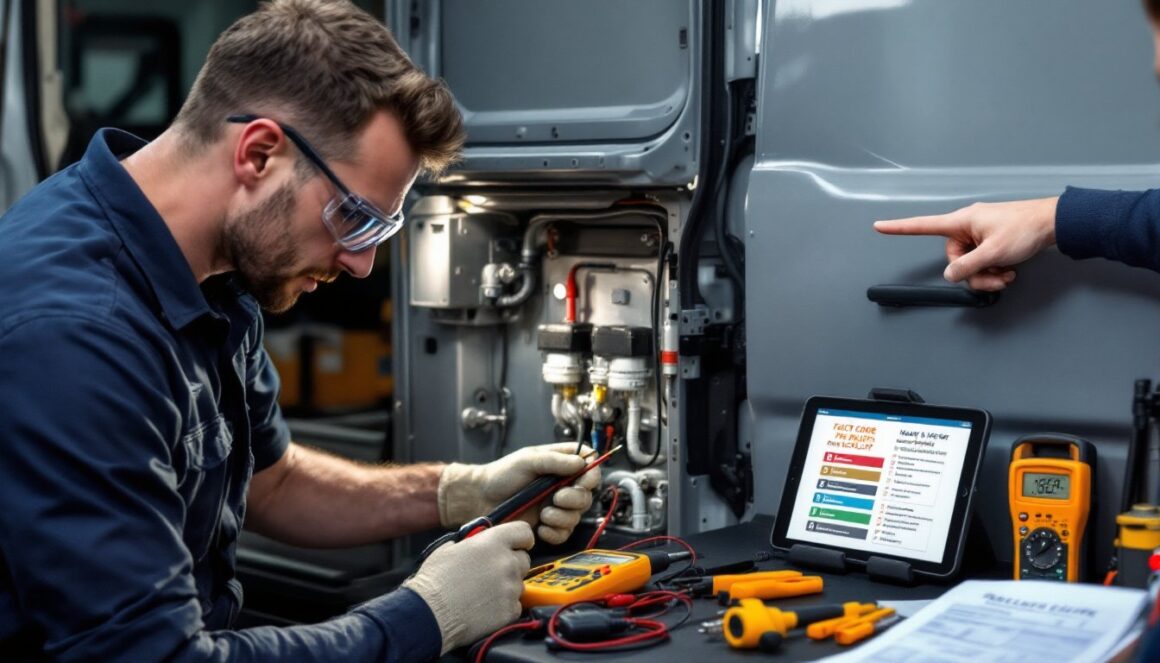
A diesel heater that won’t start in a Ford Transit Connect is frustrating, especially on a cold morning. This guide walks through the most likely causes, battery voltage, fuel delivery, airlocks, glow/ignition faults, and lockout states, and gives clear, practical checks and DIY fixes that a confident DIYer can run in a driveway or garage. The instructions assume basic hand tools and a multimeter: when a procedure requires special tools or a licensed technician, that will be stated up front. Read the safety checklist before touching anything with power or fuel.
Key Takeaways
- A diesel heater on a Ford Transit Connect requires stable battery voltage above 11.5 V to start reliably, so always check and maintain the battery before troubleshooting.
- Fuel supply issues, including low fuel levels, clogged filters, and airlocks, are common causes for the diesel heater not starting and can be fixed by inspecting and bleeding the fuel lines.
- Perform quick 15-minute checks such as verifying fuel level, listening for fan and pump activity, inspecting wiring and fuses, and resetting the heater’s power to resolve most start issues efficiently.
- Address ignition faults by checking glow plug circuits if the fan runs but the burner fails to ignite; advanced repairs should be done by a professional.
- Keeping essential spare parts like fine fuel filters, fuses, and hose clamps on hand helps to perform timely DIY fixes and avoid extended downtime of the diesel heater.
Why Your Diesel Heater On A Ford Transit Connect Fails To Start
Most no-start reports for diesel heaters on Transit Connects come down to a short list of issues that are easy to check. The common failure modes are:
- Low battery voltage: Diesel heaters typically need a stable system voltage above about 11.5–12 V during crank and at least 10.5–11 V to attempt ignition. Weak batteries or poor engine charging can cause the heater to refuse to start or to cut out mid-cycle.
- Fuel supply problems: A near-empty tank, clogged pickup, blocked feed line, or a clogged fine fuel screen/filter prevents fuel from reaching the burner. Note that some Transit Connect installations use a small auxiliary fuel pickup or header: any restriction there will stop the heater.
- Air in the fuel line (airlock): Even a small air pocket can prevent dosing and ignition. Airlocks commonly occur after filter changes, long storage, or when a loose connection lets air in.
- Glow/ignition fault: If the fan runs but the burner doesn’t ignite, the glow plug or ignition circuit may be failing. The heater’s control electronics will usually try several ignition cycles before locking out.
- Overheat or electronic lockout: Repeated failed attempts often trigger a protective lockout from the heater control unit: many owners report needing a manual reset or power cycle to clear this state.
These causes cover the majority of Transit Connect cases. The next sections explain safe prep, quick checks, and DIY fixes to isolate and resolve each one.
Quick Safety And Preparation Checklist Before You Start Troubleshooting
Safety first, diesel, electricity, and hot components are a bad mix if treated casually. Follow this checklist before any hands‑on work.
- Turn the heater off and allow it to cool before touching the burner, exhaust, or fuel fittings. Hot metal and exhaust surfaces can cause burns.
- Disconnect power when working on electrical connections. Remove the heater’s fuse or disconnect the negative battery terminal if the procedure requires opening electrical housings.
- Work in a well-ventilated area and keep open flames, smoking, or sparks away from the vehicle, diesel vapors can collect in confined spaces.
- Use PPE: safety goggles, nitrile gloves, and a dust mask when handling fuel, filters, or deposits. Use ear protection for prolonged power-tool use.
- If a repair involves fuel-system pressure, wiring within the passenger compartment, or structural mounts, consider a shop or licensed technician. Electrical work should follow general vehicle safety best practices (fuse removal, using insulated tools) and local regulations for commercial conversions.
Prep tools and parts: a multimeter, a small hand vacuum/primer pump (for bleeding), clean rags, a replacement fine fuel filter/screen if applicable, and spare fuses. Have a second person available for safety during battery/jump checks.
Quick 15‑Minute Checks To Run Before You Get Hands‑On
Before disassembling anything, these short checks will rule out fast, common causes and often restore normal operation without parts. They’re designed to be done in about 10–15 minutes.
- Verify fuel level: check the auxiliary or main tank and make sure the heater’s pickup won’t run dry. Low fuel often prevents starts.
- Listen and observe: turn the heater on and listen for the fan (air movement), pump clicks, or short ignition attempts. Note whether the fan runs but there’s no ignition, this points to fuel/ignition.
- Inspect wiring and fuses: visually check connector plugs for corrosion, loose pins, or rodent damage. Verify the heater fuse and any related vehicle fuse are intact.
- Full power reset: remove the heater fuse or disconnect the fused line for 30–60 seconds, then restore power. Many Transit Connect units exit lockout after a clear power cycle.
- Check for error indicators: some controllers display fault codes via LEDs or the vehicle display. Record any flashing patterns and consult the heater manual for code meaning.
If these quick checks don’t start the heater, proceed to the focused subchecks below on battery and fuel, those are the biggest causes.
Check Battery Voltage And Connections
A weak battery is the single most common reason a diesel heater won’t start. Follow these steps:
- Measure resting voltage with a multimeter at the battery terminals. A healthy, fully charged 12 V battery should read about 12.6–12.8 V. Readings below 12.0 V indicate significant discharge.
- Have someone crank the van or switch on other heavy loads while watching voltage. Voltage should not drop below 10.5–11 V when the heater attempts ignition: if it does, the heater may abort.
- Check terminal condition: ensure battery terminals are clean and tight. Corrosion or loose clamps can introduce voltage drop even with a good battery.
- Try a jump-start or a known-good battery temporarily. If the heater starts reliably with a jump, the problem is battery state or charging system, not the heater electronics.
Safety note: when jump-starting, follow vehicle manufacturer instructions. Disconnect the negative terminal when working on wiring that could short to chassis. If vehicle charging (alternator) doesn’t maintain voltage while running, the alternator or wiring may need service.
Check Fuel Supply, Filter, And Air In The Fuel Lines
Fuel delivery and airlocks are the next most common culprits. Tackle these checks carefully, diesel is messy, and air in the line requires a deliberate bleed.
- Confirm the heater pickup is submerged and the tank has adequate fuel. Many Transit Connect installations will not draw properly from very low tank levels.
- Visually inspect the fuel line for kinks, pinches, cracks, or loose clamps. Replace damaged hose with rated diesel fuel hose of appropriate inner diameter.
- Locate and inspect the fine fuel screen/filter (often near the pump or burner). If it’s dirty or clogged, common after storage, clean or replace it. A partially clogged screen can let the pump run but starve the burner.
- To remove an airlock:
- Place a container under the low point of the fuel line or at the filter drain.
- Loosen the bleed screw or quick-disconnect at the filter/pump so fuel can flow into the container.
- Use a small hand primer or gently crank the heater pump (if the manual allows) until steady diesel, free of bubbles, flows.
- Tighten fittings, wipe up spills, and try a start.
If the in-line pump fails to move fuel even with the bleed open, test pump wiring and fuse: a failed pump needs replacement. If unsure, use a shop, fuel-system work can be sensitive and requires clean components to avoid repeated blockages.
DIY Fixes For The Most Common Problems (Ignition, Fuel Pump, Airlocks)
Once the quick checks identify a probable cause, these DIY fixes are practical for a handy owner. Each step includes a difficulty note so the reader can decide whether to continue or call a pro.
-
Reset lockout (easy): remove the heater’s fuse or disconnect its 12 V feed for 60 seconds, then restore. If the unit was in protective lockout, this often clears the fault.
-
Replace/clean fine fuel screen (moderate): locate the screen assembly per the heater manual. Use clean rags to prevent debris. Replace with the correct spec screen, don’t substitute coarse filters that pass contaminants.
-
Bleed air and prime the system (moderate): use a hand primer or loosen the bleed screw at the pump/filter, allow fuel to flow until bubble-free, then re-tighten. Wear gloves and dispose of spilled diesel safely.
-
Test/replace pump (moderate–advanced): verify pump power with a multimeter while cycling the heater. If the pump has power but no flow, replace the pump assembly. This often requires basic wiring and hose clamps.
-
Check glow/ignition (advanced): if fan runs but no ignition, measure the glow-plug circuit resistance per the heater manual. Faulty glow elements or driver electronics may require replacement of the burner head or control module, professional replacement is recommended if the tester is unfamiliar with high-temperature components.
-
Temporary workaround: if troubleshooting at night, use a jump from the vehicle battery (with the engine running to maintain voltage) to confirm that stable supply permits ignition. This isolates battery/charging issues vs. heater internals.
Always keep replacement parts and consumables like spare fuses, hose clamps, and a replacement fine filter on hand. If multiple systems fail or wiring is compromised, a certified technician should inspect the installation to ensure safe, code-compliant repairs.
Conclusion
Most diesel heater no-starts on a Ford Transit Connect are solved by checking battery voltage, confirming fuel supply, bleeding air from the lines, and clearing any electronic lockout. Start with the 15‑minute checks and use the stepwise DIY fixes above: they resolve the majority of cases without expensive parts. When repairs touch the vehicle charging system, structural mounts, or internal burner electronics, the practical choice is a qualified technician. Staying methodical, measure, observe, then act, keeps the job safe and gets the heater running sooner.