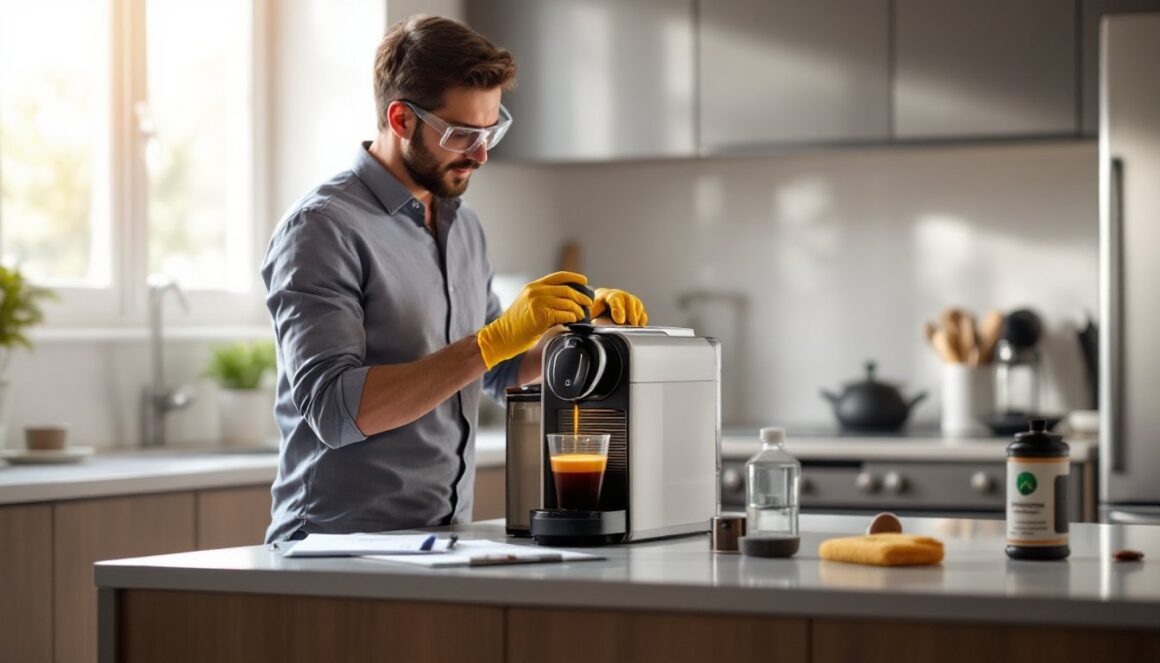
Limescale quietly ruins coffee flavor and can shorten a Nespresso machine’s life, and many readers ask in Greek, “πωσ κανω αφαλατωση σε μηχανη nespresso?” (how to descale a Nespresso machine). This guide walks through why descaling matters, what to gather before you start, and a clear step‑by‑step process that fits most Original‑line and Vertuo machines. It’s written for homeowners and renters who want a practical, safe routine they can follow with basic tools and minimal fuss. No jargon-packed manuals, just the exact actions to keep espresso tasting great and the pump working smoothly.
Key Takeaways
- Regular descaling of your Nespresso machine every 3 months or after 300 capsules prevents limescale buildup that harms flavor and machine performance.
- Use only approved descaling products like Nespresso’s kit or lactic-acid-based descalers to safely protect your machine’s components.
- Follow the step-by-step descaling mode process to effectively clean the boiler and pipes, ensuring coffee tastes fresh and the pump works smoothly.
- Rinse the machine thoroughly after descaling with at least two full water cycles to remove any residual descaling taste.
- Perform routine maintenance such as monthly cleaning of the water tank and weekly emptying of used capsules to extend your machine’s lifespan.
- Consider using filtered water to reduce mineral buildup and keep a descaling log to maintain a consistent routine.
Why Descaling Matters For Taste, Performance, And Longevity
Why Descaling Matters
Scale (limescale) forms when hard water deposits minerals, mainly calcium and magnesium, inside the boiler, pipes, and heat exchanger. Over time this does three things that coffee lovers notice quickly:
- Taste: Mineral buildup and trapped coffee residues can give off‑flavors and make espresso taste flat or bitter. Temperature instability from scaled heating elements also changes extraction.
- Performance: Scale narrows passages and chokes flow. That reduces pressure, leads to under‑extracted shots, and triggers error lights on many Nespresso machines.
- Longevity: Pumps and heaters work harder against scale. Left unchecked, that extra stress shortens component life and raises the chance of costly repairs.
Nespresso’s recommendation is to descale every 3 months or every 300 capsules, whichever comes first. That’s a practical rule for most households, but adjust frequency if you have very hard water, consider a frequency of 6–8 weeks in extreme cases.
Safety and scope: Descaling is routine maintenance, not structural repair. It’s perfectly DIY for most users, but follow the machine’s manual for model specifics. If the machine leaks or shows internal damage, stop and consult a professional. Also, use PPE: wear goggles and gloves when handling descaling chemicals, and keep them away from children.
What You’ll Need Before You Start (Tools, Solutions, Safety)
Materials and tools
- Nespresso descaling kit or a compatible lactic‑acid descaler (do not use vinegar). Follow the descaler’s label.
- Fresh potable water for dilution and rinsing.
- Large container (~1 L) to collect used solution and rinse water.
- Mild dish soap, soft cloth, and non‑abrasive sponge for exterior and removable parts.
Optional tools
- Measuring cup for pouring solution and water precisely.
- A second person to help on tall or built‑in machines (not required, but helpful).
Safety notes (read first)
- Do not use vinegar, it can corrode seals and leave an off taste. Use only descalers approved for espresso machines or Nespresso‑label products.
- PPE: Wear chemical‑resistant gloves and safety goggles. If the area is poorly ventilated, a simple mask helps with fumes.
- Keep descaler off skin and out of eyes: rinse immediately if contact occurs.
- Dispose of used solution per label directions: don’t pour concentrated descaler into plants or storm drains.
Product specifics
- Typical Nespresso kits supply ~100 ml of descaler to mix with water to reach about 0.5–1.0 L depending on the model. For Vertuo, Nespresso often supplies a single sachet meant to fill to the tank’s max line.
- Water coverage note: For cleaning only, expect to run at least two full tank rinses after descaling to remove taste, plan your water accordingly.
Why not use household acids? Vinegar’s acetic acid can damage rubber seals and leave persistent flavors. Lactic‑acid or citric‑based descalers made for coffee machines dissolve scale without harming components when used as directed.
Step-By-Step Descaling Process For Most Nespresso Models
This section covers a general process that fits most Original‑line Nespresso machines (Pixie, Essenza, Inissia, Citiz). Button names can differ, always verify with the owner’s manual for your model.
Preparation
- Remove any capsule. Empty the used‑capsule container and drip tray. Wash the water tank, drip tray, and capsule container in warm soapy water, rinse, and dry.
- Place a 1 L container under the coffee outlet to catch descaling solution. Keep another small jug for refilling if needed.
- Fill the water tank with the descaling solution: typically 100 ml of Nespresso descaler topped with water to the fill line (commonly ~0.5 L). Check your kit for exact volumes.
Entering descaling mode (Original‑line common method)
- Turn the machine on.
- Press and hold the Espresso and Lungo buttons simultaneously for about 5 seconds until both LEDs blink, this activates descaling mode (Pixie example).
Running the cycles
- With the container below the outlet, press the Lungo button to start the descaling cycle. Let the machine pump the full tank through until the tank is empty.
- Pour the collected solution back into the tank and run a second cycle. Running the solution twice helps flush scale from both the boiler and piping.
Rinsing
- Rinse the water tank thoroughly and fill with fresh potable water.
- Run at least two full Lungo rinses (or one full tank if your model suggests) until no descaler taste remains. Taste the first small pour of water to check for descaler. If you detect it, run additional rinses.
Exiting descaling mode
- Press the Espresso and Lungo buttons together for about 5 seconds until the lights stop blinking. The machine returns to normal operation.
Troubleshooting and model notes
- If error lights persist after descaling and rinsing, power‑cycle the machine and re‑run a rinse cycle.
- For machines with a pump‑prime or special maintenance menu, follow the on‑screen or manual steps, Vertuo models differ (see next section).
- If the machine leaks during descaling, stop and check seals and tank alignment: do not keep running it.
Conclusion: Maintenance Schedule And Quick Tips To Keep Your Machine Running Smoothly
Maintenance schedule (practical)
- Descale: every 3 months or 300 capsules (sooner with hard water).
- Monthly: wash water reservoir, wipe exterior, and clean the drip tray and capsule container.
- Weekly: empty used capsules: run a water only shot after the last use each day.
Quick tips
- Use filtered water or a simple under‑sink filter to reduce limescale frequency, it lowers mineral load but doesn’t eliminate the need to descale.
- Keep a small log (phone note) with the date of each descaling so you don’t miss the next one.
- If a persistent off taste remains after multiple rinses, remove and wash removable parts, then run another rinse cycle: if the taste persists, consult a service center.
Final reminder: Descaling is routine but important. With the right descaler, basic PPE, and the 10–15 minutes the process takes, most owners will restore taste, protect the pump and heater, and extend the machine’s service life. If any step feels beyond comfort (e.g., internal leaks or persistent faults), contact a licensed technician rather than forcing repairs.