
The AI image generation landscape has matured dramatically, offering visual creators powerful tools that were unimaginable just a few years ago. Whether you’re a content creator, marketer, designer, or entrepreneur, having the right AI tools in your arsenal can transform your creative workflow. Here are six essential platforms that stand out for their capabilities, accessibility, and real-world performance.
1. Pollo AI
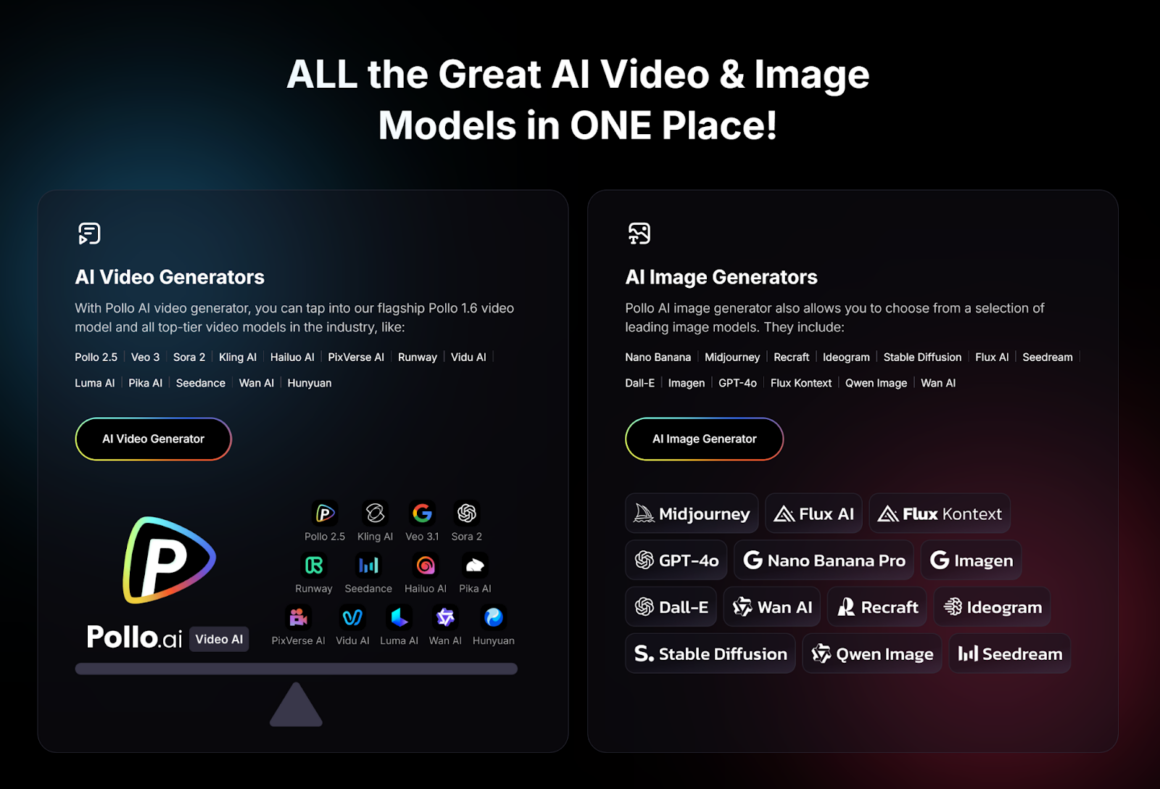
Pollo AI distinguishes itself as an all-in-one creative agency that provides access to multiple popular AI image and video generation models through a single unified platform. Instead of juggling subscriptions to different AI tools, creators can experiment with various engines to find which produces optimal results for their specific needs.
Pollo AI has an built-in AI image generator that excels at producing high-quality visuals across diverse styles—from photorealistic renders to artistic illustrations. What makes Pollo AI particularly valuable is its flexibility: you can switch between different AI models depending on your project requirements without leaving the platform. The dedicated mobile app enables creation and editing on the go, perfect for capturing inspiration or making quick adjustments away from your desk. For creators who value efficiency and versatility, Pollo AI’s comprehensive approach eliminates the friction of managing multiple tools while maintaining access to cutting-edge generation capabilities.
2. NanoBanana
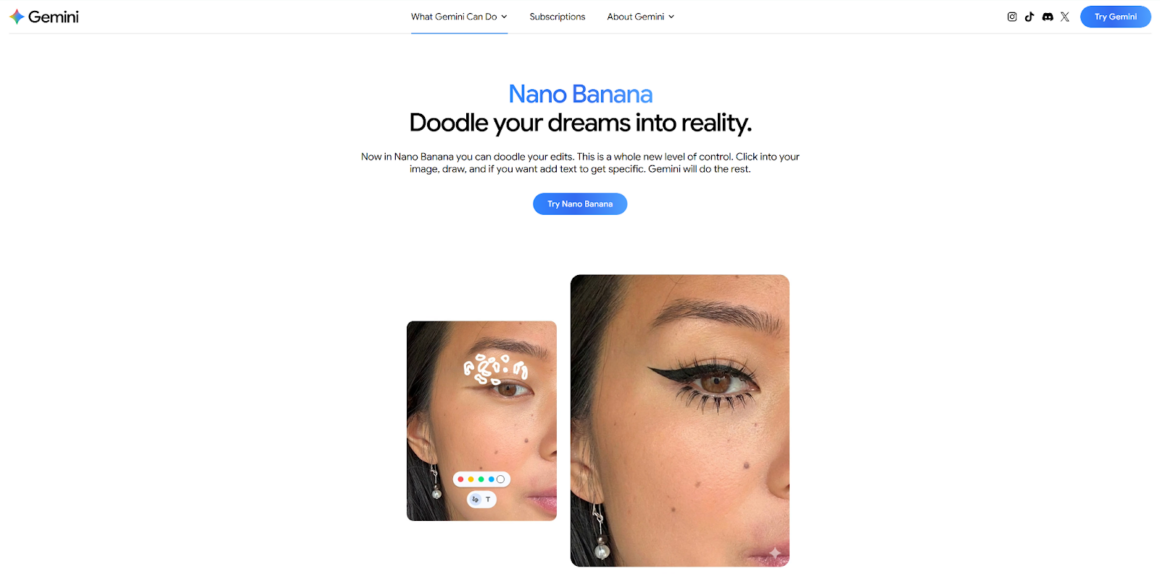
NanoBanana has carved out a niche by focusing on speed and simplicity without sacrificing quality. This platform excels at rapid iteration, making it ideal for creators who need to generate multiple variations quickly for A/B testing or client presentations.
The interface is refreshingly straightforward—you’re not overwhelmed with complex settings or technical parameters. NanoBanana’s strength lies in its intelligent defaults that produce publication-ready images with minimal prompt engineering. The tool particularly shines for social media content, marketing materials, and quick conceptual work. Its pricing structure is creator-friendly, offering generous free tiers that make it accessible for beginners while scaling affordably for professional use. For creators who value getting quality results fast, NanoBanana removes unnecessary complexity from the creative process.
3. Midjourney
Midjourney remains a powerhouse for artistic and stylized imagery. Operating through Discord, it offers unparalleled aesthetic quality, particularly for conceptual art, fantasy illustrations, and visually striking compositions. The community aspect provides inspiration and learning opportunities as you see other creators’ prompts and results.
Midjourney’s latest versions produce remarkably coherent images with strong composition and lighting. It excels at interpreting abstract concepts and artistic direction, making it perfect for brand identity work, editorial illustrations, and creative projects where aesthetic impact matters most. The learning curve is moderate—mastering advanced parameters takes time—but the results justify the investment. For creators prioritizing artistic quality and unique visual styles, Midjourney consistently delivers exceptional outputs.
4. Adobe Firefly
Adobe Firefly integrates seamlessly into Adobe’s creative ecosystem, making it invaluable for designers already working in Photoshop, Illustrator, or other Adobe applications. This integration enables powerful workflows where AI generation combines with traditional editing tools.
Firefly’s commercial-safe training data addresses ethical concerns that plague some competitors, giving businesses confidence in using generated assets. The platform offers precise control over generation parameters and excels at tasks like generative fill, text effects, and style matching. For professional designers and agencies requiring reliable, commercially viable AI tools that integrate with existing workflows, Firefly provides both power and peace of mind.
5. Stable Diffusion
Stable Diffusion offers unmatched flexibility and customization for technically inclined creators. As an open-source model, it enables complete control over the generation process, custom model training, and local installation for privacy-sensitive projects.
The platform supports countless community-developed extensions, custom models, and fine-tuning options that let you create highly specialized outputs. While the technical barrier is higher than user-friendly alternatives, the payoff is unlimited customization potential. For creators with technical skills who need specific aesthetic control or want to develop proprietary visual styles, Stable Diffusion’s open ecosystem provides tools that closed platforms cannot match.
6. Canva AI
Canva AI brings generative capabilities to the platform millions already use for design work. This accessibility makes it perfect for creators who need AI image generation as part of broader design projects rather than as a standalone tool.
The magic happens in Canva’s integration—generate an AI image and immediately incorporate it into presentations, social media templates, or marketing materials without switching platforms. The interface is beginner-friendly, with intuitive controls that don’t require understanding technical AI concepts. For small business owners, social media managers, and creators who value all-in-one simplicity over specialized power, Canva AI delivers practical utility within a familiar environment.
7. Picsart
Picsart combines AI-powered creation with an intuitive, mobile-first design, making it especially appealing for content creators, social media managers, and casual designers. Its all-in-one platform offers tools for AI image generation, background removal, filters, stickers, and quick edits without the learning curve of traditional design software.
Picsart excels at fast, trend-driven visuals and collaborative content creation, allowing users to produce eye-catching graphics in minutes. For creators who value speed, accessibility, and social-ready designs, Picsart delivers a flexible and approachable creative solution.
Choosing Your Tools
The best AI image tool depends on your specific needs, technical comfort level, and creative goals. Many successful creators use multiple platforms: Pollo AI or Midjourney for high-quality hero images, NanoBanana for rapid social content, and Canva AI for quick template-based designs.
Start by experimenting with free tiers to discover which interfaces and output styles align with your workflow. As you develop proficiency, you’ll naturally gravitate toward tools that complement your creative process. The key is building a toolkit that enhances rather than complicates your work, letting you focus on creativity while AI handles technical execution.