

In today’s manufacturing battlefield, waiting to inspect a finished part is a gamble you cannot afford. Modern welding experts are rewriting the rules: they are moving from reactive verification to process-first assurance. That is because every weld becomes auditable, predictable, and traceable before the first part ever leaves the line. This isn’t about skill alone—it’s about embedding expertise, strategy, and operational intelligence into the very physics of the join.
Embedding Reliability at the Source
Welding experts understand that welding quality is not something you verify after the part is built; it is something you build into the process at the exact moment of creation. “Inspect and hope” is dead. Modern welding experts flip the paradigm: reliability begins before the weld is finished.
For example, Microscopic Laser Welding technique actively monitors energy delivery. Every pulse, arc, and photon is tuned to preserve metallurgical integrity and minimize distortion. Sensitive medical components, injection molds, and aerospace sensors are no longer at risk from hidden flaws.
When a process is “aligned” with crucial ISO standards, it is essentially de-risked by design and the product inherits that reliability. Operational resilience isn’t aspirational—it’s baked into the workflow, eliminating costly surprises before they happen.
Tailoring Energy to Design Vulnerability
Welding professionals recognize that, because modern designs—especially in medical and aerospace—are pushing the boundaries of what is physically possible, you can no longer apply a “one size fits all” welding technique. No two designs are created equal. The material profile from thickness to composition, and surface response demands a bespoke energy solution.
Seamlessly transitioning performance and visual intent to data-driven execution. For example, TIG Micro Welding uses controlled manual build-up to restore worn molds, bridge imperfect fit-ups, and repair irregular surfaces with exceptional precision.
Here’s the radical truth: choosing the wrong energy is not just inefficient—it’s existential. Modern welding leverages physics as a strategy, ensuring the energy meets the component where it is most vulnerable.
Inverse Engineering and Performance-Based Welding
Modern experts have stopped viewing welding as the end of the assembly process. Instead, they view it as a mathematical bridge between a desired performance outcome and the data that guarantees it.
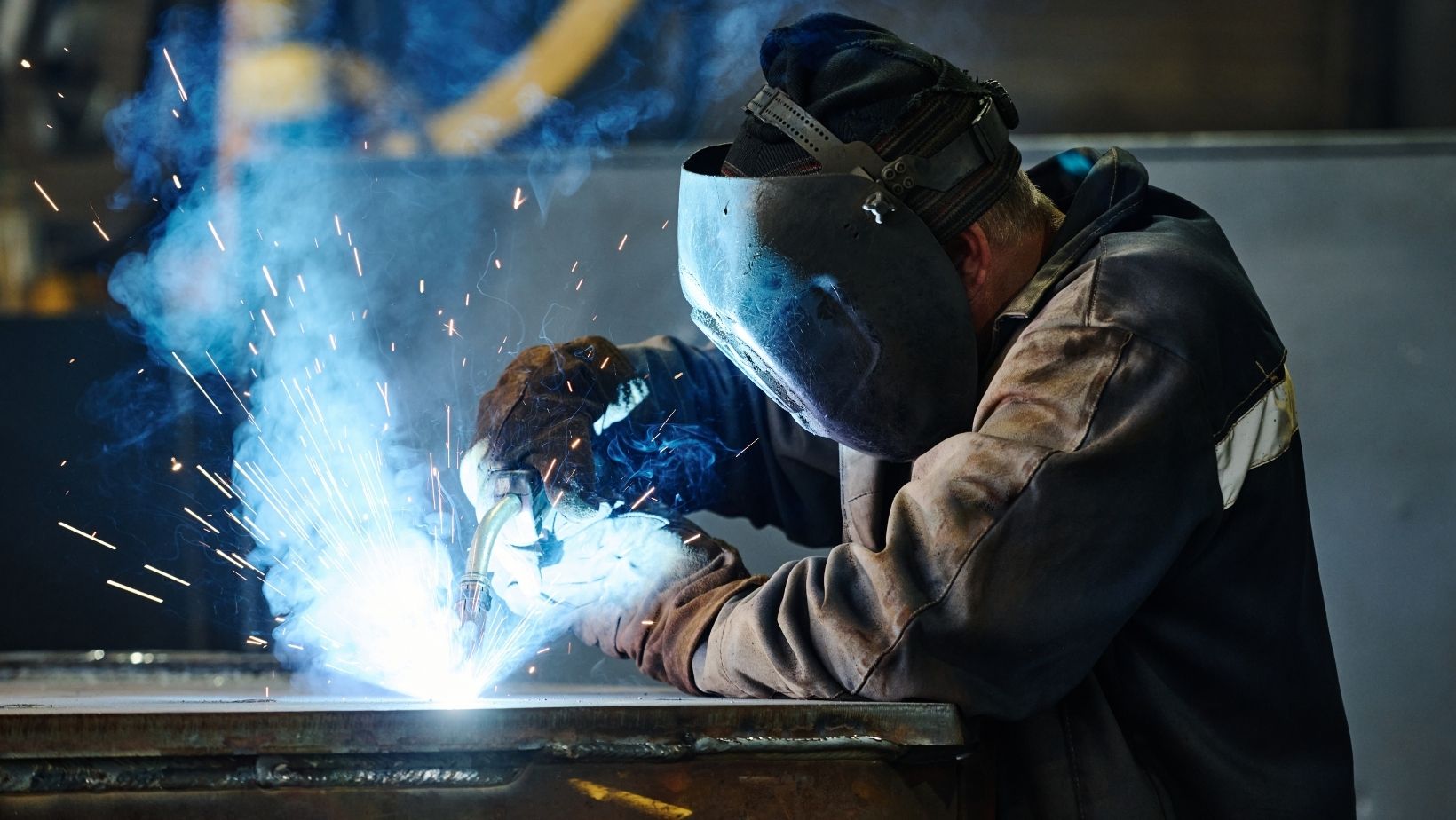
This approach shifts the perspective from “inspecting the result” to “engineering the process” by utilizing inverse engineering:
- Defining the “Visual and Structural Target”: Before the first pulse, expert welders define exactly how the weld must look and perform. That means setting the “Success Protocol”—whether that is a hermetic seal that must withstand 5,000 PSI or a sub-micron join that must remain distortion-free.
- Mapping Data to Outcomes: Once the goal is defined, tech savvy welders “reverse-engineer” the machine parameters to hit that target. Also, they speak the machine’s language to help it understand the desired aesthetic and structural outcome. That means setting a welding signature in terms of; the exact wattage, pulse frequency, and gas flow required to produce that precise result.
By working backward from the goal, the welding process becomes performance-based. Experienced welders are not just pushing buttons; they are deploying a calibrated system that treats the weld as a predictable variable. If you want an outcome that looks “perfect” and is structurally perfect, they don’t guess—they pull the expertise and data that ensures it.
Why this is the ultimate “Guarantee”
- This approach eliminates the “on-the-spot” uncertainty that haunts manual manufacturing. When the process is inverse-engineered:
- Expectation is codified: The client’s vision for the part becomes the machine’s input file.
- Data confirms intent: The “Digital Birth Certificate” is no longer just a log—it is a verification that the specific physics we engineered for the part were executed exactly as intended.
- Operational certainty: Modern welders have moved from “hoping it looks right” to “knowing it performed right” because the data proves the process achieved the goal.
Turning Welding Into Traceable Intelligence
Perfection alone is insufficient in regulated industries—proof matters. Micro Weld, Inc. transforms each weld into digital intelligence:
- CNC lasers log every pulse and parameter automatically.
- ISO 13485 compliance provides a verifiable “digital birth certificate” for every component.
This turns welding from craft to audit-ready strategy. Medical devices, aerospace assemblies, and defense-critical parts are no longer dependent on hope—they are backed by data, traceability, and absolute confidence.
Expertise as a Strategic Advantage
Tools are inert without judgment. Welding companies with many years of experience and proven portfolio provide decisive leverage:
- Emergency micro welding services relieve high-pressure production bottlenecks.
- Custom technique selection ensures every part receives precisely what it needs.
- Distortion and HAZ are minimized to protect component longevity.
Expertise transforms risk into predictability. It converts fragile manufacturing points into resilient, repeatable, and auditable operations.
In essence, when you adopt a strategy that moves from waiting to inspect the welding result to guaranteeing the process, you are effectively securing the future of your product line. That eliminates uncertain manufacturing bottlenecks while infusing a predictable, risk-mitigated manufacturing protocol. A reactive welding strategy is costly.
The Shift: Modern experts are moving to Process-First Assurance, where data integrity is baked into the weld at the source, eliminating the “gambling” aspect of manufacturing.