

In This Article
This article contains:
- Key Factors for Evaluating HVAC Repair Providers
- 4 Top 24/7 Commercial HVAC Providers
- Comparative Analysis
- Evaluation Considerations for Businesses
- Frequently Asked Questions
The reliability of heating, ventilation and air conditioning (HVAC) systems is an integral part of a smooth-running business. Regardless of the industry, a system failure has immense financial and safety implications. To mitigate these risks, facilities managers and business owners should establish partnerships with providers that offer multilocation and 24/7 HVAC repair, ensuring a single point of accountability and standardized reporting.
Key Factors for Evaluating HVAC Repair Providers
This list uses a robust criterion that covers a wide range of key considerations to identify the best HVAC service providers in the country. The selection process focused on five primary pillars of service excellence:
- Nationwide accessibility: The volume of physical locations and the geographic breadth of the network
- Self-performance ratio: The degree to which providers utilize their own employees rather than third-party assistance, allowing for maximum quality control
- Emergency protocols: The presence of a 24/7 dispatch center that is experienced in and dedicated to aiding mission-critical failures
- Service breadth: The ability to effectively troubleshoot a wide range of technical issues across different HVAC assets
- Technological integration: The use of data-driven reporting and energy optimization tools
4 Top 24/7 Commercial HVAC Providers
The following four companies have established an industrywide presence for their excellence in their multilocation HVAC service.
1. Coolsys

For organizations requiring comprehensive nationwide HVAC and refrigeration (HVAC-R) support, Coolsys continues to prove itself as a premier option. The company has become a top partner for businesses across the country, thanks to its robust full life cycle management of mission-critical systems. It provides services that span installation, engineering, design, preventive maintenance and highly reliable 24/7 emergency repairs.
Its technician network is one of the most robust in North America, offering a level of geographical coverage that guarantees qualified experts are consistently available for failure response in critical sectors such as health care, grocery, retail and industrial. According to its website, “CoolSys comprises a vast network of self-performing technicians with deep local knowledge.” Partnering with Coolsys gives business owners access to the highest level of quality available in the modern commercial market.
With “Continuously Growing to Better Serve You” as one of its key mottos, its clients can expect service from a company that’s dedicated to fostering trust by mitigating the risks of infrastructure failure. This reliability is further bolstered by a strong emphasis on energy efficiency and a driven acquisition strategy that integrates high-performing regional businesses into its national network.
Key Features
- Comprehensive life cycle coverage: Expertise in engineering, design, installation, maintenance and asset recycling
- 24/7 emergency availability: Expert service available around the clock throughout the year in all 50 states
- Sustainable practices: Provides advanced energy optimization services designed for footprint and energy cost reduction
- Confidence in self-performance: Thousands of experienced in-house technicians who ensure quality services across the country
Locations Serviced
- 45,000+ active customer sites throughout North America
- Self-performing presence in all 50 U.S. states
2. Johnson Controls
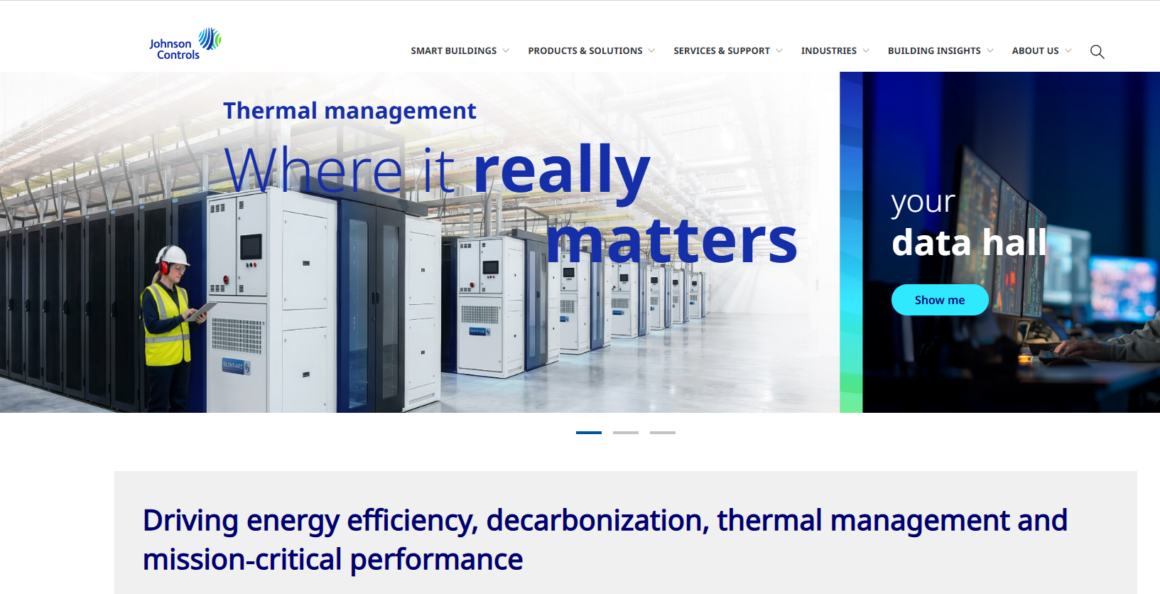
When it comes to smart building technology and sustainable initiatives in the sector, Johnson Controls has firmly established itself as a global leader. Founded over a century ago, the institution has achieved excellence in both HVAC manufacturing and service. It is particularly well known for its highly innovative automated building management systems, which integrate digital intelligence with cutting-edge mechanical performance, allowing for real-time monitoring of multistate portfolios.
Its service model focuses on smart infrastructure that analyzes efficiency levels and equipment wear to enable streamlined optimization. This is especially valuable given that a considerable portion of HVAC energy use in commercial buildings goes to waste each year due to operational inefficiencies. “Our experts can help reduce maintenance costs and minimize downtime,” it states on its website.
For global companies invested in the Internet of Things (IoT) and committed to eco-friendly operations, Johnson Controls’ systems are the gold standard.
Key Features
- Smart building integration: Expertise in IoT platforms for remote tracking and analytics
- Manufacturer-direct support: Access to OEM parts and factory-trained technicians
- Sustainability initiatives: Comprehensive and innovative solutions designed to meet environmental regulations
- Unified building systems: The capacity to manage HVAC systems through a streamlined digital platform
Locations Serviced
- 200+ domestic branch locations in the United States
- Support facilities in over 150 countries
3. ABM Industries
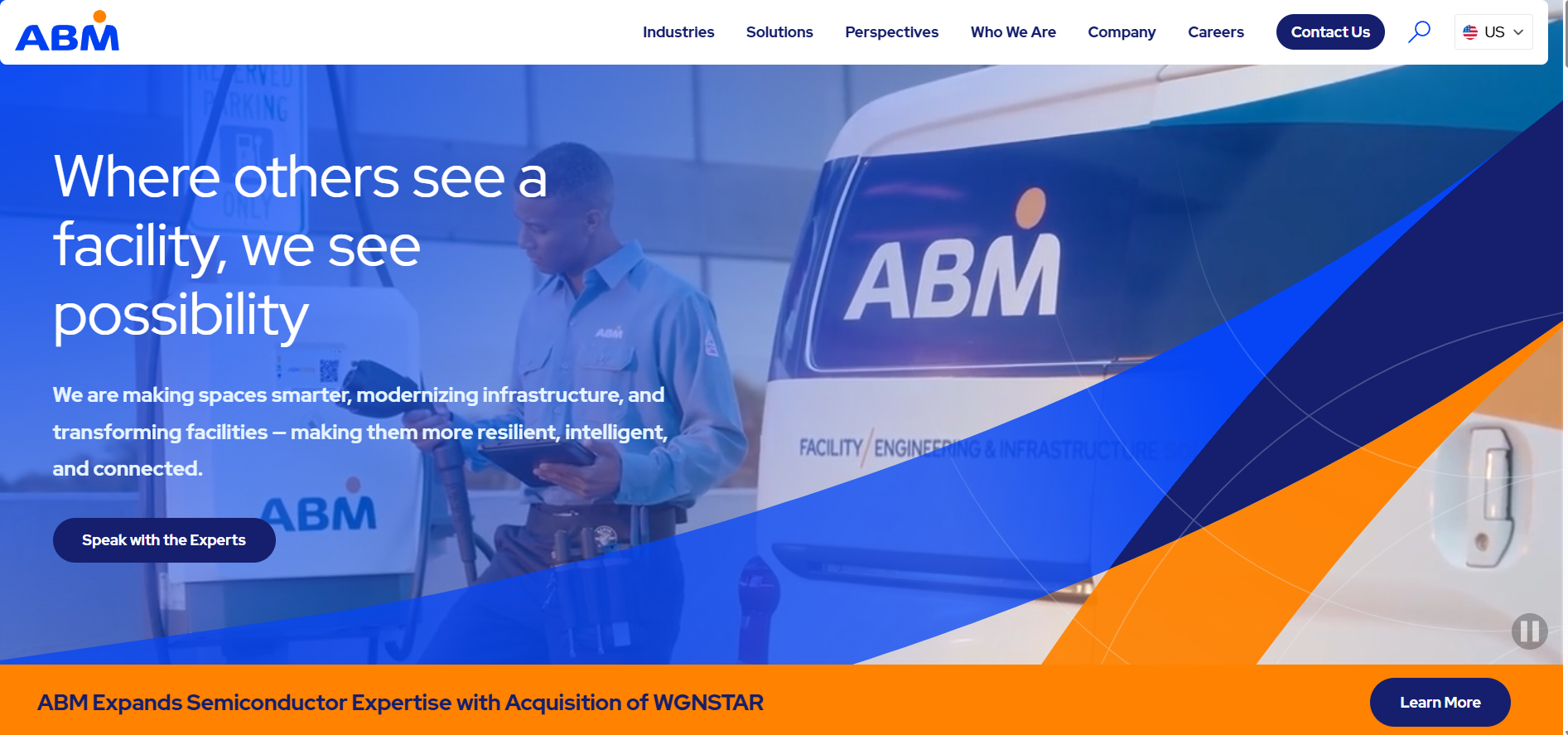
ABM Industries stands out because of its integrated facility solutions. It offers a massive infrastructure designed to handle the HVAC needs of multisite commercial accounts. It is a perfect solution for businesses that wish to bundle facility requirements, such as electrical or janitorial services, under one organizational roof. This approach significantly reduces managers’ administrative burdens.
ABM uses data tools to provide portfolio insights into asset performance. This allows it to detect potential failures before downtime occurs. This data-driven approach is a key aspect of its standardized protocols and 24/7 support across hundreds of branch locations. Its website states, “Together, we’ll transform your most critical assets into modern facilities that support growth, efficiency, and occupant well-being.”
Key Features
- Predictive analytics: Prevents catastrophes via software tracking
- Single-source accountability: Consolidates HVAC with comprehensive building maintenance
- Energy performance contracting: Funds upgrades through documented energy savings
Locations Serviced
- Massive network supported by 225+ local offices throughout the U.S. and U.K.
4. Comfort Systems USA

Comfort Systems USA boasts a vast regional network of companies, enabling them to deliver local expertise backed by national financial support. “Our national footprint provides us the ability to meet the needs of today’s most technically complex systems,” it states on its website. The Strategic Accounts division provides multisite clients with a single point of accountability for complex mechanical and electrical systems.
By leveraging building information modeling and prefabrication for large-scale retrofits, the organization can accelerate project timelines and ensure equipment longevity across the health care and industrial sectors. Furthermore, its customized maintenance services ensure clients can access services that align with their operational and budgetary needs, making it one of the top commercial HVAC providers in the country.
Key Features
- Design-build capability: Offers professional engineering to ensure high-efficiency performance from project inception
- Metropolitan density: Maintains a high volume of technicians in urban centers to allow rapid 24/7 emergency response
- Customized maintenance: Develops preventive plans tailored to specific operational requirements and budgetary constraints
Locations Serviced
- Mechanical and electrical service network spanning approximately 190 physical locations
- Direct operational presence across 142 cities in the United States
Comparative Analysis
The right choice between these top companies depends on operational dictates. Coolsys is the standout choice for mission-critical environments such as grocery stores and health care facilities, where specialized knowledge and a high density of skilled professionals are required for 24/7 uptime.
Johnson Controls is the premier choice for organizations that prioritize comprehensive digital ecosystems and energy efficiency. Conversely, ABM Industries is ideal for managers seeking administrative efficiency through a “one-stop shop” model. Finally, Comfort Systems USA excels at bridging the gap between national corporations and local contractors, particularly in large-scale retrofits.
Comparative Table
| Company | Nationwide Reach | 24/7 Support | Primary Focus | Technician Model |
| Coolsys | Yes | Yes | HVAC-R and energy | 3,000+ self-performing |
| Johnson Controls | Yes | Yes | Smart buildings | Multidisciplinary |
| ABM Industries | Yes | Yes | Integrated facilities | Manufacturer-backed |
| Comfort Systems USA | Yes | Yes | Mechanical/ electrical | Regional operating companies |
Evaluation Considerations for Businesses
Identifying the right HVAC partner makes a significant impact on resilience and profitability. Businesses must evaluate providers on a range of key factors.
Understanding the Difference Between Self-Performance vs. Brokerage
Many providers are service brokers that outsource work to local contractors. While this technically allows firms to achieve national coverage, it often means losing quality control. Self-performing companies can ensure standardized quality across state lines, ensuring that partners receive cohesive service and expertise. This model also simplifies communication, as there are only two parties involved.
Identifying Levels of Technological Integration
Modern HVAC systems have evolved into highly data-driven structures. Today, it is expected that service providers have an in-house digital portal that allows clients to track key metrics about performance and history, providing management teams with adequate information for forecasting capital expenditures. This allows businesses to budget efficiently and schedule preventive maintenance that costs less than emergency troubleshooting.
Determining Full Life Cycle Capacity
Partners should be able to manage every point of an asset’s life cycle. Whether it’s the initial engineering phase or its eventual decommissioning, a service provider must support its client at all stages of the relationship. Companies that offer asset recycling and sustainable disposal are standouts, as they ensure HVAC infrastructure remains an asset rather than a potential liability.
Frequently Asked Questions
Here are common questions company leaders have about HVAC repair providers.
Why is 24/7 HVAC repair availability so important for commercial businesses?
In many sectors, precise temperature control at all times is critical. For example, data centers require robust cooling systems to prevent continuously running hardware from overheating. A failure lasting more than a few hours can result in significant financial and reputational damage.
Does preventive maintenance help save long-term costs?
Regular maintenance reduces the frequency of costly emergency repairs. Additionally, it ensures systems operate at peak efficiency, maximizing production and revenue.
What is a “national” HVAC account?
A national account is a centralized service agreement between a multilocation business and a single HVAC provider. This arrangement ensures standardization across costs and services.
Finding a Reliable 24/7 HVAC Repair Partner for the Long Term
In nearly any industry, partnering with an HVAC repair provider with 24/7 availability and national coverage is a powerful advantage. Choosing a provider that offers technical excellence and self-performing crews is the difference between an unpredictable maintenance liability and a stable, profitable asset.