

Turning spare savings into a second income has rarely looked more tempting, yet the rules around it have rarely been tighter. The private rented sector now houses about 4.6 million households in England, roughly one in five homes, so tenant demand is not the obstacle. The real question is whether you can run a rental at a profit once tax, finance and regulation are counted in.
Buy-to-let can absolutely work as a second income, but it rewards planning far more than luck. Bringing in experienced Estate & Letting Agents early can spare you expensive mistakes. Here is what a first-time landlord should weigh before spending a penny.
Key Takeaways
- Treat a rental as a business, not passive income, and budget for tax, voids and repairs.
- Most lenders want a 25% deposit, and a 5% stamp duty surcharge applies to additional homes.
- Gross rental yields average around 5.8% nationally, with northern regions outperforming the capital.
- No-fault Section 21 evictions ended in May 2026 as the new rules began.
- Mortgage interest relief is now capped at 20%, hitting higher-rate taxpayers hardest.
Why Buy-to-Let Still Appeals as a Side Business
Buy-to-let is the purchase of a residential property specifically to rent it out for income. Two returns drive it: the monthly rent you collect and the long-term growth in the property’s value.
Demand remains the strongest card in any landlord’s hand. With around 4.6 million privately rented households in England, and ownership out of reach for many younger workers, well-priced rentals seldom sit empty for long. Understanding why property works as a business asset helps you see the opportunity clearly.
|
Key stat: Roughly a fifth of English homes are now privately rented, and demand for well-run rentals keeps outstripping supply in many areas. |
Property also behaves differently from shares. Rents and values have historically tended to climb with inflation, offering some shelter when costs rise elsewhere. The way people rent is shifting too, with shared living and flexible arrangements reshaping demand in many cities.
Still, the phrase passive income misleads. A let property is a small enterprise with customers, running costs and legal duties attached. Approaching it that way is what separates owners who profit from those who merely break even.
What It Costs to Get Started
Getting going costs far more than the deposit alone. Beyond the purchase price sit stamp duty, legal fees, a survey and often furnishing before a tenant moves in.
The Deposit and Mortgage
Buy-to-let mortgages usually require a 25% deposit, though the range runs from 20% to 40% depending on the lender and property type. Most are interest-only, so the monthly payment covers interest rather than reducing the loan.
Lenders weigh the expected rent rather than your salary alone, then stress-test it against a higher rate, commonly 125% or 145% of the mortgage cost. During early 2026, deals ran from under 4% on a two-year fix to around 5.5% on longer terms.
Stamp Duty and Other Upfront Costs
Anyone buying an additional property pays a stamp duty surcharge of 5% on top of the standard rates, raised from 3% on 31 October 2024. On a £300,000 rental that adds £15,000 to a £5,000 standard charge, so £20,000 falls due at completion. You can check the latest thresholds through the government’s published rates before you make an offer.
The table below breaks down what a typical £300,000 rental costs to acquire and prepare for its first tenant.
|
Upfront cost |
Typical amount |
|
Deposit (25% of price) |
£75,000 (your equity stake) |
|
Stamp duty (incl. 5% surcharge) |
£20,000 |
|
Legal and conveyancing |
£1,500 to £2,500 |
|
Survey |
£400 to £1,000 |
|
Furnishing and safety works |
£2,000 to £5,000 |
|
Pro Tip: If you are replacing your main home and sell the old one within 36 months, you may be able to reclaim the 5% surcharge. Speak to your solicitor early. |
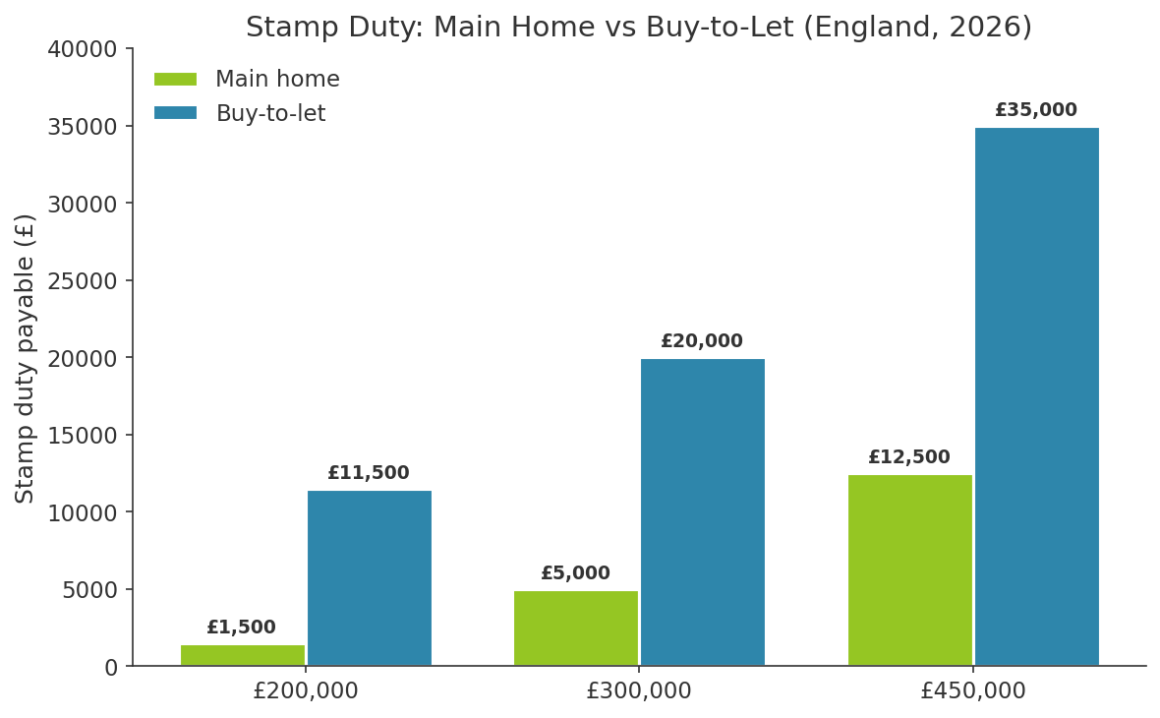
Figure 1: The 5% surcharge sharply raises the stamp duty bill on a rental compared with a main home.
How Much You Can Earn: Rental Yield Explained
Rental yield measures your annual rent as a percentage of what the property costs. Gross yield uses only the price and the rent, while net yield strips out running costs such as the mortgage, insurance, agency fees and upkeep.
The average UK gross rental yield sits at roughly 5.8%, based on a typical buy-to-let price near £270,000. A gross figure between 5% and 8% is widely seen as healthy, whereas anything under 4% looks weak on income alone.
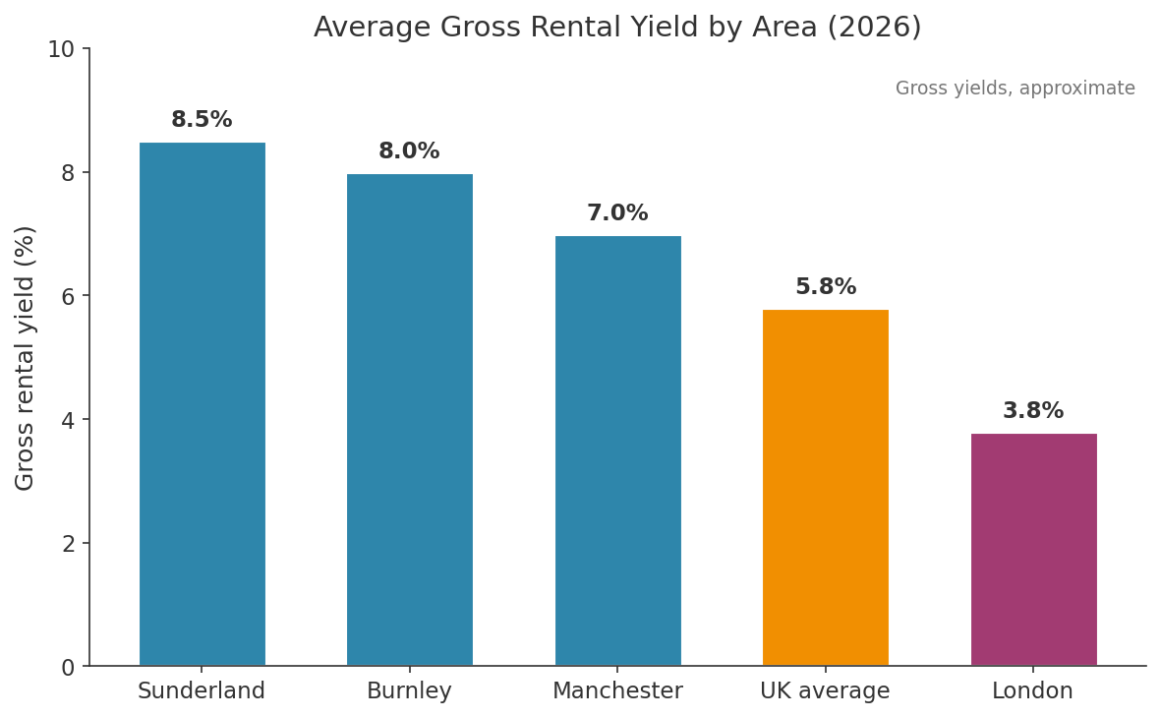
Figure 2: Yields run highest in northern towns and lowest in London, where owners lean on capital growth.
Location drives the spread. Northern cities such as Sunderland and Burnley can top 8%, while much of London hovers closer to 3.5% to 4%, where owners rely on capital growth instead of monthly cash flow.
Remember that net return usually lands two to three points below the gross figure once costs bite. Budget for void periods of four to eight weeks a year and roughly 1% of the value for annual maintenance.
“Buy well, price it right, and stay compliant. In 2026 that discipline matters more than market timing.”
The Tax Rules Every New Landlord Must Know
Tax shapes buy-to-let returns as much as the rent does. Three charges matter most: income tax on what you earn, stamp duty when you buy, and capital gains tax on any eventual sale.
Income Tax and the Section 24 Restriction
Rental profit is added to your other earnings and taxed at your usual rate. Since April 2020, the Section 24 rule has stopped individual owners deducting mortgage interest as a straightforward expense. Instead you receive a flat 20% tax credit on that interest.
For basic-rate taxpayers the impact is broadly neutral. For anyone in the 40% or 45% bands it bites hard, which is why a growing number of investors now buy through a limited company that can still offset interest in full. From April 2027, ministers plan to tax property income at 22%, 42% and 47%, with the interest credit rising to 22% in step.
|
⚠ Making Tax Digital: From April 2026, landlords whose property income tops £50,000 must keep digital records and send quarterly updates to HMRC. |
Capital Gains Tax When You Sell
Selling a rental for a gain triggers capital gains tax of 18% for basic-rate and 24% for higher-rate taxpayers, charged above a £3,000 annual exempt amount. Any bill has to be reported and settled within 60 days of completion, a deadline many first-time sellers miss.
Tax at a glance:
|
Tax |
How it applies |
|
Stamp duty |
Standard rates plus a 5% surcharge on additional homes |
|
Income tax on rent |
Your marginal rate, with mortgage interest giving a 20% credit only |
|
Capital gains tax |
18% or 24% on the gain above the £3,000 allowance |
Your Legal Duties Under the Renters’ Rights Act
England’s Renters’ Rights Act 2025 is the biggest overhaul of the rental market in a generation. It gained Royal Assent on 27 October 2025, and its first phase took effect on 1 May 2026.
From that date, Section 21 no-fault evictions ended, and every assured shorthold tenancy became a periodic one. To regain your property you now need a valid Section 8 ground, such as selling or moving a family member in. The government’s official guidance sets out exactly how the process works.
Several other rules landed at the same time:
- Rent can rise only once a year.
- Bidding wars are banned, so you must advertise a fixed asking price and cannot accept more.
- Blanket refusals of pets, families or benefit claimants are outlawed.
On top of tenancy law, every owner must satisfy strict safety duties:
- A valid Energy Performance Certificate
- An annual Gas Safety Certificate
- An Electrical Installation Condition Report every five years
- Working smoke and carbon monoxide alarms
- Deposit protection in a government scheme
- Right to Rent checks
Getting any of this wrong can sink a possession claim and invite fines, so keep certificates and deposit records current from the very first day.
In a recent Google review, Angelika described the team as professional and responsive, with clear communication throughout. That reliability matters even more in lettings, where a missed certificate or a slow reply can create genuine legal risk.
Should You Manage It Yourself or Use a Letting Agent?
Once the keys are yours, a choice appears: run the property yourself or hand it to a letting agent. Self-management saves fees but costs time, because marketing, referencing, repairs and the growing weight of compliance all fall to you. Staying on top of ongoing property upkeep is a job in itself.
A fully managed service typically costs between 10% and 15% of the rent, while a tenant-find package runs from a few hundred pounds. A capable agent earns that fee by vetting applicants, chasing arrears, arranging safety checks and fielding the late-night repair calls you would rather avoid.
|
Factor |
Self-manage |
Letting agent |
|
Ongoing cost |
No agency fee |
10% to 15% of rent |
|
Your time |
High |
Low |
|
Compliance risk |
Rests with you |
Monitored for you |
|
Best suited to |
Local, hands-on owners |
Busy or portfolio landlords |
Video: “Ultimate Guide to Buy-to-Let in the UK for Beginners” https://www.youtube.com/watch?v=rfi8XG9b3Fo
This video walks first-time buyers through the core steps of starting a rental in the UK.
Frequently Asked Questions
Is buy-to-let worth it in 2026?
It can still pay, though margins are tighter than a decade ago. Higher stamp duty, the capped interest relief and stricter regulation mean returns now hinge on buying well, pricing sensibly and running the property efficiently rather than relying on rising prices.
How much deposit do I need for a buy-to-let mortgage?
Most lenders want at least 25% of the value, roughly 75% loan-to-value. Some accept 20% at higher interest rates, while limited-company or specialist cases may ask for 30% to 40%. A larger stake also makes the rental stress test easier to pass.
Do I need a special mortgage to rent out a property?
Yes. Letting a home on a standard residential mortgage breaches its terms. These mortgages are judged mainly on the rent a property earns, are usually interest-only, and are stress-tested against higher rates to protect the lender.
How is rental income taxed?
Rental profit joins your other income and is taxed at your marginal rate. Mortgage interest no longer counts as a deductible expense; instead a 20% credit applies, which cuts relief sharply for those paying higher or additional-rate tax.
Can I be a landlord while working full time?
Yes, plenty of landlords keep their day jobs. The workload depends on how hands-on you choose to be. Handing day-to-day duties to a managing agent lets you treat the property as a genuine side business rather than a second occupation.
Conclusion
Buy-to-let keeps its place in a sensible wealth plan, but its easy years are behind it. The owners who thrive now treat every home as a business: they run the numbers before buying, budget for tax and voids, and stay ahead of a fast-moving rulebook. Get those foundations right and a single rental can become a dependable income stream. Rush them, and the costs can quietly outweigh the rent. Preparation, not luck, is what turns a purchase into a lasting venture.