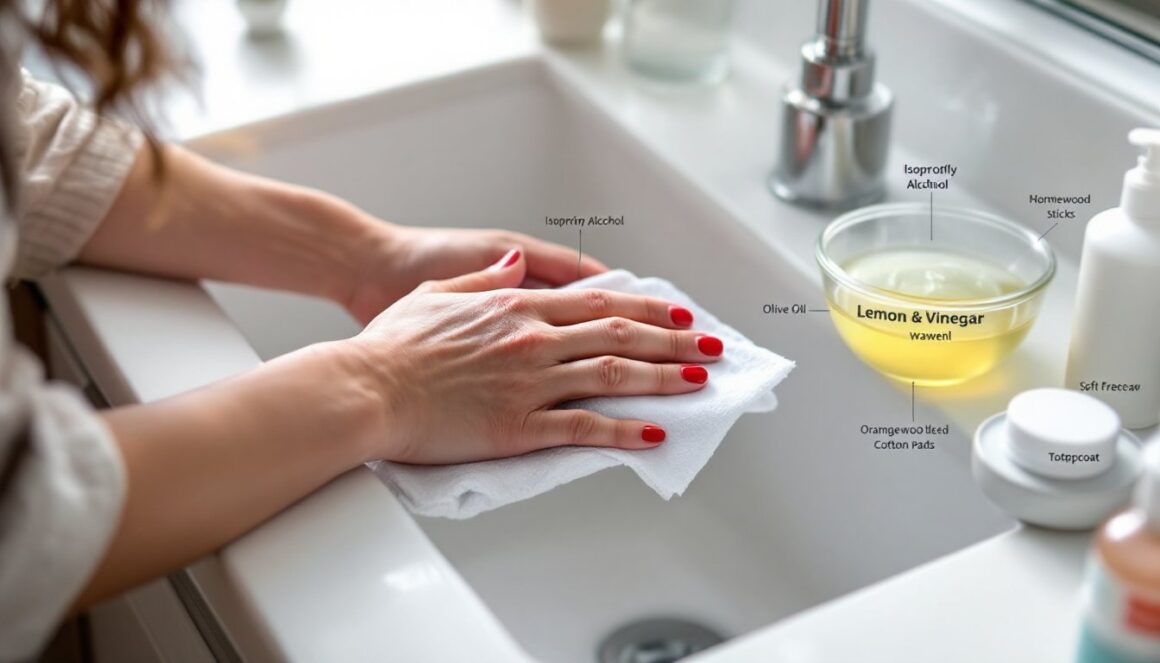
Accidents happen: a bottle tips over, a color goes rogue, or the remover sits in the other room. Fortunately, removing nail polish without commercial remover is realistic with common household liquids, kitchen ingredients, and a bit of elbow grease. This guide helps readers quickly assess the situation, choose a safe solvent or physical method, and protect nails and surrounding skin. It’s written for homeowners and DIYers who want practical, low-cost options, plus safety tips, tool alternatives, and clear steps so the job doesn’t damage nails or fabrics.
Key Takeaways
- Removing nail polish without commercial remover is possible using household items like rubbing alcohol, hand sanitizer, lemon juice with vinegar, and oils, depending on the polish type.
- For fresh or standard nail polish, soaking nails in alcohol-based products or warm soapy water for 5–10 minutes is effective before gentle rubbing.
- Older, thick, or dark polish requires longer soaking and gentle mechanical removal with soft brushes or wooden sticks to avoid nail damage.
- Gel or shellac polishes should not be removed with household solvents; professional salon removal is recommended to protect nails and skin.
- To remove polish from skin, use oils like olive or coconut oil combined with soap to gently break down pigment without irritation.
- Always prioritize safety by wearing gloves with stronger solvents, testing on hidden fabric areas, and working in ventilated spaces to prevent harm.
Assess The Situation: What Type Of Polish And Surface Are You Dealing With
Before grabbing the first bottle on the shelf, take a quick inventory, what kind of polish, how old, and where it landed. That determines whether a mild household liquid will work or if it’s time to call it a job for a professional-grade solvent.
-
Standard nail polish on natural nails: This is the easiest case. Fresh or recent coats usually loosen with alcohol-based products (hand sanitizer or rubbing alcohol), a warm soapy water soak, or by applying a fresh clear/top coat and wiping it off while wet. Expect 5–10 minutes of soaking and gentle rubbing.
-
Old, thick, or dark polish: Older layers or multiple coats are more stubborn. They often require longer soaking, 20–30 minutes in warm soapy water or a 5–10 minute soak in a lemon juice + white vinegar mix, followed by gentle mechanical removal with a soft brush or orangewood stick. Rubbing harder can damage the nail plate: patience is the safer route.
-
Gel polish, shellac, or cured polishes: These are chemically cured and typically won’t come off with household liquids. Attempting to scrape or aggressively sand them off risks harming the nail and cuticle. Recommend seeing a salon or using an acetone soak under professional guidance.
-
On skin: Nail polish on hands or cuticles responds well to oils (olive, coconut, or baby oil) and soap. Apply oil, let it sit 2–5 minutes, then rub gently. Avoid solvents on irritated skin.
-
On fabric: Test any solvent on a hidden seam first. Blot, don’t rub, to lift color. Work from fabric’s underside to push pigment out rather than deeper in. If fabric is delicate or labeled dry-clean only, take it to a professional cleaner.
-
On hard surfaces (laminate, painted wood, countertops): Start with mild soap and water. If that fails, try rubbing alcohol or hairspray on an inconspicuous spot: some finishes can dull or lift. Always test first and follow with a gentle polish or furniture wax if needed.
Safety & prep notes: Wear protective gloves if using stronger solvents, and keep work area ventilated. Gather materials (cotton, oil, soft brush) before beginning so the job is efficient and minimizes prolonged exposure to products.
Household Liquids, Oils, And Solvents That Can Remove Nail Polish
Several everyday liquids perform surprisingly well as alternatives to commercial remover. Each has pros, cons, and safe-use tips.
Materials and quick reference:
- Rubbing alcohol (isopropyl alcohol), common at 70–99% concentrations.
- Hand sanitizer, gel-based, often effective due to alcohol content.
- Hairspray, perfume, or body spray, alcohol-based sprays that can soften polish.
- Lemon juice + white vinegar, mix 1:1 for a mild acidic soak.
- Vegetable oil, olive oil, or coconut oil, for skin and gentle lifting.
- Toothpaste (non-gel), mild abrasive to scrub residues.
How to use them safely and effectively:
-
Rubbing alcohol / hand sanitizer: Soak a cotton pad with alcohol and press it against the nail for 3–5 minutes. The alcohol dissolves the polish film. Rub in a rolling motion: replace the cotton when saturated with color. Alcohol evaporates quickly, keep repeated exposures brief and moisturize nails afterward.
-
Hairspray / perfume: Spray onto a cotton pad and press firmly for 2–4 minutes. These are handy in a pinch but can be drying and may irritate sensitive skin. Avoid inhaling fumes: work in a ventilated area.
-
Lemon + white vinegar soak: Mix equal parts warm lemon juice and white vinegar, soak nails for 5–10 minutes, then rub with a cotton pad or soft toothbrush. The mild acid helps break down polish binders: it’s gentler than harsh solvents but less effective on multiple thick coats.
-
Fresh clear/top coat trick: Paint a fresh layer of clear nail polish over the old color and immediately wipe it off with a cotton pad. The fresh solvent in the clear coat temporarily re-solubilizes the underlying color, allowing it to lift. This is quick for small touch-ups.
-
Oils and soap: For polish on skin or delicate areas, use oil to loosen pigment, massage a few drops into the stain, let sit 2–5 minutes, then wash with soap and warm water. For dark stains on skin, repeat as necessary.
-
Toothpaste: Squeeze a pea-sized amount of non-gel toothpaste onto a damp cotton pad or toothbrush and scrub gently. The mild abrasive can remove thin or flaking polish without strong chemicals.
Warnings and PPE: Always wear gloves if using high-proof alcohol repeatedly, and use eye protection if spraying. Avoid trying these on gel or shellac: they often require acetone and professional removal. For fabrics and surfaces, test on a hidden area first to prevent discoloration.
Physical Methods And Simple Tools For Lifting Stubborn Polish
After chemical softening, mechanical action finishes the job. Use gentle tools and measured force, nails and finishes are thin and easily damaged.
Tools list:
- Cotton pads or balls (soft, lint-free).
- Orangewood or rosewood stick (a wooden push stick) for gentle lifting.
- Soft toothbrush for scrubbing.
- Microfiber cloth for wiping surfaces.
- Nail file (180–240 grit), for very light buffing only: avoid over-buffing.
Step-by-step approach (safe sequence):
-
Soften first: Always start by soaking or applying a solvent alternative (see previous section). Softening the polish reduces the need to scrape.
-
Pressure-wipe with cotton: After soak time, press a cotton pad onto the nail and hold for 10–20 seconds, then rub in one direction. Replace the pad as it picks up color.
-
Use a gentle push: If small flakes remain, use an orangewood stick held at a very shallow angle to nudge softened polish off the nail. Don’t dig at the cuticle, stop if the polish resists.
-
Soft brushing: For textured buildup or under the free edge, a soft toothbrush dampened with soapy water or paste can scrub away residues. Keep strokes light to avoid thinning the nail plate.
-
Final buff and finish (optional): If tiny stains persist, lightly buff with a 180–240 grit file, one or two quick passes across the top surface. Over-buffing weakens nails. Finish by washing hands and applying a nail oil or a hand cream to rehydrate.
On fabric or hard surfaces: Blotting beats rubbing. For fabric, place a clean towel beneath the stain and work from the underside with solvent. For hard surfaces, use a microfiber cloth with a small amount of alcohol, then rinse and dry immediately to avoid finish damage.
When to stop and call a pro: If polish is gel-cured, tightly bonded, or removal requires excessive force, stop. Licensed nail technicians or salons have acetone wraps and tools to remove gel safely. If skin becomes raw, irritated, or shows signs of chemical burns, discontinue use and seek medical advice.
Tool alternatives and tips: A circular nail buffer can be used by experienced DIYers for light topcoat removal, but, a simple soft brush and cotton pads are usually sufficient. Keep ventilation in mind when using sprays or high-strength alcohol, and protect nearby surfaces with paper towels to catch drips.
Conclusion
Removing nail polish without commercial remover is doable using household alcohols, acidic kitchen mixes, oils, toothpaste, and simple mechanical methods. The key is assessing polish type and surface first, softening the film with the right liquid, then using gentle tools, cotton, orangewood sticks, and soft brushes, to lift the color without damaging nails, skin, or finishes. Always prioritize safety: wear gloves when needed, test solvents on hidden areas for fabrics and surfaces, and stop if polish is gel-cured or removal risks injury. A little patience and the right combination of soak plus gentle rubbing will usually do the trick.