
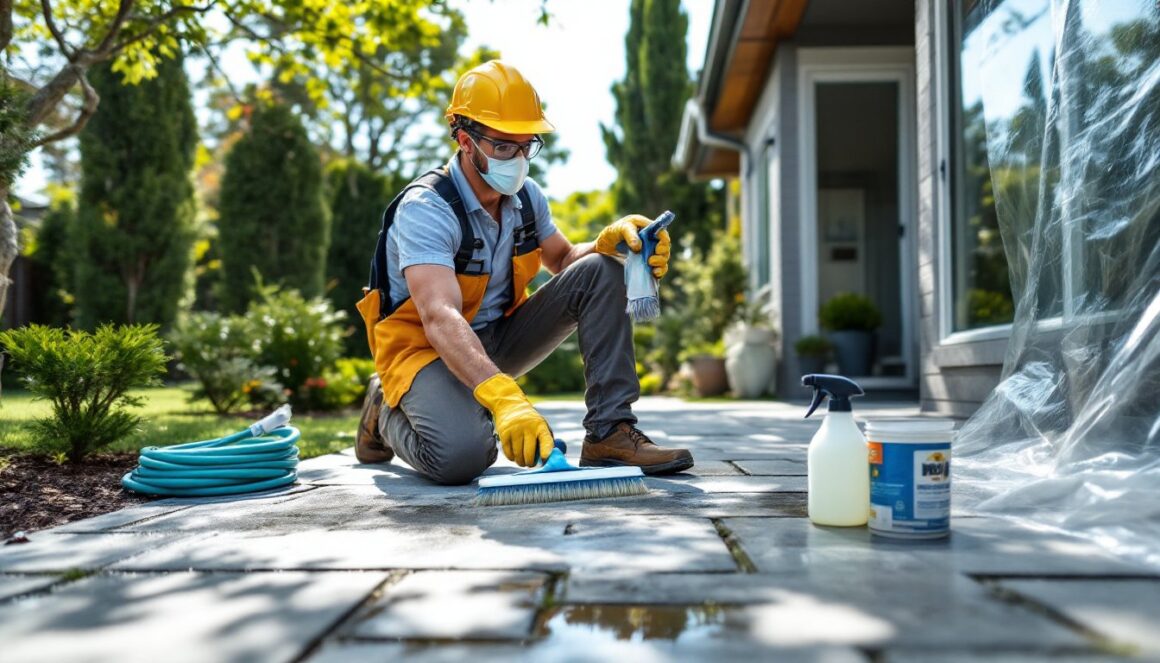
Lichen, those pale, crusty patches on stone pavers, are common where slabs stay damp and shaded. They’re not the same as moss: lichen are a partnership of fungus and algae that cling to porous surfaces and can make walking surfaces slippery, dull the stone’s appearance, and, over years, contribute to minor pitting or staining. This guide shows how to safely and effectively ta bort lavar på stenplattor (remove lichen from stone pavers) with homeowner-friendly tools, clear steps, and realistic maintenance tips. It focuses on methods that protect the stone, nearby plants, and the people doing the work.
Key Takeaways
- Lichen thrives on damp, shaded stone pavers and can make surfaces slippery and dull, so prompt removal is important for safety and appearance.
- To ta bort lavar på stenplattor (remove lichen from stone pavers), start with gentle manual methods like scraping and brushing before progressing to mild chemical treatments.
- Protect surrounding plants and soil by wetting vegetation and covering drains before using bleach or biocides, and always test treatments on a small area first.
- After removal, thoroughly rinse and dry the stone, repair joints if needed, and apply a breathable sealer or biocidal preventer to reduce lichen recurrence.
- Improving drainage and increasing sunlight exposure by trimming branches helps prevent lichen from returning, and regular maintenance like sweeping and early treatment ensures stone pavers stay safe and attractive.
Why Lichen Appears On Stone Slabs And Why It Matters
Lichen establishes where three conditions exist: persistent moisture, shade, and a rough or porous surface. Stone pavers that sit under trees, against north-facing walls, or on flat areas with poor drainage trap water and give lichen spores time to colonize. They anchor with fungal filaments that creep into tiny pits and pores, making the growth tenacious.
Why it matters:
- Safety: Lichen-covered pavers become slippery when wet, increasing fall risk on steps, patios, and walkways. Homeowners should treat high-traffic areas promptly.
- Aesthetics: Even non-invasive lichen dulls stone color and texture, making a patio look aged or unkempt.
- Surface health: On softer stones, like sandstone or some concrete pavers, lichen can contribute to staining or slight surface erosion over long periods.
Distinguish lichen from algae or moss: lichen often appears crusty or scaly and may be pale gray, green, or orange. Moss is plush and green: algae look like a slimy green film. The removal approach varies slightly, so identifying the growth guides the correct treatment.
Safety, Tools, And Prep Before You Start
Safety first. Wear gloves, eye protection, and a mask if mixing chemicals, and old clothes that can get splashed. If pressure washing, add hearing protection. Protect nearby plants and soil: pre-wet vegetation and cover drains with plastic sheeting or use a water catchment to avoid chemical run-off.
Materials and tools (homeowner-friendly list):
- Stiff or medium-stiff brush (deck brush or scrub brush)
- Plastic scraper or putty knife for edges and joints
- Stiff-bristle hand brush for joints
- Bucket and pump sprayer (optional)
- Low-pressure garden hose or light-duty pressure washer (keep pressure low)
- Household bleach (sodium hypochlorite) or washing soda (sodium carbonate) or a quaternary ammonium/biocide patio cleaner
- Personal protective equipment: gloves, safety glasses, mask, hearing protection (if using a washer)
Prep steps before any chemical or mechanical work:
- Test a small, inconspicuous area for color change or surface damage, especially on softer stones. Some stones are sensitive to acids and strong alkalis.
- Sweep and remove loose debris: work in dry weather when surfaces will not be slippery.
- Wet surrounding plants and lay down plastic where possible: plan a rinse path away from wells or storm drains if using bleach-based solutions.
- Check local regulations: strong biocides and bleach run-off may be restricted in some jurisdictions.
DIY Removal Methods
This section covers manual and chemical approaches. Homeowners should try the gentlest effective method first and escalate only if needed.
Aftercare, Sealing, And Routine Maintenance To Prevent Return
After removing lichen, the next goal is to stop it coming back.
Immediate aftercare:
- Rinse the cleaned area thoroughly and allow it to dry fully, lichen needs moisture to reestablish.
- Remove any loosened joint material and repack joints with polymeric sand or jointing mortar if needed: this helps prevent seeds and spores lodging in gaps.
Sealing and preventive products:
- On appropriate stones, apply a breathable stone sealer (look for “breathable” on the label) to reduce water uptake. Don’t seal historic or very porous natural stone without professional advice, sealers change how moisture moves through the slab.
- Consider a biocidal preventer applied once or twice a year in shady, high-moisture spots: these products kill spores before they take hold. Follow label directions and local environmental guidance.
Landscape adjustments to reduce recurrence:
- Improve drainage: add slope or regrade where water pools.
- Increase sun and airflow: trim overhanging branches to reduce shade and speed drying.
- Regular maintenance: sweep monthly, hose after heavy leaf fall, and treat early signs of regrowth promptly.
Cost note: Sealer and biocidal preventers vary by region and product grade. Homeowners should compare coverage rates, most sealers list square feet per gallon on the label, and buy slightly more for two coats if recommended.
Conclusion
Removing lichen from stone pavers is usually a matter of choosing the gentlest effective method and committing to sensible aftercare. Start with manual scraping and brushing, try washing soda or mild biocides next, and reserve pressure washing or stronger chemicals for persistent patches. Protect plants and drains, test on a small area first, and consider a breathable sealer or seasonal biocidal treatment to keep pavers clear. With routine sweeping, improved drainage, and occasional preventative treatment, homeowners can keep patios and walkways safe and looking their best.