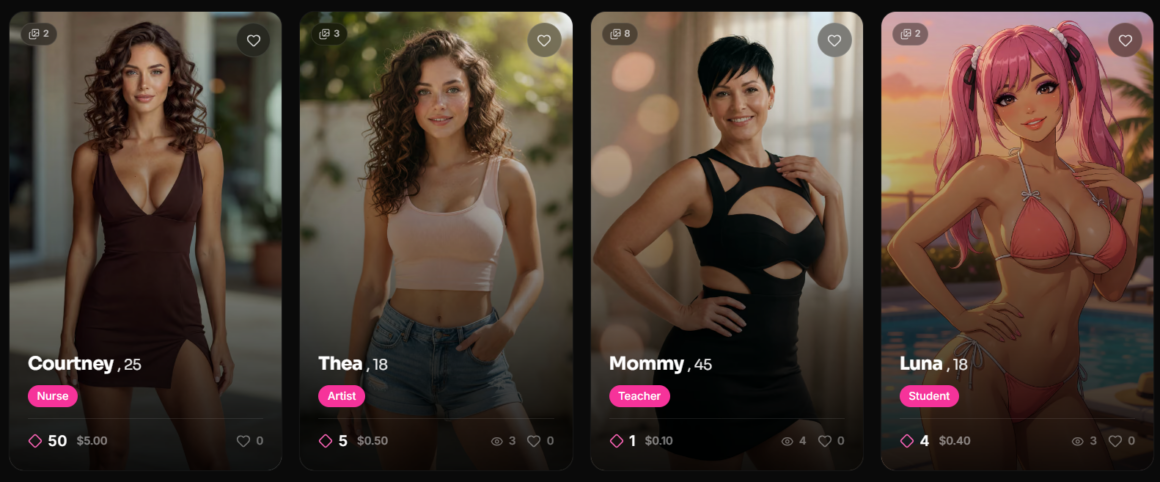
AI girlfriends are beautiful, flawless, and always available. Nevertheless, few people could expect that the AI companion industry would grow into a $3 billion market in well under a decade, enticing millions of users worldwide and inspiring the launching of hundreds of new AI platforms. But beyond the product's natural appeal, is it possible that the rapid success of AI companion ventures has been powered by Gen Z's romance gap?
Research published by the American Institute for Boys and Men determined that "nearly half of young men aren't dating." The findings of the study, based on a survey conducted by the Center on American Life, are particularly worrying considering the gap between Gen Z and previous generations such as the Baby Boomers and Xers.
Only 56% of Gen Z adults reported having at least one romantic relationship during their teen years, but the percentage was considerably higher for Xers (76%) and Baby Boomers (78%). The growing importance of social media usage among young adults, as well as the impact of the pandemic, are often cited as the main causes behind the so-called "Gen Z romance gap", but is it safe to say that AI companion platforms may have also played a role?
AI Companions as a Rejection-Free Alternative to Modern Dating
According to the founders of the AI girlfriend website Uncensy, more and more Gen Zers have turned to their services because they're looking for emotional connections that are free of the "performative aspects" that tend to characterize human relationships.
In their words, "Young men and women seem to be overwhelmed by the performative aspects of traditional dating. The same people who download dating apps and use social media extensively are the ones joining our website; what this tells us is that, even though there are more ways to establish romantic connections than ever, there also seems to be a generation-wide saturation with these traditional channels. When you can potentially meet thousands of singles in your area via apps such as Tinder and Bumble, the paradoxical consequence is that rejection is normalized".
Once described as "the most rejected generation" by The New York Times, Gen Zers are seemingly part of a world that has no room for them. This notion is illustrated, for example, by limited opportunities in the job market, leading to what some authors have described as "systemic rejection".
As more and more of their job applications get turned down and more and more of their potential matches swipe left, Gen Zers seem to face an identity crisis. In this grim scenario, AI companion services come to the rescue by presenting them with a new form of intimacy that leaves no room for rejection. But while some people consider this to be an alarming new social menace, others believe it can actually bring more good than harm.
AI Love and the 2020s Loneliness Epidemic
On the social media platform Medium, a new group of AI-age writers is promoting the idea that "AI love" doesn't necessarily have to be a threat to human intimacy. Instead, it's a new resource for intimacy that can actually help young men and women to experience the solace and support they couldn't find elsewhere.
The benefits of AI companion services are often contrasted with the rise of social isolation and loneliness, an issue that institutions such as the World Health Organization have raised awareness of. The general idea promoted on Medium and other online channels is that AI girlfriends and boyfriends can actually be used to fight back against the modern-day loneliness epidemic, with the essential argument being that "artificial love is better than no love at all…"
Another popular argument states that AI companions can help people deal with their own anxieties towards modern dating. On platforms such as Reddit, for example, young men claim to use AI girlfriend websites to practice their flirting skills; this zero-risk, no-rejection experience later allows them to talk with real women more confidently. But while the notion that AI companions can be a "training ground" for dating is extremely popular, there's no data to show exactly how effective it can be.
The Bright Future of the AI Companion Industry
Behind the Gen Z romance gap, however, there's an underlying devaluation of the importance that sex and romance have in one's life. Younger generations no longer seem to believe that finding a partner is a life priority, especially before turning 30.
This doesn't explain everything, but it's definitely worth taking into account. At the end of the day, there's a possibility that Gen Zers are dating less not only because they feel overwhelmed by the stressful requirements of modern dating but also because they have decided to place their focus on other aspects of life.
Either way, every single economic projection we have checked points to the same inescapable conclusion: the AI companion industry is set to grow steadily during the next decade, with some outlets pointing to a whopping 1,000% rise by 2034.