The term 'AI girlfriend' has been around at least since 2017, the year the first commercial "AI companion" platforms were launched online. Meanwhile, AI girlfriends have been at the center of numerous public debates, inspiring criticism from those who believe they constitute a reduction of love and gathering praise from those who see them as a valuable product.
Regardless of how you feel about AI girlfriends, one thing seems to be undeniable: the AI GF app market is booming. The sector is currently valued at over $3 billion, and reports from outlets such as Yahoo Finance state it will surpass an $11 billion valuation by 2032. But what's the reality behind the numbers, and what are the specific traits and features that justify the rapid growth of the industry?
What Makes AI Girlfriends Popular (According to the Experts)
To learn more about what drives people to pay for AI girlfriends in 2026, we have contacted the team of experts behind Uncensy, one of the most popular AI GF platforms available today, with over 50,000 registered users and a reported 98% satisfaction rate. This is what they had to say about the recent surge in demand for AI girlfriends:
"A lot has changed since we launched Uncensy. Google data, for example, shows that searches for 'AI girlfriend' and 'virtual companion' have grown, respectively, 525% and 620% over the course of the last year, and that spike in interest has surely been reflected by our user numbers. Considering the competitiveness of the AI GF app market, we didn't expect to get to where we are so quickly, but the high demand has helped our platform soar less than two or three quarters after launch."
As for what makes AI girlfriends so attractive, the Uncensy founders were quick to dismiss their platform as "just another AI companion site", commenting on a set of additional features that has allowed their website to set itself apart from other competitors:
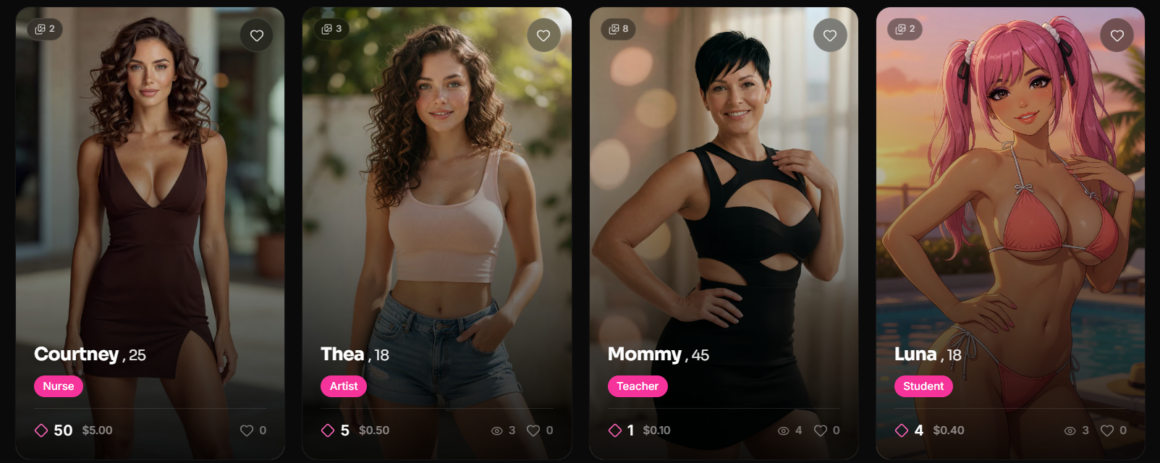
"What separates AI girlfriend services from AI chatbot platforms, for example, is the specific focus on the romantic elements of human-AI interaction, including AI-generated images and videos and customized companions. At Uncensy, however, we wanted to go beyond the obvious. We now believe that the secret to our success is mostly due to the launching of unique features you can't really find elsewhere, such as our AI Companion Marketplace (a discoverability option covering hundreds of ready-made companions) and our Weekly Beauty Competition, in which users can compete against each other by creating the best AI girlfriends."
When it comes to the average user of the platform, the team behind Uncensy was quick to dismiss the notion that AI GF usage is mostly driven by young men looking for immediate relief:
"Surprisingly enough, most of our users seem to be more interested in the romantic side of AI companions than in the images and videos. There's an element of adult entertainment, that's for sure, but the average user is more interested in the social features and in establishing 'genuine' connections with the companions. It's not just young men either: we have a lot of female users that sign up for our AI boyfriends, and our community is composed of people from all ages and backgrounds."
The First AI Chatbot Legislations, From the U.S. to China
Despite assuring that their website prioritizes user privacy and has invested significantly in improving the safety of its AI companions, the team behind Uncensy agrees that "some legislation will be welcome", particularly at a time when the AI GF sector is still largely unregulated in most regions, with a few notable exceptions.
The United States was one of the first countries to take measures, limiting the access to AI companions to users over 18 years of age. This is something, however, that platforms such as Uncensy have already put into practice.
The biggest legislative backlash against AI companions, though, has recently come from China, which has reportedly instructed its major technological firms to "prohibit flirtatious behavior from their AI products." The Chinese legislators seem to be worried about potential negative effects such as addiction and psychological dependency.
Commenting on China's new chatbot laws, the Uncensy experts welcomed "whatever rules help to make the AI GF app market sector" but pointed out that "a flat-out ban of AI companion products will only force users to look for unregulated platforms", having the opposite of the intended effect.